
By Lehlohonolo Lehana.
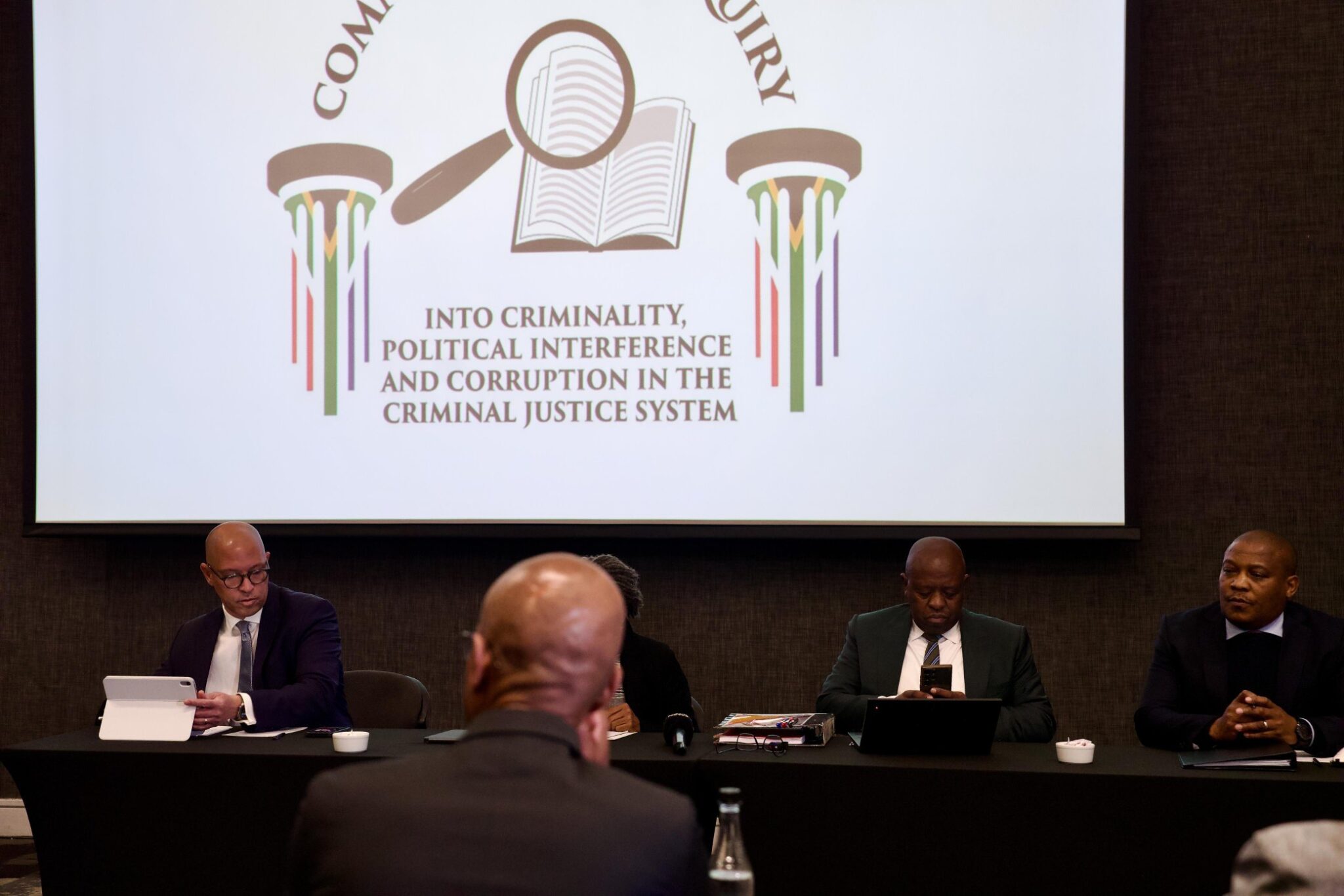
The suspended deputy national police commissioner Shadrack Sibiya concluded his five-day testimony at the Madlanga Commission of Inquiry on Tuesday night.
Sibiya complained over the line of questioning, accusing commissioners of attempting to coerce him into making specific admissions.
He told the commission that his devices were confiscated by members of the Political Killings Task Team (PKTT), he was suspended, and he was never allowed access to anything.
“Now, I have been told by the evidence leader (Advocate Adila Hassim SC) that I had ample time to prepare,” he said, expressing frustration that his testimony lacked information contained on the electronic devices seized during a raid at his Centurion home in October last year.
He further accused Hassim of being “a vicious advocate” defending KZN provincial commissioner Nhlanhla Mkhwanazi.
“There is no good side of me that is being brought up from whatever I have because I don’t have devices. I don’t have anything. He (Mkhwanazi) got all the experts. He is still in the office. I am out there in the wilderness… So, quite honestly, the playing field is not level,” Sibiya said.
Commission chair Justice Mbuyiseli Madlanga clarified that the commission is in the second phase, where those implicated are afforded a chance to respond to allegations and be cross-questioned.
Sibiya has been accused of receiving bribes from criminally accused tender tycoon, Vusimuzi “Cat” Matlala, an allegation he continues to deny.
He denied granting Matlala access to the South African Police Service (SAPS) Pretoria Training College.
This follows the commission’s presentation of WhatsApp transcripts in which Matlala initially claimed that Sibiya had authorised him to store and operate X-ray machines at the SAPS Training College Hospital in Pretoria.
Sibiya also denied sharing confidential SAPS documents with Matlala.
The commission questioned him about his handling of sensitive SAPS transcripts and internal documentation after WhatsApp messages suggested that information may have been shared between Sibiya, Sgt Fannie Nkosi and Matlala.
The commission heard about an internal audit report investigating allegations against certain SAPS officials, in which Matlala was implicated.
A journalist had approached the SAPS communications office seeking clarity on why Matlala was still receiving payments despite the audit recommending termination of his contract and possible criminal charges.
The commission was told that after becoming aware of the media inquiry, Sibiya shared excerpts of the audit report with Nkosi, who forwarded the information to General Richard Shibiri and Matlala, among others.
Sibiya maintains he acted improperly. His testimony was adjourned to allow his legal team to file an application to obtain his devices and would resume at a date to be announced by the commission.