
By Lehlohonolo Lehana.
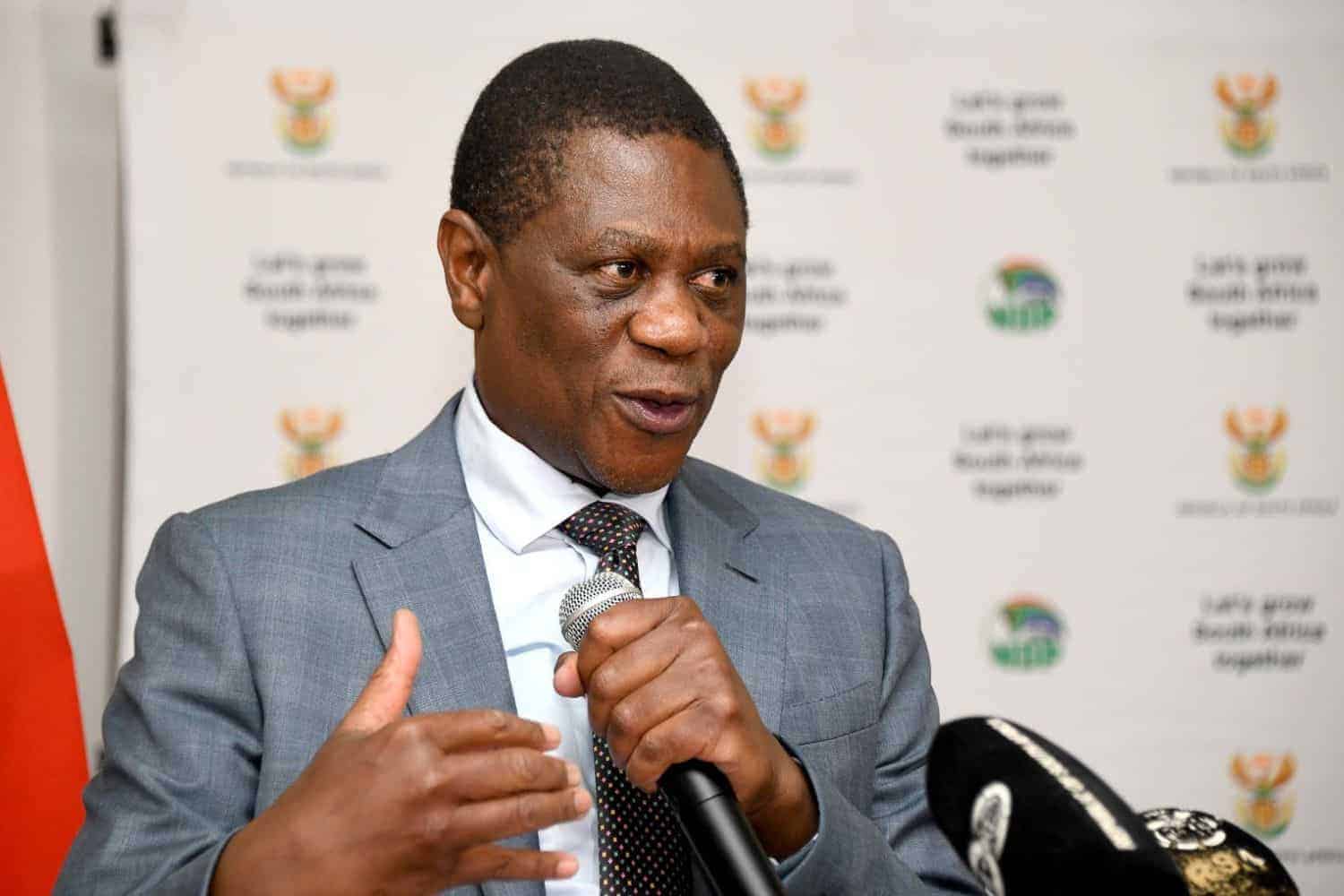
Deputy President Paul Shipokosa Mashatile says transformation and economic justice require a willingness to challenge the status quo.
Mashatile delivered the keynote address at the Transformation Fund Dialogue in Pretoria which is aimed at accelerating transformation and support black businesses accros various sectors.
The Transformation Fund is a key initiative aimed at accelerating transformation and supporting black-owned and black-managed businesses across various sectors in South Africa.
The session was hosted by the Minister of Trade, Industry and Competition (DTIC), Parks Tau at Freedom Park Heritage Site and Museum in Pretoria.
The Transformation Fund aims to improve access to funding for black-owned and controlled enterprises, particularly small, medium, and micro enterprises (SMMEs) and cooperatives; aggregate resources from existing Enterprise and Supplier Development (ESD) obligations to support the sustainability and growth of black-owned businesses, and mobilising financial resources from both the private and public sectors using Broad-Based Black Economic Empowerment (B-BBEE) legislation.
Last month, Tau announced the extension of the deadline for public comments on the Draft Transformation Fund Concept Document. The extension is until 28 May 2025, from the original date of 7 May 2025.
“We are going to make sure that the Transformation Fund is at the centre of government, specifically the Presidency, and will work with the Minister of Trade and Industry as well as the key economic cluster Ministers to ensure we meet the set targets, especially in the procurement of goods and services, said Mashatile.
“This will include expanding spending aimed at supporting African and black enterprises in townships and rural South Afrrica led by women, youth and people with disabilities. The National Treasury and the Department of Women, Youth and People with Disabilities have already collaborated to develop such a framework.
The focus is to ensure speed of execution and equally implement the Preferential Procurement Policy Framework Act, he added.
The Transformation Fund was a voluntary fund that aimed to improve the impact of broad-based black-economic empowerment and enterprise and supplier development (ESD) spending by companies, and would not interfere with companies that were implementing successful ESD initiatives of their own, Tau said during the launch.
“The Transformation Fund will serve as a strategic vehicle for businesses to embrace change, foster innovation and drive growth. This fund will serve as a catalyst for financial support, guiding organisations through crucial transitions and enabling them to seize new opportunities that arise in the market,” Mashatile emphasised.
The Transformation Fund would help enterprises seeking improved access to capital to remain competitive in the current dynamic enviroment, and would leverage ESD’s potency in driving economic inclusion and participation, he said.
Further, the fund is anchored by private and public sector contributions to the Enterprise Supplier Development and Equity Equivalent Investment Programme obligations.
Additionally, as a centralised fund, administered in partnership with the private sector, it would ensure greater access to funding opportunities, especially in township and rural economies, Mashatile noted.
Investing in a Transformation Fund signified a commitment to progress and a dedication to long-term sustainability. It would enable businesses to navigate challenges with resilience, adjust in response to changing dynamics, and establish themselves as adaptive leaders in their respective industries, he said.
Government is planning to invest in Fourth Industrial Revolution (4IR) skills development to revive economic development, revitalise skills and generate high-quality employment.
“We must take advantage of the African Continental Free Trade Area, which promotes industrialisation by reducing reliance on raw material exports and promoting value-addition.
“The AfCFTA improves our bargaining position in trade negotiations and allows us to attract more foreign direct investment, negotiate better trade deals with other countries and develop diverse industries,” said Mashatile.