
By Lehlohonolo Lehana.
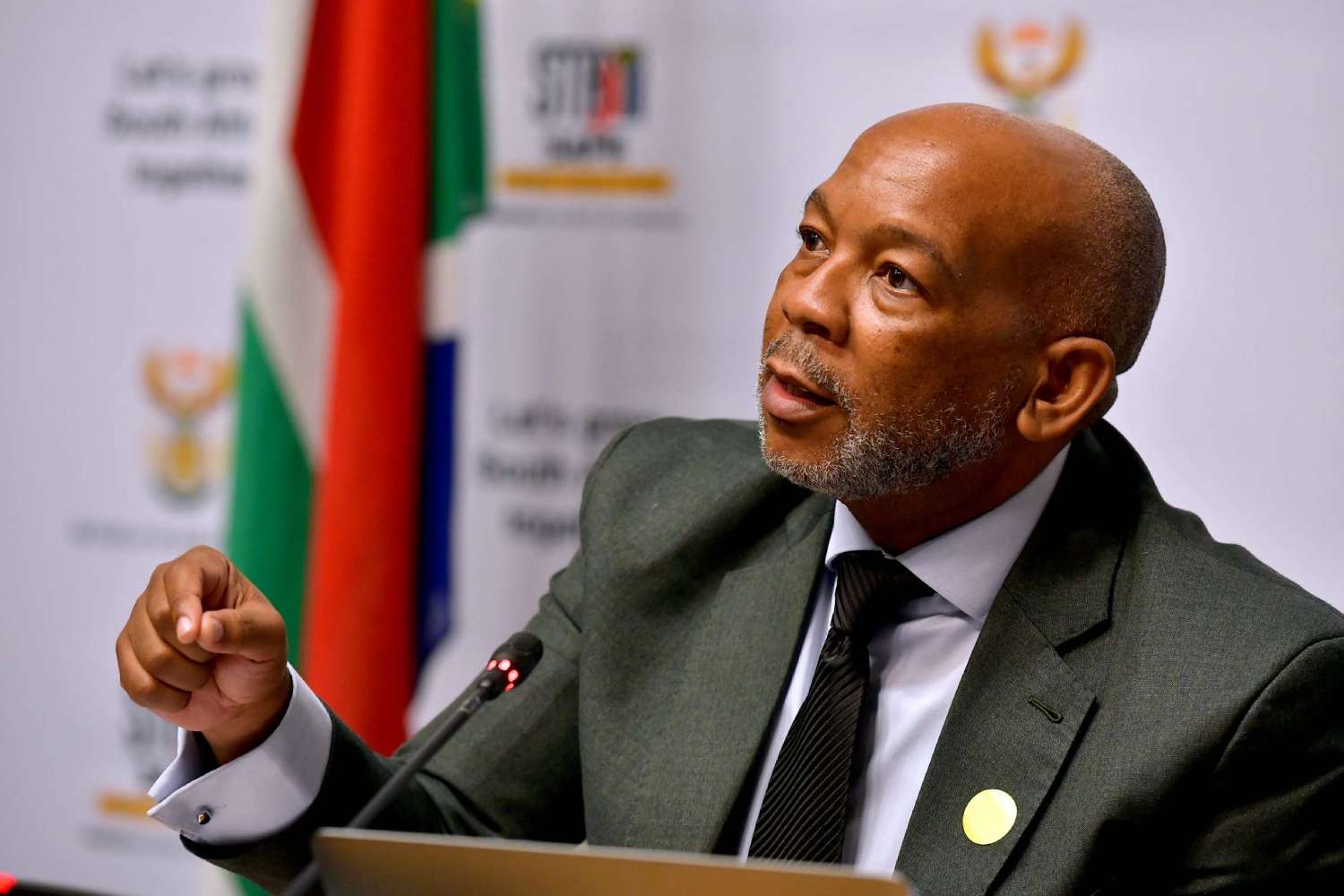
Electricity and Energy Minister, Kgosientsho Ramokgopa has admitted that the latest power outages were the result of poor planning and delayed generation unit recoveries.
Ramokgopa was briefing the media following the most recent load shedding.
State owned power utility Eskom has announced it will implement stage 2 load shedding from 4pm on Tuesday until Thursday.
Eskom said the primary reason for load-shedding was the delayed return of several units from planned maintenance.
Ramokgopa attributed the slippages to inadequate planning by Eskom, as well as some capacity problems at the original-equipment manufacturers that implement the maitenance on behalf of the utility.
Nevertheless, Ramokgopa still stressed that recent developments were in line with Eskom’s winter outlook, published on May 5, which indicated that loadshedding could be implemented should unplanned breakdowns rise above 13 000 MW.
The base case was for breakdowns to remain below that threshold, however.
On May 13, unplanned losses breached 15 000 MW, as a result of more than 11 900 MW of breakdowns and the fact that 3 100 MW had not been returned to service as scheduled from planned maitenance.
Eskom CEO Dan Marokane confirmed that outage slippages were experienced on two units at Duvha, as well as at Grootvlei, Kriel, Medupi and Tutuka and said urgent efforts were under way to bring the units back as soon as possible.
He described the current period as particularly challenging from an outage slippage perspective, as Eskom was still in the process of tapering planned maitenance ahead of the high-demand winter months but still had more than 4 000 MW on scheduled outages.
Marokane said the diesel-fuelled open-cycle gas turbines (OCGTs) were being deployed as planned for six hours daily during the peak periods, and denied any suggestion that these were being used sparingly to save on diesel costs.
He admitted, however, that OCGT usage during the summer maintenance campaign was probably higher than the comparative period last year, but highlighted that Eskom had also conducted more maintenance than during the comparative period.
Between September 1, 2024, and March 31, 2025, Eskom had spent R12.4-billion on diesel against a budget of R10.3-billion for the period.
However, Marokane stressed, the overall use of diesel for the full financial year had moderated.
Eskom has reported previously that its spending on diesel fell by R16-billion in the 2024/25 financial year when compared with the 2023/24 financial year.
“The fact remains that, when you look at the last period, we have seen significant savings in diesel costs.
“What’s happened in the last three to four weeks may come out as higher consumption than the previous period, but it does not necessarily follow that you can extrapolate that information to say that is going to be the case for the rest of the year,” Marokane asserted.
Meanwhile Ramokgopa has reaffirmed that deliberations at the National Economic Development and Labour Council (Nedlac) are the “last step left” ahead of Cabinet approval of the updated Integrated Resources Plan (IRP).
Ramokgopa indicated that the Nedlac process was a legislated requirement and that the draft IRP had been delivered to the social partners late last year for their deliberations.
They will make their report as part of the totality of the submissions that are made by everyone and … to the extent that we think those should be carried into the IRP, we will carry them to the IRP.
“To the extent that we are of the opinion that they will not enhance the IRP, we will make that call and then Cabinet will finally approve,” he said, highlighting that policymaking was the domain of the executive.
As and when Nedlac completes that process, that is the last step that is left and then we go to Cabinet and then we’ll make the IRP available to the rest of the country and it’s going to guide our work going into the future.”
Ramokgopa could not be drawn on persistent concerns over the content of the latest draft, referred to variously as IRP 2024 and IRP 2025, as well as the public consultation process followed.