
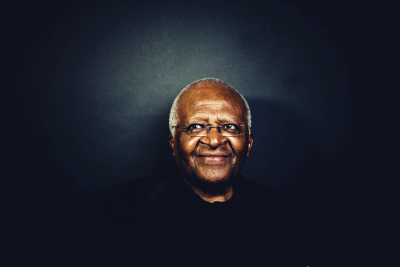
By Lehlohonolo Lehana.
Photo Credit: Stephen Voss.
The Desmond and Leah Tutu Foundation has described Archbishop Desmond Tutu as the embodiment of faith in action and as someone who spoke out against injustices.
“Tutu was a living embodiment of faith in action, speaking boldly against racism, injustice, corruption, and oppression, not just in apartheid South Africa but wherever in the world he saw wrongdoing, especially when it impacted the most vulnerable and voiceless in society,” the foundation said.
This as South Africans woke up to news of Tutu’s passing on Sunday. The anti-Apartheid icon passed away in Cape Town on Sunday.
Mourning a great human teacher – the week ahead
On behalf of the family of Archbishop Emeritus Desmond Tutu, we express our most sincere appreciation to people and organisations across the country and the world for the outpouring of love, respect and condolences that followed the Arch’s passing earlier today.
While arrangements for a week of mourning are still in their infancy, below are a number of confirmed events for the coming week leading to the Arch’s funeral in Cape Town on Saturday 1 January 2022. As additional plans are confirmed these details will be published either by ourselves or the organising institutions.
The bells of St George’s Cathedral will be rung daily for 10 minutes, starting at midday, from Monday to Friday. The Archbishop of Cape Town, Thabo Makgoba, asks all who hear the bells to pause their busy schedules for a moment in tribute to Archbishop Tutu.
On Wednesday, the Diocese of Pretoria and the South African Council of Churches will hold a memorial service in the capital city. (Details to be announced.)
On Thursday evening, the Archbishop Tutu IP Trust and the Desmond & Leah Tutu Legacy Foundation will host an intimate evening with the friends of the Arch and Mrs Tutu. (Details to be announced.)
On Friday, Archbishop Tutu will lie in state in St George’s Cathedral.
On Saturday, Archbishop Makgoba will lead the Archbishop’s funeral service, also at St George’s Cathedral.
Tributes poured in from different quarters.
South Africans remembered anti-apartheid hero Archbishop Desmond Tutu with cathedral bells, flowers and warm words on Monday, a day after he died in a Cape Town nursing home aged 90.
Tutu, a Nobel laureate who had preached against the tyranny of the white minority, was revered by black and white South Africans alike as the nation’s moral conscience.
His passing prompted an outpouring of tributes worldwide, including U.S. President Joe Biden and his predecessors Barack Obama and Jimmy Carter, Britain’s Queen Elizabeth, Pope Francis and the foundation of Nelson Mandela, South Africa’s first Black president and friend of Tutu.
“Fighting for freedom from the trenches of South Africa required courage that cannot be described. Yet he stood resolute and fearless, leading demonstrations cloaked in his flowing clerical robe…,” said Mandela’s widow, Graca Machel.
The bells of St George’s Cathedral tolled for 10 minutes at noon local time on Monday, a homage set to be repeated every day until Friday. Tutu led numerous campaigns and marches against apartheid from St George’s steps.
The Archbishop of Cape Town, Thabo Makgoba, asked all who heard the bells “to pause their busy schedules for a moment in tribute” to Tutu.
Mourners laid flowers outside what is known as the “People’s Cathedral” and a powerful symbol of democracy. Black and white portraits of Tutu were attached to a fence and five condolence books were available for mourners who braved the wet weather.
Former President of the Republic of Liberia, Ellen Johnson Sirleaf, said the African continent has lost an icon with the passing of Tutu.
“…Africa has lost an icon, a father to us all who fought injustice and oppression in all its forms and inspired a generation to strive for a more equal society. May he rest in everlasting peace,” she said.
In a tweet, India’s President Shri Ram Nath Kovind expressed his condolences.
“Deeply saddened by Archbishop Desmond Tutu’s demise. Influenced by Gandhiji, he brought spiritual values to the anti-apartheid struggle and upheld noblest ideals of humanity. His life will inspire generations. Condolences to his followers in South Africa and across the globe,” he said.
Ngidi hails impact of Tutu: ‘He inspired us to stand up for what we believe in’
Proteas speedster Lungi Ngidi said the late Archbishop Emeritus Desmond Tutu inspired people like him to stand up for what they believe in.
The 90-year-old Tutu, who was the bishop of Johannesburg and the Archbishop of Cape Town, died on Sunday after a battle with prostate cancer.
Tutu was a big cricket fan and was often seen at matches before his retirement from public life in 2010.
Ngidi, whose status as an eminent South African went up many notches in May 2020 when he said a conversation should be had on the Black Lives Matters (BLM) movement, said Tutu’s passing was sad news.
President Cyril Ramaphosa arrives at Tutu’s home
President @CyrilRamaphosa arrives at the family home of Archbishop Desmond Tutu to pay his respects. Archbishop Tutu, the last surviving South African laureate of the Nobel Peace Prize, passed away in Cape Town at the age of 90. #RIPDesmondTutu pic.twitter.com/38l4xhxkVg
— Presidency | South Africa ?? (@PresidencyZA) December 27, 2021
No confirmation yet whether the Dalai Lama will attend Tutu’s funeral
There is still no word on whether Archbishop Emeritus Desmond Tutu’s close friend the Dalai Lama will be attending his funeral on Saturday.
The holy spiritual leader had a close friendship with Tutu and in 2016 co-authored a book with him titled “The Book of Joy” examining the quest of joy in a world filled with suffering.
Anglican Archbishop Thabo Makgoba said at a press briefing on Monday that there has been no confirmation whether the Dalai Lama would attend or not.
Tutu to be cremated
Archbishop Emeritus Desmond Tutu will be cremated and his ashes will be interred at St George’s Cathedral in Cape Town.
This was announced by Anglican Archbishop Thabo Makgoba on Monday morning at a press briefing about the funeral arrangements for Tutu, who died on Sunday. Makgoba said Tutu’s funeral would be held at the cathedral at 10am on Saturday, January 1.
Tutu (90) suffered from prostate cancer after being diagnosed with the disease in 1997. He was the last surviving South African laureate of the Nobel Peace Prize.
Every night this week, the City of Cape Town will light up Table Mountain and City Hall in purple – the colour that is so synonymous with The Arch. #CTNews pic.twitter.com/cefqgyyIzV
— City of Cape Town (@CityofCT) December 27, 2021
EU Foreign Policy Chief Josep Borrell
“Desmond Tutu did a lot of good for the world. His legacy of resistance to apartheid and to inequalities lives on in today’s South Africa and for all humankind.”
SAHRC mourns the passing of Emeritus Desmond Tutu
SAHRC Mourns the Passing of Archbishop Emeritus Desmond Tutu, A Pillar Upon Which The South African Constitutional Democracy was Built
The South African Human Rights Commission (the Commission or the SAHRC) joins the rest of the Nation and the world in mourning the passing of Archbishop Emeritus Desmond Tutu.
The man who coined the phrase “the Rainbow Nation” and was affectionately known as “the Arch” has been fighting prostate cancer for roughly two decades, and tragically passed away at the age of 90 on Sunday, the 26th December 2021.
Archbishop Emeritus Desmond Tutu dedicated his life through his faith to the advancement of human rights and remains a pillar of the constitutional democracy we have built in South Africa. Following years of activism against the repression of the Apartheid regime, Tutu was an icon for many black South Africans, a status rivalled only by the Former President Nelson Mandela during the 1980s.
In August 1983, he became a patron of the new anti-apartheid United Democratic Front (UDF). In 1984, Tutu embarked on a three-month sabbatical at the General Theological Seminary of the Episcopal Church in New York, where he was invited to address the United Nations Security Council. He was also invited to the White House, where he unsuccessfully urged President Ronald Reagan to change his collaborative approach to Apartheid South Africa.
In New York, Tutu was informed that he had won the 1984 Nobel Peace Prize. He shared the $192,000 prize money with his family, SACC staff, and a scholarship fund for South Africans in exile, at the time he was the second South African to receive the award, after Dr Albert Luthuli in 1960, and prior to his passing, was the last surviving South African Nobel Peace Prize Laureate.
In 1995, Nelson Mandela, then President of South Africa, appointed Archbishop Desmond Tutu as the Chair of the Truth and Reconciliation Commission (TRC). The TRC received more than 22,000 statements from victims and held public hearings at which victims gave testimony about gross violations of human rights, defined in the Act as torture, killings, disappearances and abductions, and severe ill treatment suffered at the hands of the Apartheid State. The TRC received more than 7 000 amnesty applications, held more than 2 500 amnesty hearings, and granted 1 500 amnesties for thousands of crimes committed during the apartheid years.
In October 1994, Tutu announced his intention to retire as archbishop in 1996. Although retired archbishops normally return to the position of bishop, the other bishops bestowed on him a new title, “Archbishop Emeritus”. A farewell ceremony was held at St George’s Cathedral in June 1996, attended by senior politicians and at the ceremony former President Nelson Mandela awarded Tutu the Order for Meritorious Service, South Africa’s highest honour.
In January 1997, Tutu was diagnosed with prostate cancer.
Post-apartheid, Tutu’s status as a gay rights activist kept him in the public eye more than any other issue facing the Anglican Church. Tutu regarded discrimination against persons in same-sex relationships as being the equivalent to discrimination against black people and women. Tutu also spoke out on the need to combat the HIV/AIDS pandemic, in June 2003 stating that “Apartheid tried to destroy our people and apartheid failed. If we don’t act against HIV-AIDS, it may succeed, for it is already decimating our population.”
In October 2010, Tutu announced his retirement from public life so that he could spend more time “at home with my family – reading and writing and praying and thinking”. Despite this announcement, the Archbishop Emeritus remained in the public discourse and maintained an interest in social issues. In July 2014, he came out in support of legalised assisted dying, later stating that he would want that option open to him personally.
In December 2015, Tutu’s daughter, Mpho Tutu, married a woman in the Netherlands. Tutu attended and offered a blessing, despite Anglican opposition to same-sex marriage.
Archbishop Emeritus Desmond Tutu fought for equality, an equality which gives true meaning to all the rights enshrined within the Chapter Two of the Constitution, the Bill of Rights. He was the embodiment of what a commitment to human rights is and sets an example we all could only aspire toward.
The Commission shares its deepest and most sincere condolences with his family, friends, the nation and the world. May his soul rest in eternal peace.
UCT pays tribute to Archbishop Tutu
Vice-Chancellor Professor Mamokgethi Phakeng has, on behalf of the University of Cape Town (UCT), paid tribute to the late Emeritus Archbishop Desmond Tutu – “a fervent supporter of higher education”.
Tutu visited UCT and other learning institutions often and lent his name to many research-led initiatives at a wide range of universities. At UCT, the Desmond Tutu HIV Centre in the Faculty of Health Sciences reflects his compassion for those who were affected by the disease, and the Nansen-Tutu Centre for Marine Environmental Research in the Science Faculty reflects his love of the environment.
Phakeng said: “We remember Archbishop Tutu not only for his firm, principled stand on issues of justice, human rights and democracy. We also remember him for his infectious smile, unflagging sense of humour and especially his demonstrations of love for his fellow South Africans.
“He taught us to appreciate our own human failings even as we identified ways we need to improve. By sharing his acceptance and love with us, he motivated us to be become better people.
“On behalf of the University of Cape Town, I express to Mrs Leah Tutu and her family our heartfelt condolences. This is a loss we all share and we each need to take the time to process what Archbishop Tutu’s life and example meant to us.”
To honour Archbishop Tutu and his legacy, the university will in the next days be commemorating a life well lived on a dedicated feature page on the UCT website.
“We cannot forget the role he played in focusing world attention on the atrocities of apartheid,” said Phakeng.
Tutu was awarded the 1984 Nobel Peace Prize.
The citation read: “Like his countryman Albert Lutuli, Anglican Bishop Desmond Tutu was honored with the Peace Prize for his opposition to South Africa’s brutal apartheid regime. Tutu was saluted by the Nobel Committee for his clear views and his fearless stance, characteristics which had made him a unifying symbol for all African freedom fighters … Despite bloody violations committed against the black population, as in the Sharpeville massacre of 1961 and the Soweto rising in 1976, Tutu adhered to his nonviolent line.”
In 1986, he was named the first black Archbishop of Cape Town in 1986 and used his unique position to serve South Africans who were treated as non-citizens in their own country.
“His infectious personality helped to attract world admiration for the struggle against apartheid. After South Africa became a democracy, he focused his energy on many different issues to improve the lives of South Africans – most notably on HIV/Aids, but also on projects like the It Gets Better campaign in South Africa, supporting sexual minorities who experience discrimination, and interventions against poverty and inequality,” added Phakeng.
She concluded: “His life signifies what we can achieve when we live by our principles and are fearless in the face of injustice, whatever form it may take. We will miss Archbishop Tutu’s laughter, his wisdom, his sparkling enthusiasm for this wonderful country.
“But he has left us a rich legacy of memories to encourage us to complete his vision for a country that celebrates diversity, that welcomes those who are different, that meets the needs of the poor and suffering. His spirit is so vast that it embraces us all. Let us follow his example, embrace his vision and make it real.”
SASCOC joins in mourning Archbishop Desmond Tutu
The South African Sports Confederation and Olympic Committee (SASCOC) is saddened at the passing of Archbishop Emeritus Desmond Tutu.
In reacting to the news of the death of the 90-year-old anti-apartheid struggle icon, the president of SASCOC, Barry Hendricks, said that the last surviving South African laureate of the Nobel Peace Prize played a huge role in the country’s history, both during apartheid and after re-acceptance to the international community.
“It came as a shock to hear the news,” Hendricks said.
“The Archbishop was an example to all of us how to conduct our lives. He was a principled man who fought for justice and equality and he was a global icon. That we have lost such an influential, respected and acclaimed individual is a sad day.
Hendricks said that on behalf of SASCOC, thoughts and prayers and sincere condolences go out to Tutu’s wife Leah, the Tutu family, as well as he board and staff of the Desmond and Leah Tutu Legacy Foundation, The Elders and Nobel Laureate Group, and Tutu’s friends and associates nationally and all round the world.
US President Joe Biden and First Lady Jill Biden
“On this morning after Christmas, we are heartbroken to learn of the passing of a true servant of God and of the people, Archbishop Desmond Tutu of South Africa.”
“His courage and moral clarity helped inspire our commitment to change American policy toward the repressive Apartheid regime in South Africa.”
US Vice President Kamala Harris
“Archbishop Desmond Tutu was a fervent, vocal opponent of apartheid and committed champion of human rights. He inspired millions, not just in South Africa, but worldwide to stand with those fighting for freedom and justice.”
UK’s Queen Elizabeth
“I am joined by the whole Royal Family in being deeply saddened by the news of the death of Archbishop Desmond Tutu, a man who tirelessly championed human rights in South Africa and across the world. I remember with fondness my meetings with him and his great warmth and humour.
“Archbishop Tutu’s loss will be felt by the people of South Africa, and by so many people in Great Britain, Northern Ireland and across the Commonwealth, where he was held in such high affection and esteem.”
Vatican Telegram
“His Holiness Pope Francis was saddened to learn of the death of Archbishop Desmond Tutu… Mindful of his service to the gospel through the promotion of racial equality and reconciliation in his native South Africa, his Holiness commends his soul to the loving mercy of Almighty God.”
Statement by Jan Bosman, Chief secretary of the Afrikanerbond
Archbishop Desmond Tutu A moral beacon in South Africa’s troubled times.
It is with great sadness that we have learned that Archbishop Desmond Tutu passed away. Our heartfelt condolences to his family and friends, the religious society and also to every South African.
Archbishop Desmond Tutu will be remembered as a moral beacon in South Africa’s troubled history during apartheid, but also as a beacon for a just South Africa in recent years.
For this he must be remembered.
May he rest in peace.
Tutu (90) suffered from prostate cancer after being diagnosed with the disease in 1997. He was the last surviving South African laureate of the Nobel Peace Prize.