
By Lehlohonolo Lehana.
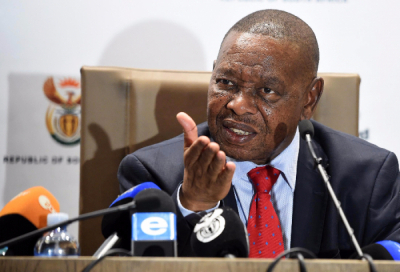
Higher Education, Science and Innovation minister Blade Nzimande has confirmed that government plans an inflation-linked price hike for colleges and universities in South Africa for the 2022 academic year.
In a media briefing on Monday (1 February), Nzimande said this will likely include:
- A CPI increase to a maximum of 4.23% for tuition fees;
- A CPI+2% increase to a maximum of 6.23% on accommodation fees.
“I would like to point out that fee increases are agreed upon in the sector as part of a social compact that has been in place since 2016, the only year when fees were not increased.
“Since 2016, we have worked together with the sector on inflation-linked increases, to ensure that fee increases remain affordable,” he said.
Nzimande said that the long-term stability and sustainability of the Higher Education sector relies in a significant measure on tuition and residence fee income to universities, with the government currently working on a new fee regulatory policy framework.
“It should also be noted that the costs of providing university education continue to increase, and it is therefore not sustainable to consider lower than inflation fee increases.
“Fee increases are necessitated by obvious factors, including, increase in workers’ wages and staff salaries, increase in electricity and water tariffs, rising food prices, books and learning materials, and generally the rise in inflation.
“We recognise that the long-term stability and sustainability of the sector relies on a significant measure on tuition and residence fee income to universities, and we are working on a fee regulatory policy framework.”
Over 1 million enrollments have been received for the 2022 academic year, with first time registrations being projected at 208 299.
Nzimande said he was proud that the system had remained resilient despite the numerous challenges of funding constraints, COVID restrictions and the new forms of teaching and learning that had to be adopted.
“For our university sector, the number of students who de-registered remains low, both for undergraduate and post graduate level. The undergraduate level, the percentage of dropouts was at 2% and for post graduate its at 3%’.”
Nzimande said they had worked well to face the challenges posed by the pandemic.
A special Cabinet meeting on Monday approved changes to the adjusted level 1 regulations.
He said information gathered reported that the country had exited the fourth wave.
“This development means that 2022 is promising to be an academic year less disrupted by lockdowns and restricted access to classes, of course, if no new wave of variants surges again and by the way, we mustn’t also drop the ball; we must continue to uphold the health protocols.”
Growing debt
Data shared by Nzimande shows that student debt has grown in South Africa’s university sector significantly in recent years.
The unaudited data showed that an estimated R6.1 billion was owed by students at the start of the 2021 academic year
Audited accumulated gross student debt as of 31 December 2020 is R16.5 billion. The amount is inclusive of students who have exited the universities with debt.
A survey conducted by the Department in 2021 showed that an estimated 56.2% of students with debt owe less than R10,000; 32.9% owe between R10,000 and R50,000; and 10.9% owe more than R50,000. The survey also showed that NSFAS students owe R5.3 billion.
In addressing matters of student financial aid and student debt, Nzimande said his department is hard at work developing recommendations for a comprehensive student financial aid model for the future.
This model will incorporate the existing funding available from the state and explore alternative funding sources,he said.
“While we are concerned about the long-term sustainability of the fully-subsidised funding for students from poor and working-class backgrounds, we are also concerned about students considered to be in the “missing middle” and the need for more postgraduate funding opportunities.
“In 2021, I appointed a Ministerial Task Team to support the development of a new student financial aid policy and I am looking forward to receiving the report from the MTT in the first half of 2022.”
Nzimane added that his department has already held talks with the Banking Association of South Africa on work that needs to be done to develop a possible loan scheme for students falling outside the NSFAS funding regime.
Livestream Video Below:
Video Courtesy of GCIS.