
By Lehlohonolo Lehana.
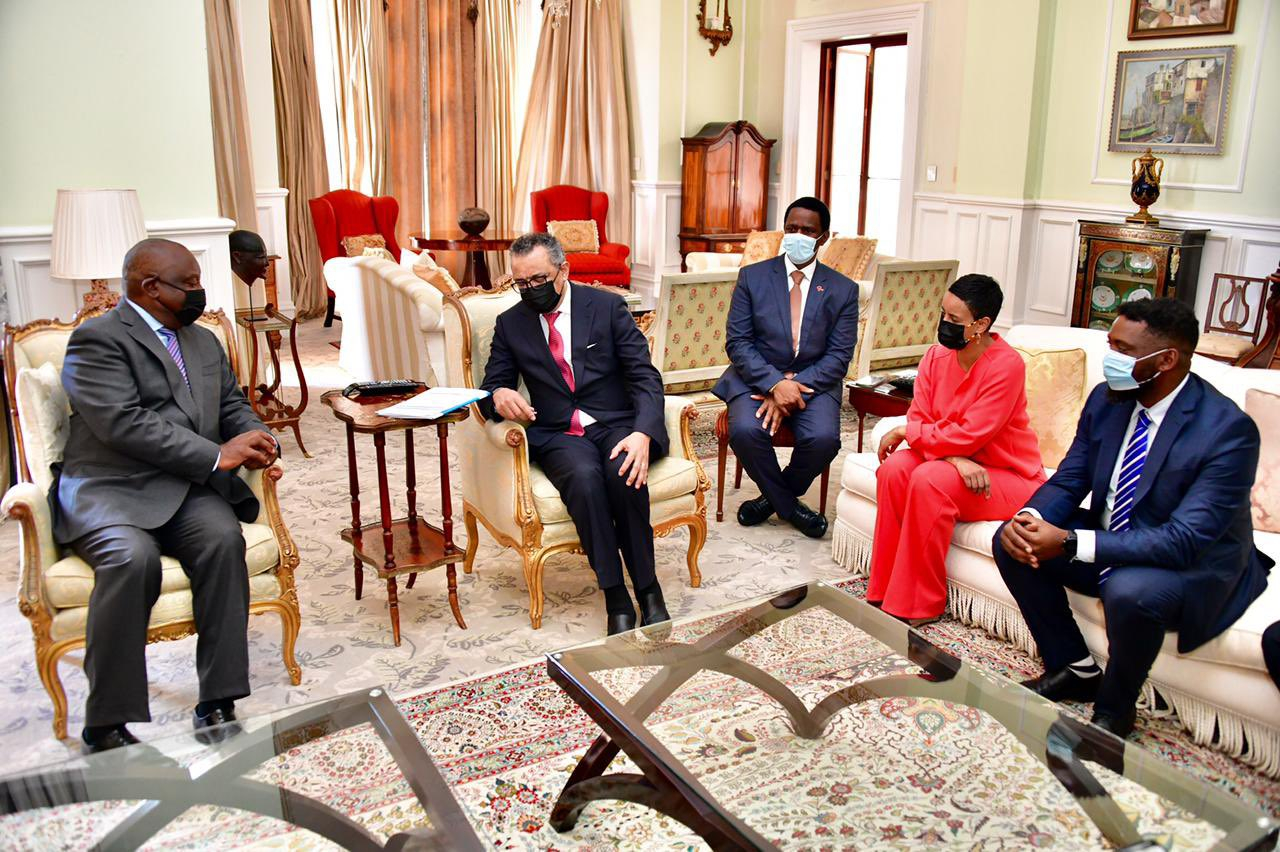
Dr Tedros and Minister Meryame Kitir are on a working visit in South Africa, that focuses on the local production of vaccines and the mRNA tech transfer hub, an initiative of the World Health Organisation. ,supported by Belgium.
The World Health Organization (WHO) has lauded South Africa’s scientific prowess in helping to kickstart the development of a global mRNA vaccine technology transfer hub.
The WHO last year announced South Africa as the host of the continent’s first COVID-19 mRNA vaccine technology transfer hub, set to boost vaccine production capabilities in low to middle-income countries.
Dr Tedros Adhanom Ghebreyesus, Director-General of the World Health Organization (WHO), Buti Manamela, Deputy Minister of Higher Education and Training of the Republic of South Africa, Dr Blade Nzimande, Minister of Higher Education, Science and Technology of South Africa, Dr Joe Phaahla, Minister of Health of South Africa and Meryame Kitir, Minister of Development Cooperation and Urban Policy of Belgium today visited a number of public and private sector partners that are collaborating to develop and build WHO’s global mRNA vaccine technology transfer hub in South Africa.
The mRNA global hub is designed to serve low- and middle-income countries and will empower countries to not only be able to make their own mRNA vaccines but ultimately to have the choice of which vaccines they want to make. Manufacturers from low- and middle-income countries are therefore encouraged to express their own interest so they can receive training, technology transfer and any necessary licenses.
WHO and partners will bring in the production know-how, quality control and necessary licenses to a single entity to facilitate a broad and rapid technology transfer to multiple recipients.
“The pandemic has highlighted the need for increased local production of vaccines globally, especially in low- and middle-income countries,” said Dr Tedros Adhanom Ghebreyesus, Director-General of the World Health Organization. “The WHO mRNA global hub is a major step in that direction, by sharing technology and building on the capacity and scientific expertise that already exists in South Africa.”
Ghebreyesus is optimistic about the success of the project.
South Africa’s efforts to produce vaccines are key to helping the African continent become more self-sufficient in inoculations to combat COVID-19 and many other diseases, the visiting chief of the World Health Organization said Friday.
“More than half of the world’s population is now fully vaccinated, and yet 84% of the population of Africa is yet to receive a single dose,” Tedros said during a press briefing.
Tedros added there was an “urgent need” to increase local production of vaccines in low and middle-income countries.
He was also scheduled to visit the Afrigen lab that, with support from the WHO, is creating a COVID-19 vaccine from scratch.
The laboratory is replicating the Moderna vaccine using mRNA vaccine technology.
The Afrigen facility has backing from WHO and several other partners including the governments of South Africa, France and Belgium.
The initiative is also supported by the Africa Centers for Disease Control and Prevention.
Tedros said it is expected that clinical trials for the vaccine candidate developed by Afrigen would start in 2022 and it is hoped that approval for its use will be granted in 2024.
WHO chief scientist, Doctor Soumaya Swaminathan, has lauded the brisk pace scientists are working.
“This is a testament to the scientific capability in Africa and South Africa that this has happened so quickly and we are very confident, all the partners on board, that this can be expanded,” she said.
Messenger RNA vaccines uses a genetic code to illicit an immune response in people inoculated with the coronavirus jab.
The global hubs will act as training facilities where technology is established at industrial scale and clinical development performed. WHO will compliment this activity and assist other countries in Africa and other low- and middle-income countries to strengthen biomanufacturing capacity as well as regulatory capacity.
Livestream Video Below:
Video Courtesy of WHO.