
By Lehlohonolo Lehana.
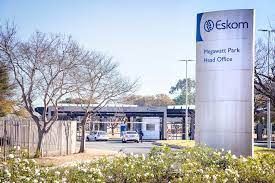
State owned power utility Eskom announced that Stage 4 load shedding was suspended at 08:00 on Sunday.
Spokesperson Sikonathi Mantshantsha said this was due to a recovery in generating capacity and pumped storage dam levels.
However, load shedding will be reinstated at 17:00 – with the stage to be confirmed on Sunday afternoon.
Meanwhile Investec CEO Fani Titi said that poor management, corruption, and the overall failures of Eskom and Transnet would keep South Africa in crisis unless the government makes some difficult decisions.
According to Titi, businesses are being impacted more by the challenges around state-owned entities than by increases in interest rates.
South Africa’s economy is growing at less than 2%, exacerbated by a national power utility like Eskom that is load-shedding at record rates and a national port and freight company Transnet that is facing consistent failures.
“Our problems are not monetary policy management but fiscal policy and the inability of the economy to grow and stop unemployment,” said Titi.
“Interest rates have gone up probably 250 to 300 basis points. We are back to where rates were just pre-Covid. Our clients have been able to conduct business at these rates. More increases are expected, but this will be tolerable in the South African environment,” he said.
“Bigger issues, however, were the macroeconomic reform programmes and the growing challenges around state-owned entities,” he added.
The worst national power cuts on record have plagued 2022, with businesses needing to invest private funds to stay afloat. Grocery giant Shoprite, for example, said buying diesel to keep stores lit costs an extra R100 million a month.
Titi also noted that Transnet is equally detrimental to South Africa’s economy, stating that the freight rail company is becoming a constraint in terms of the ports and rail, said the Sunday Times.
The Minerals Council of South Africa said that the 12-day strike in October strike had cost the mining sector R6 billion a day, compounded on top of the R50 billion already lost by previous failings for iron ore, coal, chrome, ferrochrome and manganese exporters as measured by delivered tonnages against contracted rail tonnages. This compares to a loss of R35bn in 2021.
Domestic supply chain constraints are top of the list for South African CEOs worries. Backlogs caused at the ports and rail systems require between six and nine weeks to clear, stalling business.
Instances of labour action at the company have also been compounded by crime syndicates that take advantage of the system and poor infrastructure.
Titi said that the country is fast running out of time and that the government’s inability to act is debilitating the country.
“As in any difficult situation, there is pain whichever road you take. Our leadership has to make the tough calls now. They need to execute with competence and skill and have the courage to face the consequences of their choices. We cannot continue to drift as we are doing today, “he said.
Titi added that there are several things South Africa can do right now, such as open up the electricity market to the private sector and cut a lot of red tapes so that capacity can be brought online, but this requires the courage to make the right call by the government.