
By Lehlohonolo Lehana.
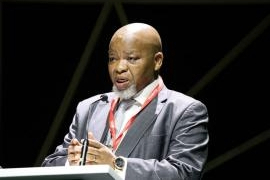
Minister of Minerals and Petroleum, Gwede Mantashe, says government needs to introduce measures to promote the beneficiation of the country’s minerals.
South Africa should not be exporting raw materials, which were beneficiated elsewhere, the minister said during the debate on opening of parliament address on Friday.
Over the years South Africa has seen an increase in raw materials getting exported to different countries around the world. The issue arises when a final product, made from the raw material is later imported back to the country.
Mantashe said the country needed an incentive scheme for beneficiation which could include granting tax holidays for beneficiaters for a limited period of time, taxing exports to discourage the export of raw commodities or the introduction of a commodity-price-linked electricity tariff.
He said his department was drafting a report on the ‘State of Mining’, which would consider several factors such as the contribution of mining to GDP; the performance of the mining sector in terms of production, exploration, exports, sales and prices, as well as trends in these areas; and the challenges facing the industry and the interventions needed to resolve those challenges.
Mining companies are battling a tough financial environment, with rising costs and shrinking profits squeezing their bottom line. This echoes a global trend, but local miners face additional challenges like poor infrastructure and low demand for key metals.
This is according to PwC, who said the global mining industry faced a challenge in 2023 that was both unprecedented and familiar.
The company explained that mining companies need to invest for growth and transformation despite facing a challenging financial environment with rising costs and shrinking profits.
“The financial performance of the world’s Top 40 mining companies was squeezed by falling commodity prices and rising costs, which resulted in revenues falling more than 7% – this despite increases in the production of key commodities.”
The company said these trends will continue in 2024, marking the first time since 2016 that industry revenues will fall for a second consecutive year.
South African mines have also been feeling this pressure, with high labour costs, poor infrastructure and low demand threatening their profitability.
In addition, Mantashe,said gas and oil exploration is critical for the future of South Africa’s economy.
“Our country is endowed with petroleum deposits that are not yet exploited. We appeal to South Africans to appreciate that our quest for exploration of oil and gas deposits is not a nice to have.
“It is important to turnaround the composition of our economy and therefore, that will translate into growth of the economy,” he said.
Mantashe bemoaned what he called “foreign funded NGOs that block exploration of gas and oil”.
“That is blocking economic development and we must confront it and deal with it. That doesn’t mean we are not serious about responsible mining and exploration. We must accept, unreservedly, the need for mining and exploration that is conscious in preserving the environment while accelerating development,” he said.
The Minister said as development and growth takes place, empowerment should not be put on the back burner.
“As we address the question of unemployment and develop a framework for economic growth, we should bear in mind that involving black South Africans in economic activity is not a favour. It is a necessary intervention because for many years…they were not active in economic activity so therefore the question of black economic empowerment and affirmative action is a necessary intervention in the economy, “he said.