
By Lehlohonolo Lehana.
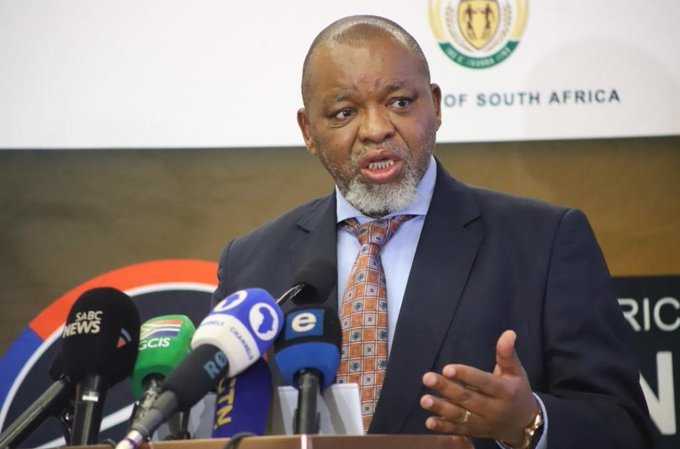
Mineral and Petroleum Resources Minister Samson Gwede Mantashe has outlined government’s comprehensive plan to fortify South Africa’s energy security.
Mantashe delivered the keynote address at the Fuels Industry Association of South Africa Annual Imbizo, which kicked off at the Sandton Convention Centre in Johannesburg on Wednesday.
The minister noted that recent geopolitical conflict in the Middle East had “once again” exposed the risks associated with an excessive reliance on imported refined petroleum products.
“The disruption of global energy supply chains has contributed to increased volatility in international fuel markets and placed pressure on fuel-importing countries, including our own country,” Mantashe said.
He added that existing domestic refining infrastructure currently accounted for only 40% of South Africa’s fuel requirements, with the balance met through imported refined products, stressing the need for restoring additional local refining capacity through the revitalisation of the South Africa Petroleum Refineries in Durban.
Further, Mantashe highlighted that strengthening refining capacity formed part of a broader national risk management strategy aimed at protecting the country from global supply disruptions.
To build long-term, sustainable resilience against external shocks, the department has finalised the draft Strategic Petroleum Stocks Policy, which will be put before Cabinet for consideration.
The policy came about after the department commissioned a comprehensive study on the country’s strategic petroleum stocks in 2024, which identified areas for attention, including the need to strengthen stockholding arrangements and increase domestic refining capacity.
“The policy proposes a mixed stockholding model, under which the South African National Petroleum Company (SANPC), will maintain strategic reserves equivalent to 60 days of net imports in both crude oil and refined products.
“This represents a major step towards strengthening South Africa’s resilience against future supply disruptions, “Mantashe said.
This step is complemented by a firm push to unlock domestic upstream potential with the implementation of the Upstream Petroleum Resources Development Act (UPRDA).
“Whereas the publication of the regulations took longer than originally anticipated, we are pleased to report that the extensive stakeholder submissions have been fully considered, and that the regulations are now ready for publication and implementation.”
“Together, the Act and its regulations will establish a dedicated regulatory framework for the upstream petroleum sector, which is distinct from mining, thereby creating a more appropriate and investment friendly environment for oil and gas development,” the Minister said.
The Minister noted that while conventional fuels will continue to play a role in South Africa’s economy, biofuels remain a major, largely untapped economic and energy resource.
“Within this context, biofuels represent an important opportunity. The development of a sustainable biofuels industry has the potential to support agricultural development, create employment opportunities in rural communities, stimulate new investment, and contribute meaningfully to the reduction of greenhouse gas emissions.”
“We have engaged with the Minister of Agriculture [John Steenhuisen], who has expressed strong support for the biofuels programme. This gives us confidence about the availability of feedstock required to support the industry’s growth,” Mantashe said.
Furthermore, regulations on pricing have also been released.
“The publication of the regulated biofuels price last year marked an important milestone in providing regulatory certainty and creating conditions conducive for investment.”
“We now look to the industry to partner with government in developing this strategic sector and ensuring its long-term success,” the Minister said.
Moreover, Mantashe said LP Gas is a viable alternative as global tensions wreak havoc on prices on paraffin.
“The recent pressure on paraffin prices should also encourage us to accelerate the growth of the Liquefied Petroleum Gas market. LPG offers households a cleaner, more efficient, and often more affordable alternative for cooking and heating.”
“Our mission is to ensure that every South African household has access to LPG as a viable energy option.
“Achieving this objective will require coordinated investment in infrastructure, storage, distribution networks, and market development. Industry participation will be crucial,” the Minister noted.