
By Lehlohonolo Lehana.
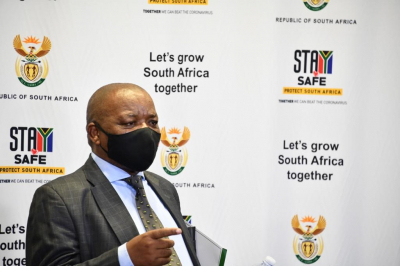
Mineral Resources and Energy Gwede Mantashe says that the international crisis between Russia and Ukraine could lead to higher costs for local motorists.
“We should pay attention to the developments between Western countries and the Russian Federation on the Ukraine matter, in so far as it impacts crude oil prices, “Mantashe said in his debate on the State of the Nation Address address on Tuesday (15 February).
“This could result in huge increases in fuel prices globally and negatively affect local consumers and transport users.”
The Brent Crude oil price has swung wildly this week amid a flurry of reports about the tensions over Ukraine.
While the US had earlier warned an invasion may be imminent, Russian Foreign Minister Sergei Lavrov said Tuesday that diplomatic efforts would succeed in easing the situation. Moscow has repeatedly denied it plans to attack.
The underlying oil market is one of the strongest in years. S&P Global Platts assessed the Dated Brent price, which values more than half of the world’s crude, at more than $99 a barrel on Monday, traders said.
Gauges of market strength along the futures curve are trading at some of their firmest levels on record as supply struggles to keep pace with booming demand.
South Africa’s local petrol price is heavily weighted based on international oil prices and the buying power of the rand, with the rising crude price pushing petrol 95 above the R20/litre mark once again at the start of February.
Experts warned that prices would continue to rise with records broken almost daily, amid fears that a Russian invasion of Ukraine could have a knock-on impact on supply.
Mantashe also criticised BP South Africa and Shell Downstream South Africa following the recent announcement they will pause operations at South African Petroleum Refineries (Sapref) in Durban by the end of March 2022.
The two shareholders of the refinery will implement a spending freeze and pause refinery operations at Sapref no later than the end of March 2022 as they will attempt to find a buyer for the refinery. The decision comes after consultation with the government, unions, and Sapref employees.
“The greed and arrogance of certain petroleum entities that want to shut local refineries and import the product, something that will cause job losses to our people, cost our economy dearly, and lead to uncertainty of supply.
“For our national and economic security, we are taking drastic measures in this regard,” Mantashe said.
Mantashe also took a swipe at the DA for being engaged in a “polarised energy debate”, particularly on the question of transition from high carbon emission to green energy.
He said the DA had no clue what they were talking about and had limited knowledge on the subject matter.
Mantashe said the transition from carbon emissions would take time.
“There is nothing called instant energy. It is not coffee you just mix with water and drink. You build the infrastructure and it takes years and you connect to the transmission.
“The 2,600 megawatts from renewable energy was announced in October and we are hoping they will start connecting. It does not mean there will be 2,600 megawatts next week. It means building the infrastructure to connect the 2,600 megawatts has started.”
Mantashe added that over the next two months, the department will finalise power purchase agreements that are set to address the country’s energy shortfall.
“Next month and in April, we will conclude the power purchase agreements for 2 000MW Risk Mitigation Independent Power Producer Procurement Programme (RMIPPPP).
“The challenge is that, not all of the RMIPPPP preferred bidder projects may be in a position to conclude power purchase agreements due to outstanding processes on their side,” he said.