
By Lehlohonolo Lehana.
Deputy President Paul Mashatile has called on communities to actively participate in interventions to combat stigma, discrimination, and human rights violations affecting people living and affected by HIV/AIDS.
The theme for 2023 is Let Communities Lead, and it’s intended to shine a light on the crucial role of communities and their leadership in the fight against HIV and Aids.
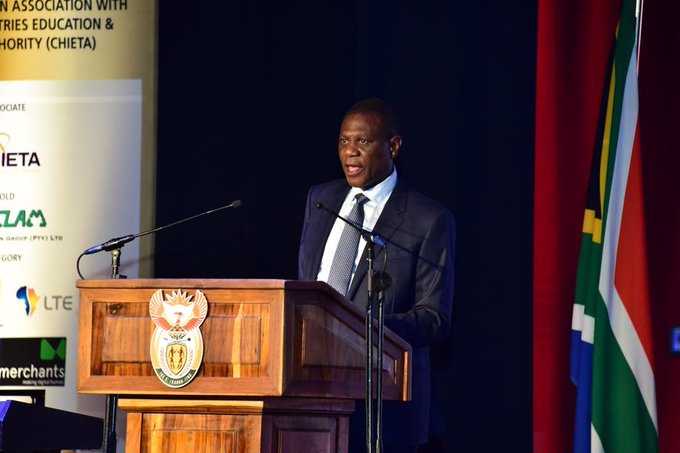
Mashatile was speaking at the official commemoration of World AIDS Day as Chairperson of the South African National AIDS Council (SANAC). The event was held in Mandeni in KwaZulu-Natal.
He described the 1 December as an opportunity to strengthen unity to fight against HIV, support those living with HIV, and remember those who succumbed to AIDS-related illnesses.
“Our combined strengths can help us achieve the goal of eliminating HIV/AIDS and tuberculosis as public health threats.”
The Deputy President believes active civil society has also led to significant progress in the prevention, treatment, care, support, and outreach for the vulnerable.
“An additional area that necessitates strong oversight from civil society is the pervasive problem of gender-based violence and femicide, the correlation of which is universally recognised with HIV.”
However, he said he was encouraged by the Takuwani Riime Men’s Movement for its commitment to establish the men’s community parliaments in every village, township, suburb, and community in South Africa.
“This movement seeks to mobilise men and boys to stand up and be counted in the country’s efforts against mental health in men, gender-based violence and femicide (GBVF), new HIV infections, and toxic masculinity, and for men to be drivers of the positive socialisation of the boy child.”
He also rallied communities to hold hands with government to eradicate patriarchy, economic inequality, insensitive social norms, and harmful cultural practices.
Gender-based violence, according the Deputy President, was detrimental to the state’s efforts towards the achievement of the global Sustainable Development Goals and National Development Plan.
Survey
He also touched on the recently published sixth South African National HIV Prevalence, Incidence, and Behavioural Survey by the Human Sciences Research Council (HSRC).
The research found that 7.8 million people are living with HIV in South Africa, a decrease from 14% in 2017 to 12.7% in 2022.
“While the results clearly show that the prevalence of HIV is declining, there are some worrying patterns regarding the age group between 25 and 49 years.”
Meanwhile, among females, HIV prevalence was highest in ages 35 to 39 years at 34.2% compared to 27.1% in males aged 45 to 49 years.
The country’s second-in-command also raised concerns about the increased incidence of HIV infection among girls between 15 to 19 years old.
“It is an indication that older men engage in unprotected sexual activities with girls and young women. We must take extraordinary measures as a society to protect kids against immoral predators. We must ensure that children have a safe environment to discuss the issues influencing their sexual conduct and the pressures they are under.
“We must stand with them and educate them about their rights and sexual health,” he stressed.
Government is also worried about the lack of access to treatment by HIV-positive children, young people, and men.
The survey indicated that among those aged 15 and older living with HIV in South Africa in 2022, 90% were aware of their status, 91% of those aware of their status were on antiretroviral treatment (ART) and 94% of those on ART were virally suppressed.
He told the community the state’s primary objective as a government is to integrate all facets of an individual’s healthcare into a unified system, ensuring that everyone consistently gets quality medical care.
“Another game-changer in our progressive treatment literacy efforts is the integration of the undetectable equals untransmittable (U=U) concept into our policy framework.”
This means that if a person takes their treatment consistently without fail, they will achieve ongoing viral suppression until the level of the virus drops to below 50 copies per millilitre.
“However, we advocate for safe sex since being undetectable will not prevent you from passing on a sexually transmitted infection to your partner or having an unplanned pregnancy.”
Stigma
Shifting his focus on stigma and prejudice, he said this can be as traumatic as the illness itself.
This, he said, could lead to partner or family rejection, social marginalisation, school expulsion, denial of medical services, a lack of care and support, and violence.
“We encourage our community leaders to engage our communities in order to alter societal attitudes and customs, some of which are influenced by our upbringing.”
Global Alliance
Mashatile officially launched the South African Chapter of the Global Alliance to End AIDS in Children by 2030, led by his wife, Humile Mashatile.
“We are concerned with HIV treatment gaps in children. Children living with HIV aged 15 years and below are left behind in the global HIV response when compared to the general population,” he said.
Globally, he said only 52% of children who are living with HIV are on lifesaving treatment, compared to 76% of the adult population.
According to the Deputy President, this results in children accounting for 15% of AIDS-related deaths on an annual basis despite that 4% of people living with HIV are children.
He said stigma, discrimination, punitive laws and policies, violence, and gender inequalities in Eastern and Southern Africa remain some of the barriers that hinder access to treatment, care, and support for women, girls, and children.
“Unfortunately, South Africa has the largest population of children living with HIV in the world, and as of June 2023, our treatment coverage for children is alarmingly low, coming in at 67%.”
He said the data raises concerns and emphasises the urgent need for increased efforts and resources to guarantee that every child who is HIV-positive receives the care and treatment they require.
In response to this challenge, government is working with the Joint United Nations Programme on HIV and AIDS (UNAIDS), by coordinating United Nations (UN) agencies including the United Nations Children’s Fund (UNICEF) and the World Health Organisation (WHO).
The other partners include the United States President’s Emergency Plan for AIDS Relief (PEPFAR) and the Global Fund, together with civil society, in establishing the Global Alliance to end AIDS in Children by 2030.