
By Lehlohonolo Lehana.
South Africa, Nigeria and Gabon voted for a UN Security Council (UNSC) resolution which led to the killing of Libyan leader, Muammar Gaddafi, says former president Thabo Mbeki.
The three countries were then members of the UN Security Council (UNSC).
This resolution, adopted in February 2011, authorized the use of force to protect civilians in Libya from imminent attack, and allowed for a no-fly zone over the country.
Gaddafi was killed in October 2011, during the Libyan Civil War, after being captured by rebel forces.
The UNSC is the premier global body for maintaining international peace and security, but it faces steady calls for reform to better meet twenty-first-century challenges.
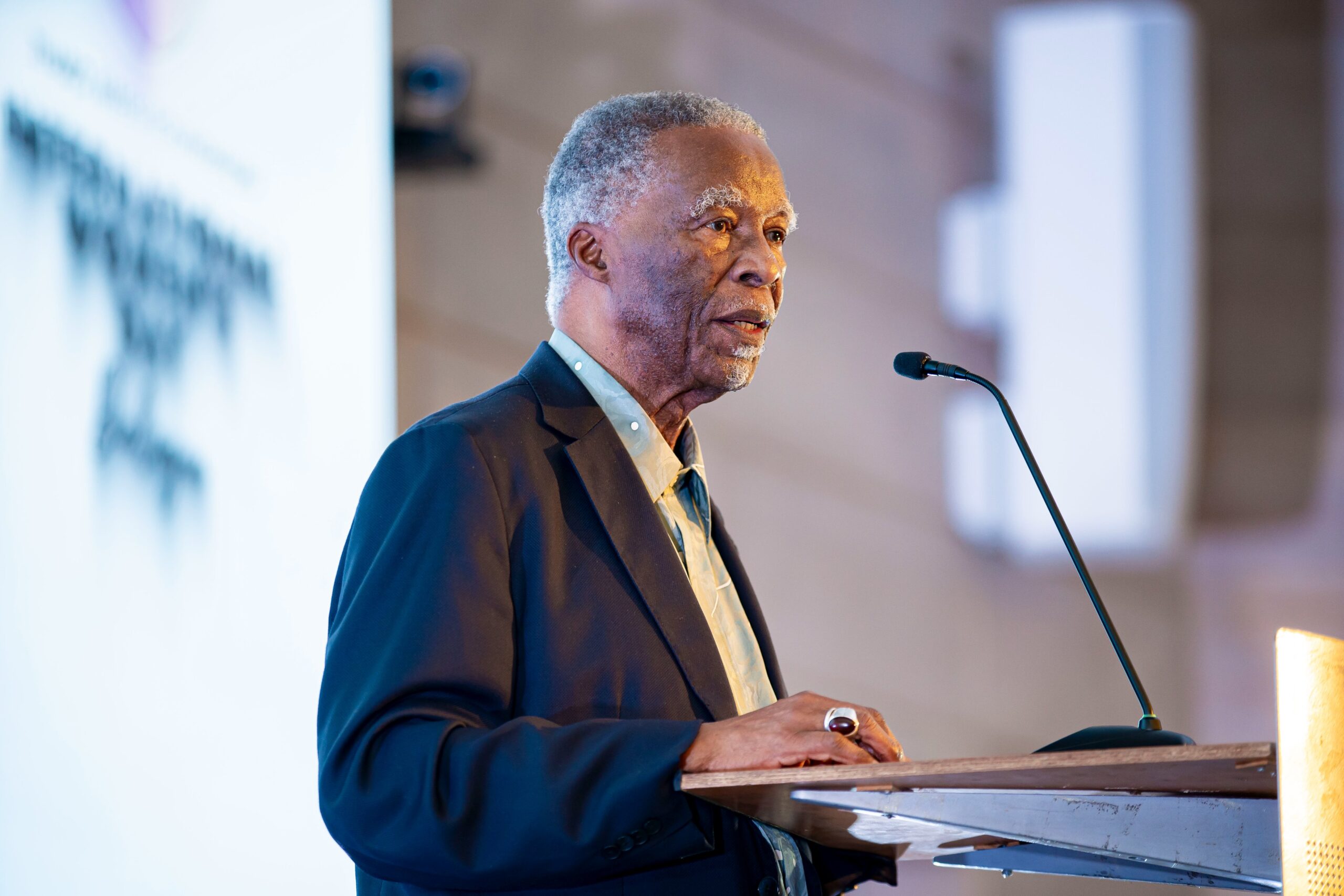
Mbeki was speaking ahead of the Thabo Mbeki annual lecture in Dar es Salaam, Tanzania.
The Thabo Mbeki Foundation, in collaboration with the Tanzanian government, has organized the lecture at the Julius Nyerere International Convention Centre.
The lecture is expected to focus on discussions surrounding the future of the African continent. The event will bring together a diverse group of participants, including scholars, government officials, retired leaders, youth, and representatives from the private sector.
Mbeki paid a deeply symbolic and historic visit to the Mazimbu site — a location that once served as a sanctuary for South African liberation fighters during the height of the apartheid struggle.
Mazimbu, situated just outside Morogoro town in Tanzania, was a vital base for the African National Congress (ANC) in exile and a place of refuge, education, and political training for thousands of South Africans who had fled the brutal oppression back home.
Mbeki sharply criticised “the misuse of the UN Security Council to engage in militarised diplomacy to effect regime change in Libya”.
He said, “When the Security Council met to discuss the resolution on Libya, the South African ambassador – was a temporary member of the Security Council at the time – ran away because his instruction from his boss in South Africa had been to vote in favour of the resolution. So, he went and hid himself and the US ambassador at the Security Council looked for him.They found him and they took him physically into the UN Chamber so that he must vote for this resolution, which he did, to destroy Libya.”
The assertions that the AU depended on Libyan money to ensure its survival were false and was yet another fabrication, said Mbeki.
“The (UN Security Council) Resolution (on a no-fly-zone) said nothing about regime change. However the fact of the matter is that the Nato actions had everything to do with the overthrow of the Gaddafi regime”.
The AU had in fact adopted a roadmap for the negotiated resolution of the conflict in Libya “Ignoring the AU”.
To all intents and purposes the Security Council ignored the AU decision and later blocked the AU Panel on Libya from flying into the country to begin the process of mediating a peaceful resolution.”
“Libya is an African country. In addition to this, in terms of international peace and security, the conflict in that country has impacted and will continue to impact directly and negatively on a number of African countries.”
The former president has called on Africans to continue working together for the development of the continent, and also to grow its economy.
Mbeki’s predecessor Jacob Zuma then criticised Nato for “misinterpreting” Security Council – which South Africa supported – to try to oust Gaddafi rather than just protect civilians.
“He also said that Nato had caused unnecessary bloodshed by continuing to drop bombs on Libya after the AU had asked it to stop to allow the AU Roadmap to take effect. He insisted that the road map, which he failed to persuade either side to adopt, “still has room in the situation right now.”