
By Lehlohonolo Lehana.
The Department of Arts, Sports and Culture (DSAC) has set aside R82 million to procure Video Assistant Referee (VAR) technology for top-tier football in South Africa.
VAR has been implemented in over 50 leagues worldwide, and other African countries, such as Algeria, Egypt, Tanzania, and Morocco, are already using it.
According to the department, the funds will cover referee training, stadium readiness, and the creation of a dedicated VAR Training Centre – all crucial steps in bringing the technology to the Premier Soccer League (PSL).
Part of the budget will also be used to improve connectivity at stadiums, which the department said would support VAR operations and strengthen safety communication systems.
SAFA has already published a Request for Proposals (RFP) for VAR technology and received responses from service providers. SAFA has also appointed a VAR Project Team and re-engaged the PSL to coordinate the system’s rollout.
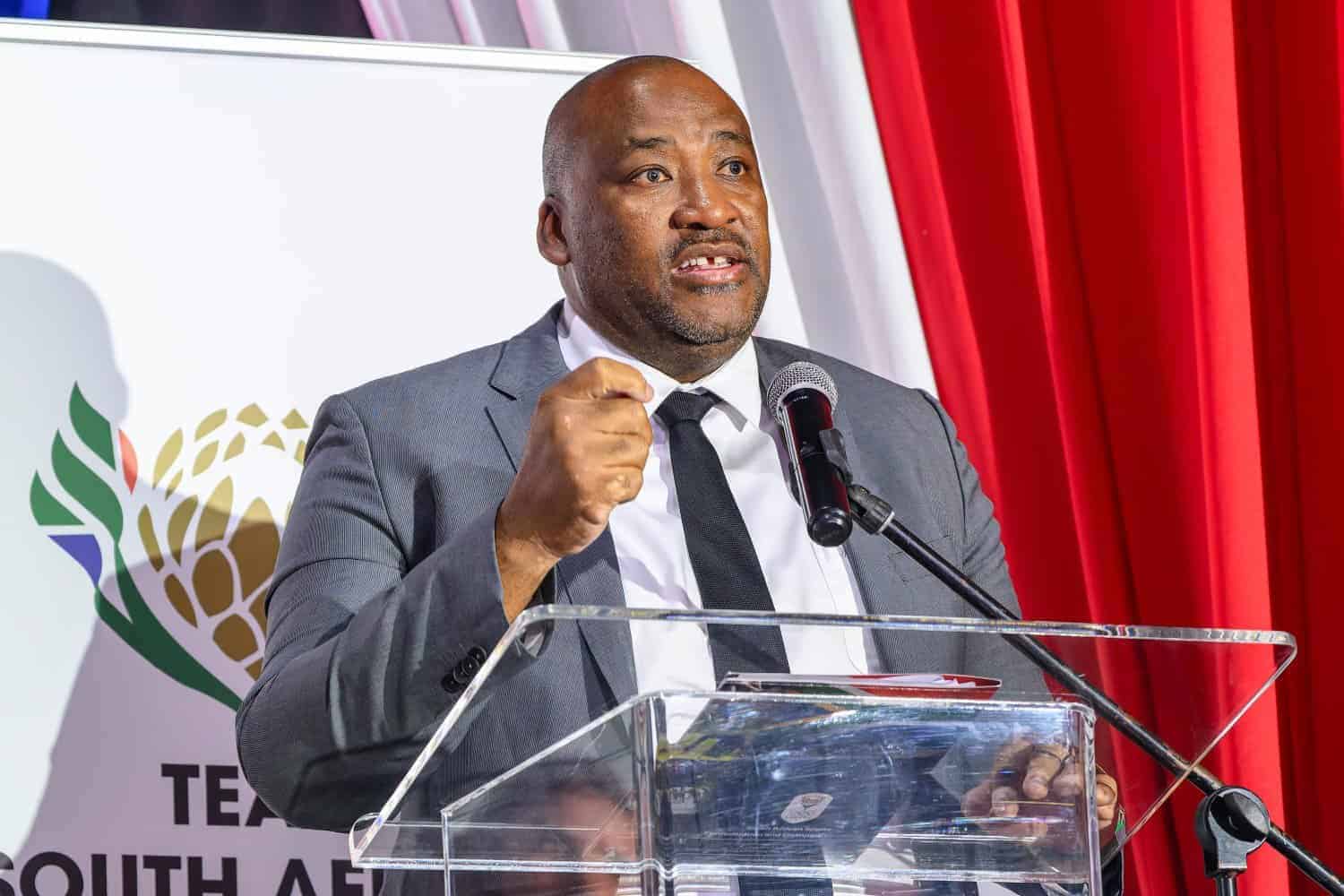
Minister of Sport, Arts and Culture Gayton McKenzie said the allocation was intended to ensure the project moves forward within the current financial year.
“We commend SAFA’s dedication to this process and their prioritisation of transparency and FIFA compliance. These measures will contribute to the rollout of VAR, enhancing the integrity and quality of domestic competitions,” McKenzie said.
The initiative forms part of broader government efforts to align South African football with international standards.
While it is designed to maintain a higher standard of officiating in matches and is used in cases of potential goal-scoring opportunities and red cards, VAR has been a source of controversy.
One point of criticism is how the technology affects the emotions experienced by fans, with a goal often being allowed or disallowed by a referee, only for the decision to be overturned by VAR.
This was one of the considerations when the International Football Association Board (IFAB) decided to begin VAR testing in 2016.
“The initial testing will deliberately have a limited focus to minimise the impact of the flow and emotions which are crucial to football,” said IFAB technical director David Elleray.
Following testing in leagues worldwide, such as the Australian A-League and the Dutch Eredivisie, VAR was approved for use in early 2018.
This allowed the technology to be used at the 2018 FIFA World Cup in Russia, where it was called upon 335 times in the competition’s group stage — seven times per match.
VAR then underwent testing in the English Premier League the following season, with clubs unanimously voting to fully implement it in the 2019/20 season. Data released by the Premier League shows that the rate of correct refereeing decisions has improved from 82% to 96%.