
By Lehlohonolo Lehana.
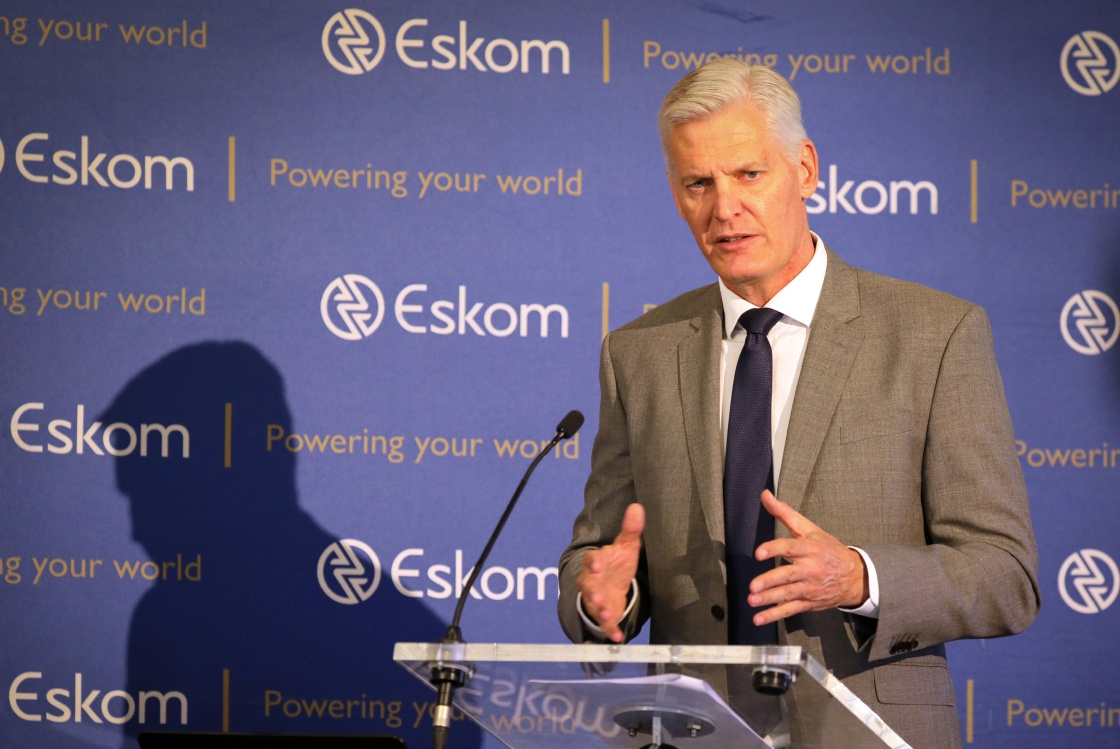
André de Ruyter has resigned as CEO of state power utility Eskom amid South Africa’s worsening power supply crisis and fragile electricity grid.
De Ruyter’s resignation comes at a time when South Africans are moving between Stage 5 and Stage 6 power cuts.
This led to multiple calls for de Ruyter to step down.
At the time of writing, no formal communication was issued by Eskom but they have since released the statement, that read as follows:
“André de Ruyter, who resigned as Eskom chief executive earlier on Wednesday, has agreed to stay on until 31 March 2023 as the embattled utility seeks his replacement.
“De Ruyter has agreed to stay for an additional period beyond the stipulated 30-days’ notice to ensure continuity while we urgently embark on a search for his successor,” said Eskom chair Mpho Makwana. The Eskom board denied speculation that Makwana would become interim CEO.
In a statement, De Ruyter said was an honour and privilege to serve Eskom and South Africa. “I wish all the hard-working people of Eskom well.”
“On behalf of the Eskom Board, executive and the entire Eskom staff, I thank De Ruyter for his extraordinary service to the people of South Africa. I also thank De Ruyter’s family for supporting the Group Chief Executive during the tumultuous period,” said Makwana.
“André has carried an enormous burden on behalf of South Africa, I want to thank him for his sacrifice and resilience in a difficult job,” Public Enterprises Minister Pravin Gordhan said in a statement.
Fullview learned that De Ruyter’s resignation could lead to the departure from Eskom of a number of other senior executives and engineers. Jan Oberholzer, De Ruyter’s number two and the chief operating officer, will also retire in April 2023.
This follows public attacks on him led by Mineral Resources and Energy Minister Gwede Mantashe, and DPE minister Pravin Gordhan’s and President Cyril Ramaphosa’s subsequent failure to publicly support him and his management.
“Any other government can be overthrown for this level of load shedding. Eskom, by not attending to load shedding, is agitating for the overthrow of the state. If it is not addressed, then the state will be failing to do what it needs to do … load shedding is urgent; it must be attended to sooner than later,” said Mantashe.
“We’re engaging with Eskom more aggressively and telling them to get investment into the grid as quickly as possible … energy is always used as a factor that attracts investment into the economy.”
De Ruyter has previously said that corruption, mismanagement, and lack of skills, maintenance and sabotage, have brought the power utility to its current state.The year 2022 has also seen the worst levels of load shedding.He also said that the lack of capacity left the utility’s management with little room to do the necessary work to end the load shedding.
Eskom has repeatedly said that the dire state of its aging coal fleet means that breakdowns will increase, and that maintenance cannot be postponed. The government has, however, dragged its feet to install additional generation capacity.
According to Bloomberg, the rand gave up some gains after the De Ruyter news broke and was 0.3% stronger at 17.1823 to the dollar by 16:20.
Yields on Eskom bonds due 2028 without a government guarantee reversed an earlier drop, to rise 2 basis points from their closing levels to 11.2%. Yields on the company’s dollar debt due 2025 climbed 7 basis points to 11.4%.
Reaction
The National Union of Metalworkers of South Africa (Numsa) said it was “overjoyed at the news that the worst CEO in the history of Eskom’s existence, has finally decided to do the right thing and resign”.
“We demand that whoever replaces Andre De Ruyter must have an engineering background, and, must also work for Eskom, so that that person can understand all the technical aspects of this business. Eskom is not like any other company, you need a technical expert who, at the very least, must understand the difference between good quality coal and bad quality coal. This was a concept which was way over De Ruyter’s head,” General Secretary Irvin Jim said in a statement.
DA MP Ghaleb Cachalia said De Ruyter was “sacrificed at the altar of politics”
“André de Ruyter’s apparent sudden resignation as the CEO of Eskom is a reflection on Gwede Mantashe’s relentless campaign against a man who despite having one hand tied behind his back as he battled to get the utility on track – fighting corruption, debilitating policies and political interference – conducted a dutiful and responsible effort at the discharging of his duties.”
Cachalia said Gordhan was “powerless in the face of Mantashe and many in the RET faction who have been baying for his blood”.
Trade union Solidarity:
The resignation of André de Ruyter will deepen the Eskom crisis and not alleviate it. The wrong person has resigned. The problem at Eskom is not the operational will of the chief executive, but the political will of the government.
Business Unity SA CEO Cas Coovadia said De Ruyter’s resignation was a “major blow for Eskom and the efforts to address the energy crisis we are facing on an ongoing basis”.
“While this is a blow, it is hardly surprising, given the irresponsible comments by some in govt and some other sectors. The Eskom board must act with urgency to announce a replacement, even if on a temporary basis,” he said in a statement.
Kenneth Creamer, an economist from Wits University said in reaction to the news that “those playing politics with Eskom are making it weaker”.
“We need structural solutions to solve our electricity crisis and bring an end to load shedding,’ he said.
Creamer said those solutions would include “dealing with state capture and corruption, investing in new grid capacity, facilitating rapid new generation investment mainly in solar and wind, improving plant maintenance and performance, retiring end of life plant, restructuring Eskom in line with technology changes and global energy transition, putting in place wheeling policies, dealing with regulators, managing debt relief and securing more and affordable financing for transition-related investment, including concessional loans and grants available under the Just Energy Transition Partnership”.