
By Lehlohonolo Lehana
Civil society, businesses, and political parties are not convinced with President Cyril Ramaphosa’s State of the Nation Address (SONA).
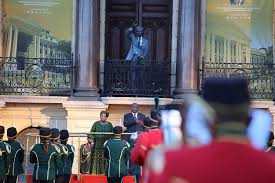
Ramaphosa addressed a joint sitting of Parliament on Thursday evening as he delivered the State of the Nation Address at the Cape Town City Hall.
Proceedings were disrupted by the Economic Freedom Fighters, who were subsequently ejected from the sitting, and the president delivered a speech touching on all the expected points: the power crisis, economic growth, poverty, and promising a better life for all.
The stand-out announcement from the address was the declaration of South Africa’s energy crisis as a national state of disaster. However, even this was broadly expected, after the ANC last week indicated that this was the path it was going to take in government.
The rest of the address was littered with information South Africans are already aware of (there is an energy crisis; there is a plan to deal with the energy crisis; the plan is not happening any time soon), and ultimately painted a bleak picture for the state of the nation, with a hopeful message that the country will rise up to meet the challenges.
Broadly, the SONA:
- Emphasised the risk that insufficient energy supply poses to growth and investment in the economy.
- Noted the need to arrest the deterioration in basic service delivery rolled out from defunct municipalities.
- Acknowledged the widening trust deficit between itself and other key stakeholders in the economy as is evidenced by slow progress in socioeconomic development.
- Highlighted the shortcomings of law enforcement agencies which have led to a rising level of lawlessness in the country.
- Confirmed the continuation of the social relief of distress (SRD) grant.
- Underlined the poor performance of the country’s municipalities and offered up interventions to improve professionalism in public service.
Nothing new, but maybe some hope
Business Leadership South Africa (BLSA) is of the view that, even though the SONA delivered very little in the way of new measures to drag the country out of the doldrums, it is hopeful of the progress being made.
As is a recurring theme among responses, BLSA does not believe that a state of disaster is the way to go in dealing with the energy crisis – however, contrary to the pessimism expressed by others, the business group said that the declaration could actually help, if used correctly.
The group also had a more moderate view of having another minister in charge of electricity. It said that it is encouraging that Ramaphosa sees the urgency to have direct involvement with oversight of the crisis through the presidency.
“If used responsibly and effectively though, the state of the disaster, along with the new electricity minister driving the energy reforms, do offer hope of faster implementation of the measures needed to end load-shedding in the short term and secure our energy supply over the longer term through increased generation capacity,” it said.
BLSA was also broadly supported of pro-business measures like the futher cutting of red tape, the promise of helping to ease the burden on small businesses, and the repeat of the promise to address the country’s skills crisis through the visa regime.
More empty promises
According to civil action group Outa, the president’s speech missed the mark, and delivered only more empty promises.
“The President’s State of the Nation Address failed to inspire confidence. He acknowledged many of the problems but did not offer believable solutions. He offered many promises, many of which we’ve heard before,” the group said.
“It would be wonderful if all these promises were realised or even underway. The President sought to inspire hope, but he succeeded in reminding us how bad the situation really is. His address confirms the country has been poorly managed for too long.”
Like many others in the country, Outa took exception to the declaration of a state of disaster over the energy crisis. The prevailing view regarding this is that none of the measures needed to address the ongoing power crisis require the extreme measure of giving those in government extraordinary powers.
“We do not believe that a state of disaster will cure the government’s inability to address the crisis. It will not make previously inept officials and ministers suddenly competent and willing to do their jobs,” Outa said.
An act of desperation
The Democratic Alliance was one of the first groups out the door with a reaction to the SONA, vowing to challenge the declared state of disaster in court.
The party said the speech reeked of desperation, and the extreme measures taken underlined exactly that.
The DA said that the state of disaster would be abused by politicians and open the country up to further corruption and looting, and it also pushed back against adding yet another minister into the mix.
This sentiment was echoed by the union Solidarity, which intends to launch its own legal challenge along the same lines.
The DA also raised concerns about the further centralisation of power within the presidency, alluding to the president setting up a second cabinet in government that lacks parliamentary oversight.
“Instead of decentralising control and trusting in the market mechanism, Ramaphosa has opted to centralise even more power in his own Super Presidency – which lacks democratic oversight mechanisms, with Parliament lying in ruins and the Presidency having no portfolio committee to oversee it,” he said.
“More centralisation and less accountability is exactly the opposite of what South Africa urgently needs right now.”
The rest of Ramaphosa’s address was characterised by delusion, the party said.
“He talked of electric cars in a country that does not have electricity. He talked of hope in a country that has lost all hope.”
ActionSA to consider legal action
ActionSA leader Herman Mashaba has accused President Cyril Ramaphosa of centralising power in his office, following the announcement of yet another appointment in the Presidency to deal with electricity blackouts.
“He is trying to consolidate all the powers – intelligence, small business – and now he has announced a minister of electricity.
“Millions of our people are unemployed and he creates another department that is not going to add value. We will be talking to our legal team tomorrow morning to challenge these draconian and irrational decisions before it’s too late.
“We do not want to see another Zimbabwe emerging while we sit and do nothing about it, “he said.
IFP and Freedom Front Plus – No need for Minister of Electricity
Inkatha Freedom Party (IFP) president Velenkosini Hlabisa described Ramaphosa’ Sona as “long-winding, with new promises but no action plan.”
“What is clear though is that he passed a vote of no confidence in [Mineral Resources and Enegry] Minister Mantashe and Gordhan [Public Enterprises].
“But we do not need a new minister of electricity because tomorrow we will have a new ministry for potholes, for pit toilets…we don’t need that. We should not create more ministries causing more expenditure. Use what you have to fix the problem,” said Hlabisa.
Freedom Front Plus leader Pieter Groenewald slammed the creation of a new ministry, saying Ramaphosa didn’t say anything new in his speech.
“It appears he took the last six Sona speeches and cut and paste them to come up with another speech. Nothing has improved for Eskom since he took over as President, in fact, it has gotten worse.
“And how many times must we hear about plans to create jobs when that never happens? The unemployment rate keeps rising every year.”