
By Lehlohonolo Lehana.
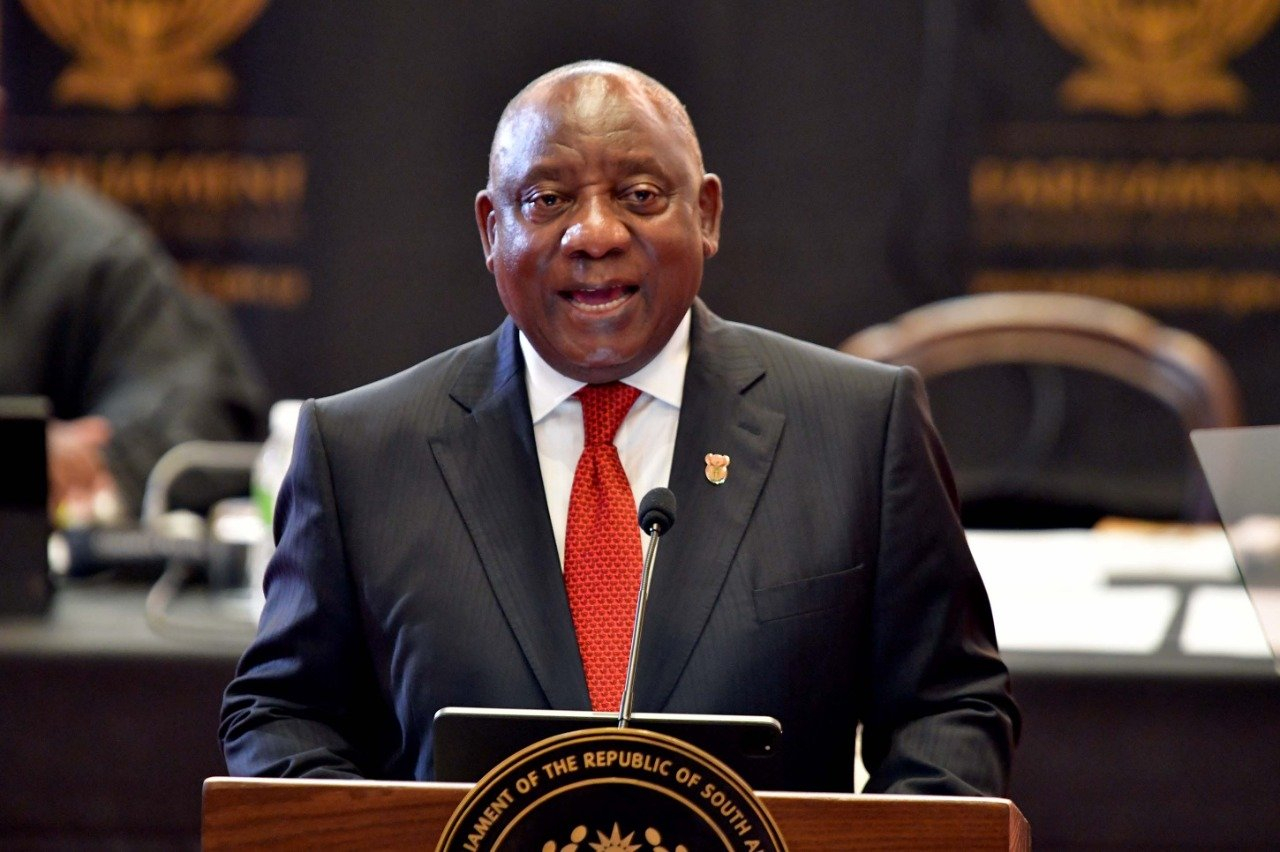
President Cyril Ramaphosa delivered his 2022 state of the nation address (SONA) on Thursday evening (10 February), looking to inspire the country with words of hope and deliver a plan of action to get the country’s economy moving again.
The speech ran for 110 minutes and touched on a number of major topics including the current state of disaster, power woes including load shedding, the unemployment crisis, corruption, social unrest, and the revival of the economy.
Given the length and breadth of the president’s speech, the response to his address has been suitably mixed.
Many lauded the detail given to some of the plans to address the country’s energy crisis and open up the market by reducing red tape for small businesses. However, others have shrugged off or outright dismissed the repeated promises of reform and anti-corruption speak.
A common thread among the responses is that the speech hit a lot of high notes and said the right things, but is tempered by the reality that many of the promises made have been made before – with little in the way of delivery.
The president’s speech contained a few oddities including the following claim: “We all know that government does not create jobs. Business creates jobs.” He then immediately announced an expanded state jobs programme.
You can read the full SONA 2022 speech here.
These are some of the key reactions to the speech:
Business Unity South Africa (Busa) CEO Busi Mavuso called the speech a missed opportunity for the president to show that he is moving with the urgency and vigour needed to reform the ailing business sector.
She said that businesses had hoped for a ‘big bang’ announcement to address blockages in the rollout of infrastructure or to speed up already agreed-upon policy changes.
“The last such (big bang) moment was when the president intervened to ensure the cap for energy self-generation without a licence was raised to 100MW – not the 10MW limit that energy minister Gwede Mantashe wanted to impose.
“That was a breakthrough moment in liberalising the sector which generated much optimism that the government was serious about getting the economy on a strong growth path. Unfortunately, much of the momentum and goodwill generated by that move has dissipated as other areas of the energy reform process are being held up for no specific reason,” she said.
Civil action group, Outa, said the president’s speech hit many of the right notes, but continues to lack credibility due to the government’s failure to make good on its promises. Especially when it comes to dealing with corruption. “We are tired of promises of future action, “the group said.
“We are still waiting for accountability against ministers who failed South Africa during the July 2021 riots, and those linked to state capture. Let this not be the era of blaming all state failures on the state capture gang of the Zuma administration and an ongoing failure to act decisively.”
The group said that the speech contained many excellent statements and ideas, but these will take significant resources to implement.
“We need to see these reflected in the Budget later this month. Ample resources are necessary for law enforcement, specialised anti-corruption units, courts and prosecutors if these promises will come to fruition,” it said.
Labour federation Cosatu said the address spoke to the usual common issues — it took on board the R350 grant matter, and the National Health Insurance (NHI) — but was not radical.
We are worried. They say the crisis is deep. But we don’t have a sense of urgency to arrest the disintegration, to reverse it,” Cosatu Parliamentary Liaison Matthew Parks.
Nedbank says the most encouraging message from this year’s State of Nation Address (SONA) was the unequivocal affirmation by Ramaphosa that the private sector drives job creation.
In a research note on Friday (11 February), Nedbank said that this message will be welcomed by both the local private sector and international investors after historically anti-business messages from the government.
“We all know that government does not create jobs. Business creates jobs. About 80% of all the people employed in South Africa are employed in the private sector,” the president said.
“The key task of government is to create the conditions that will enable the private sector – both big and small – to emerge, to grow, to access new markets, to create new products, and to hire more employees.”
Ramaphosa stressed that it was the state’s role to ‘create an environment in which the private sector can investment and unleash the dynamism of the economy’.
While this message evoked mixed reactions from the general assembly, it is likely to offer some comfort to businesses and investors after absorbing the severe shocks of the past two years, Nedbank said.
It added that much of the SONA was devoted to listing the measures already taken and still to be implemented to create this growth enabling environment.
This year’s SONA appeared designed to offer some reassurance to a wary public that the government was taking the necessary steps to move the country and the economy forward after two exceptionally difficult years and over a decade of economic stagnation.”
While there is undoubtedly evidence of some progress with structural reforms, the detailed feedback provided by the President still stands in stark contrast to the reality experienced on the ground, Nedbank said.
The South African Chamber of Commerce and Industry (SACCI) has welcomed the 2022 State of the Nation Address (SONA), especially in its affirmation of the central role and importance of the private sector.
SACCI CEO, Alan Mukoki, said a private sector led economy will finally set South Africa on a path of science-based planning, underpinned by meritocracy and tangible accountability.
“The private sector will assist other social partners by bringing to the fore the much-needed investment and innovation in areas, such as local industrialisation, fast tracked infrastructure, sustainable commercialisation of commodities, service industries and human capital,” Mukoki said.
Mukoki also noted that since 1994, private sector controlled companies have recorded globally competitive performance, such as in financial services, natural resources, ICT (information and communications technology), infrastructure development and retailing.
“These success stories can be extended throughout the domestic economy which can then be leveraged to take advantage of AfCFTA (African Continental Free Trade Area) and international markets,” Mukoki said.
For a private sector led economy to thrive, Mukoki added that government at all levels will require a material shift in institutional arrangements and work ethic on the part of the public sector institutions that are tasked with supporting economic policy and development.
Political Parties
Democratic Alliance leader John Steenhuisen gave credit where it was due, saying that Ramaphosa said “some of the right things”, with the bulk of his speech echoing many DA policies and viewpoints.
However, he noted that the president had made the right noises in the past, and then simply abandoned the stance in practice.
“The proof of the pudding is in the eating, and so we caution all South Africans to hold the applause until these announcements become actions, if they ever do,” he said.
The Economic Freedom Fighters and its leader Julius Malema took a more insulting path, questioning why Ramaphosa was bragging about his “cheap suit” – in response to the president proudly boasting about his suit, which was locally made – calling his promises empty and his posturing pointless.
Freedom Front Plus Leader, Pieter Groenewald, says his party will monitor the President and his team that has to ensure that those implicated in corruption are brought to book.
Al Jama-Ah leader, Ganief Hendriks, says heads must roll following the panel of experts’ report into the July unrest. He says the security cluster ministers must take responsibility.
United Democratic Movement Chief Whip, Nqabayomzi Kwankwa, says the President’s speech sounded more like a DA manifesto.
Kwankwa says, “This is a neo- liberal speech. He focuses more on privatisation. It sounds more like I was listening to a DA speech, a DA manifesto and DA speech where he contradicts himself right at the beginning of the speech. He talks about the state playing a conducive role and creating a conducive environment for the private sector in which to operate but at the same time, at the latter part of the speech he talks about a development state. The two can’t go existing together.”
The President’s SONA will be followed by a two-day State of the Nation Debate and his reply to the debate next week.