
By Lehlohonolo Lehana.
Photo Credit:AFP.
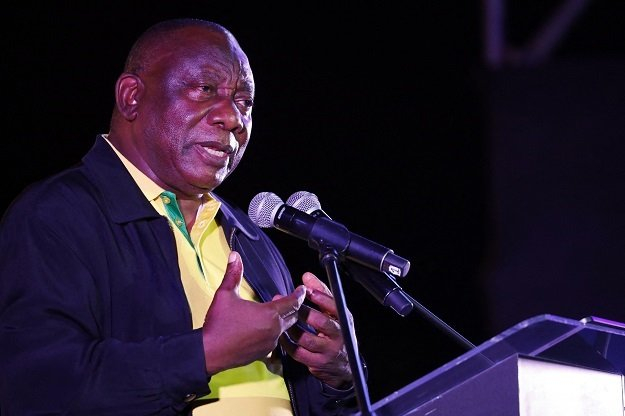
African National Congress (ANC) president Cyril Ramaphosa says that the party has learnt from its mistakes and is committed to doing better.
Speaking to journalists at Luthuli House on Wednesday evening, Ramaphosa doubled-down on his election promise that the ANC would fix the problems in local government.
His message was that the ANC would bring the reforms it had made in national government, since his election as president, to local government – if given a chance by voters.
Ramaphosa said the ANC was recalibrating how things were being done in government as the party seeks to convince people to vote for it, despite a dismal track record in local government.
Ramaphosa also conceded that the riots were “orchestrated” to cause social instability and “severely weaken, even dislodge,” his administration.
After the riots he reshuffled key positions in the cabinet including that of former defence minister Nosiviwe Mapisa-Nqakula and corruption-implicated former health minister Zweli Mkhize.
Ramaphosa was quizzed about the Digital Vibes report, which was given to him three months ago. He defended Mkhize, saying the fact that he was implicated in the damning Digital Vibes scandal did not take away the contribution he made in the fight against the Covid-19 pandemic.
“He has served the nation well, and I think as much as we want to be gung-ho and send him to the gallows, we do need to also recognise some of the things that he has done. Mkhize has served the nation well,” said Ramaphosa.
Ramaphosa added that he did not believe that the timing of the release of the report would have a negative impact on the ANC heading into the November 1 polls.
He said he was due to speak to Prime Minister Boris Johnson after the UK imposed severe restrictions for travellers arriving from South Africa.
The UK has placed South Africa on its coronavirus “red list”, forcing travellers into a pricey hotel quarantine on arrival.
Attracting investment into the country has been a priority for Ramaphosa, who seeks to attract more than R1-trillion in foreign direct investment by 2022. Data released in September by economic think-tank Trade & Industrial Policy Strategies (Tips), however, demonstrated that the recent riots and the effects of Covid-19 on the global economy had dampened the president’s plan to attract investment into the country.
Against the backdrop of the Covid-19 pandemic and the unrest, and staggering unemployment figures recorded in the second quarter, TIPS noted that investment had dropped to 12.8% of GDP, which is well below the norm of 20%-25% of GDP, which is required to maintain stable growth.