
By Lehlohonolo Lehana.
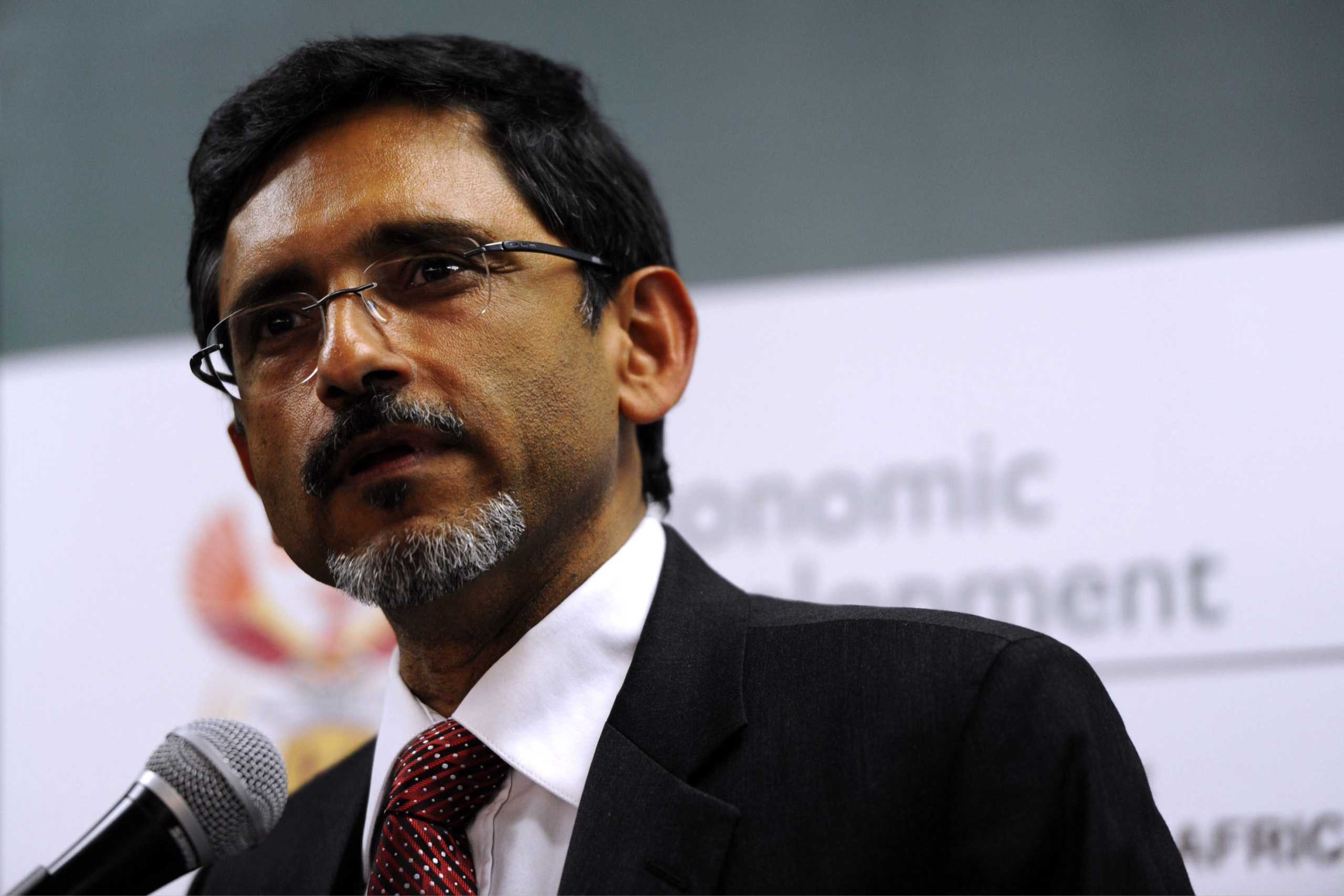
Minister of Trade, Industry and Competition, Ebrahim Patel has announced that 64 large companies are expected to make pledges to procure goods and services from black industrialists over the next five years.
Patel was briefing reporters ahead of the Black Industrialists and Exporters Conference, set to take place in Johannesburg on Wednesday.
He was joined by the Acting Chief Executive Officer of ECIC, Ntshengedzeni Maphula, Interim CEO of IDC, David Jarvis and Acting CEO of NEF, Mziwabantu Dayimani.
The objective of the Black Industrialists Programme is to increase the participation of black South Africans in the ownership and control of productive enterprises in key sectors and value chains of the country’s economy.
The event will be aligned with the theme ‘Black industrialists catalysing economic growth and jobs’.
“This will be a new aspect added to the conference proceedings and will be done for the first time. Large companies . . . are looking at the state of their own businesses and the expectation of economic growth over the next five years [and], in good faith, indicating the value of the goods that they will be buying from black industrialists,” Patel said.
He pointed out that 53 large companies have indicated that they will be making pledges at the event. In addition, 11 black industrialists have also promised to make pledges to buy from other black industrialists. Therefore, a total of 64 companies from different sectors of the economy are expected to make pledges.
“This will be something new, and it will give an indication . . . of firms in the economy that are really stepping forward and saying when they look at the marketplace, they see that black South Africans running their own manufacturing and other businesses are producing products now that are so competitive that these companies want to buy from those businesses,” Patel said.
He added that the conference presented an opportunity for industry and government to both take stock.
Patel said the first challenge was that, very often, black South Africans acquired only minority stakes of up to about 20% of an existing business. The second challenge was that some of the early BBBEE deals were often only in sectors of the economy comprised of suppliers to the core productive sectors.
“We wanted to develop, within the BBBEE framework, a particular programme that would highlight, support and celebrate black-owned companies where the majority of the equity was held by black South Africans.
“We wanted to also ensure that there was enough space for black South Africans to participate in the core productive sectors of the economy, like agroprocessing and food production, the making of clothes and shoes, or furniture, the production of chemicals and pharmaceuticals, plastic or steel production, oil and gas, green economies, mineral beneficiation, mining and agriculture,” Patel said.
Wednesday will see the second edition of the Black Industrialists Conference, which was first launched in 2022 when more than 1 300 delegates took part. This year’s conference — which will be attended by business owners in the manufacturing, mining and film industries — takes place under the banner: “Black Industrialists catalysing economic growth and jobs”.
Watch Live in the video below:
Video Courtesy of GCIS.