
By Lehlohonolo Lehana.
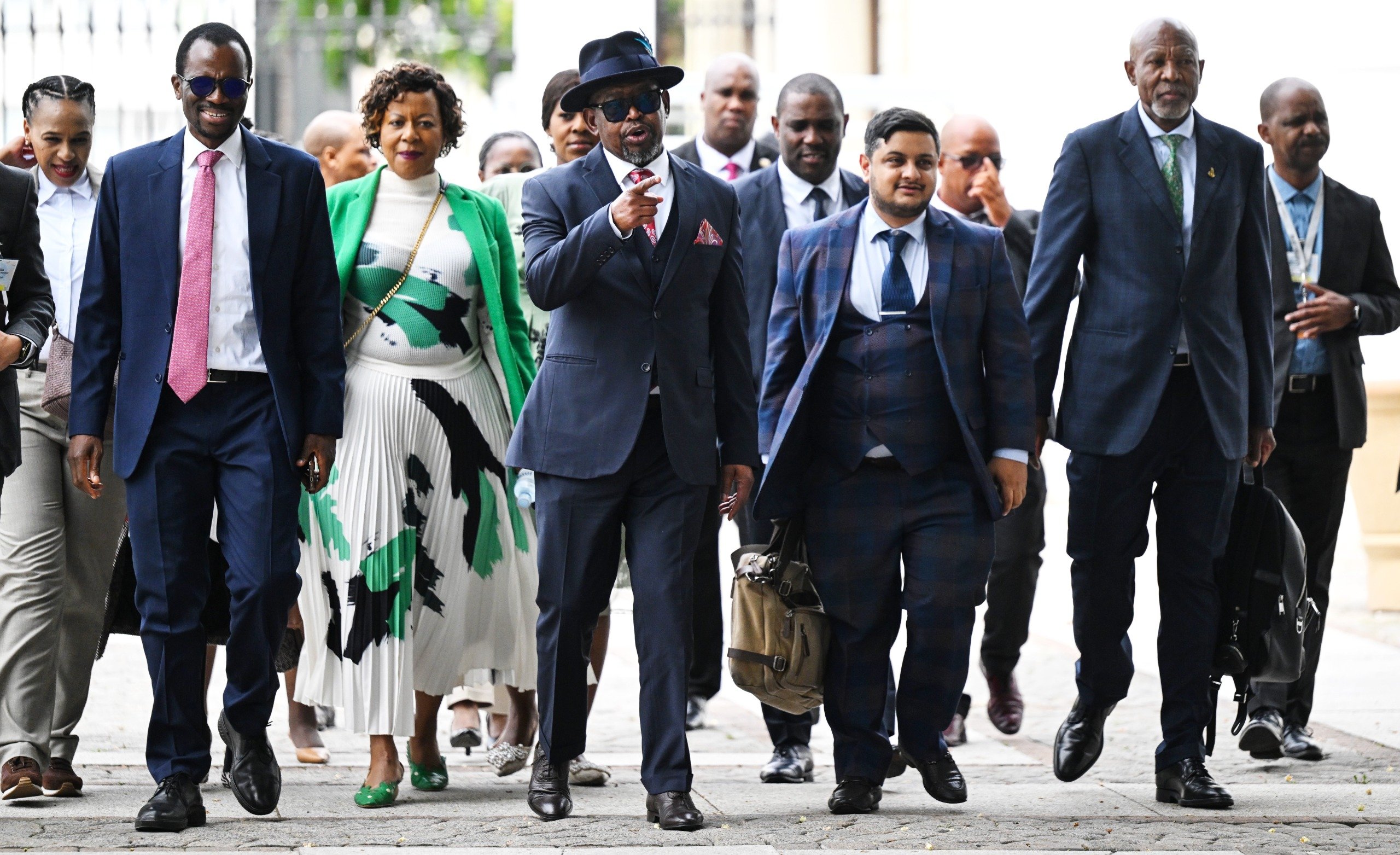
The 2026 Medium Term Budget Policy Statement (MTBPS) reflects continued fiscal consolidation, with primary surpluses, declining deficits, and a gradual reduction in the debt ratio.
Amongst others, minister of finance Enoch Godongwana announced relief on fuel levies, saying that the diesel levy will drop by R3 per litre and the petrol levy will drop by R1.50 per litre on 4 November, before tapering down in December.
Revenue projections: The R17.1 billion increase refers to National Treasury’s upward revision of its gross tax revenue estimate for the 2026/27 financial year, compared with the February Budget forecast. It is projected additional revenue, not money already collected.
Jurgen Eckmann, Wealth Manager at Consult by Momentum
Government’s books are healing faster than most households’ budgets. The Minister told us debt has stabilised at 78.4% of GDP and is now falling, and the deficit is a little better than February’s forecast. That is good news for the long run. But it doesn’t put money back in your pocket this month, with inland petrol above R30 a litre and prime at 10.75%.
The fuel relief is welcome, but keep it in perspective. The levy cut takes R1.50 a litre off what you would otherwise pay for petrol from 4 November, about R75 on a 50-litre tank. Early forecasts point to another increase in November, so the cut may only soften it rather than lower the price at the pump. Diesel gets more help, at R3 a litre. And the relief tapers in December and ends on 5 January, right when January’s bills land. Don’t plan your budget around it.
Treasury now expects tax revenue this year to be R17.1 billion higher than it forecast in February, below the R40 billion to R50 billion some economists had anticipated, and much of it comes from commodity prices that won’t last. I wouldn’t count on tax relief in February. The relief you can count on is already there: qualifying retirement fund contributions are deductible up to 27.5% of income, subject to an annual cap of R430,000, and you can contribute up to R46,000 a year to a tax-free savings account. Make use of these allowances where appropriate before the tax year ends on 28 February.
Growth was cut to 1.2% for this year. In a slow economy, your job is your biggest financial asset. Build an emergency fund of three to six months of expenses, where possible, and keep your two-pot savings for genuine financial emergencies.
For crypto investors, Treasury and the Reserve Bank say they aim to move away from pre-approvals for cross-border crypto transactions. It’s still a draft, so nothing changes yet. Keep your records clean and stay tax compliant.
Nkosinathi Mahlangu, Youth Employment & Entrepreneurship Specialist at the Momentum Group Foundation
The Minister’s confirmation that South Africa’s public finances are stabilising is encouraging, particularly the continued commitment to infrastructure investment.
However, with economic growth revised down to just 1.2% for 2026, the question remains how we translate this progress into meaningful employment opportunities for young South Africans. At the same time, we cannot ignore the impact of high fuel and energy costs and unreliable water supply on economic growth. These pressures make it harder to attract new investment and for existing businesses, particularly SMEs, to remain viable and create jobs.
The infrastructure projects supported by IFISA, with a potential investment value of over R200 billion, present significant opportunities for job creation. But infrastructure spending does not automatically translate into youth employment. We need deliberate mechanisms to connect young people to these projects through apprenticeships, technical training, local procurement and entry-level employment opportunities.
These infrastructure ambitions have featured prominently in previous Budget speeches, yet we are still not seeing sufficient reporting on what has actually been delivered, how much progress has been made against earlier commitments, and importantly, how many jobs have been created as a result.
I was particularly encouraged by the Minister’s acknowledgement that spending does not always translate into results. A review of R887 billion transferred to provinces and municipalities through infrastructure conditional grants between 2017/18 and 2023/24 found that, while most funds were spent, projects were often delayed, incomplete or failed to deliver their intended benefits.
The proposed reforms to strengthen accountability and oversight are long overdue, and this same outcomes-based approach should extend to youth employment. We need to measure not only how much government spends but how many young people actually gain skills, secure employment or build sustainable businesses as a result. Government procurement policies should also make deliberate provision for youth-owned businesses, including ring-fencing a portion of public procurement opportunities for qualifying youth enterprises.
Once again, however, the Statement offers little in the way of specific youth employment targets or dedicated interventions. For a country with such a large youth population, it is disappointing that youth employment and economic participation receive so little attention beyond social support measures. Fiscal stability is an important foundation, but without deliberate pathways into economic participation and clear accountability for delivery, young South Africans risk being left behind.
David McDonald, CEO at SolarAfrica
From an energy perspective, this year’s MTBPS is largely a continuation of existing policy, although it’s encouraging to see some tangible progress on commitments made earlier in the year.
The most significant development is the Credit Guarantee Vehicle, which has now been incorporated and received conditional capital commitments of US$553 million. This is a positive step towards unlocking private investment in infrastructure, particularly transmission, which remains one of the biggest constraints on South Africa’s energy market.
We urgently need more grid connections to accommodate private generation and bring more competitively priced electricity into the market. This has implications well beyond the energy sector. Affordable electricity is essential for economic growth, allowing energy-intensive industries such as smelters to resume operations and giving manufacturers the confidence to expand rather than scale back because of prohibitive energy costs.
The Minister also reiterated government’s commitment to restructuring Eskom and establishing an independent transmission operator. Both are critical to creating a competitive electricity market, but we still need greater clarity on implementation timelines.
The additional R3.5 billion for municipal smart metering is also welcome. Improving revenue collection is critical because when municipalities and Eskom cannot recover the cost of electricity supplied, the financial burden ultimately falls on paying customers. Better collections, alongside reinvestment in electricity infrastructure, are essential to restoring the financial sustainability of the system and easing pressure on electricity tariffs over time.
Overall, the direction remains positive, but implementation is what matters now. Expanding the grid, improving revenue collection and introducing meaningful market competition are what will ultimately determine whether South African businesses can access electricity at prices that allow them to grow.