
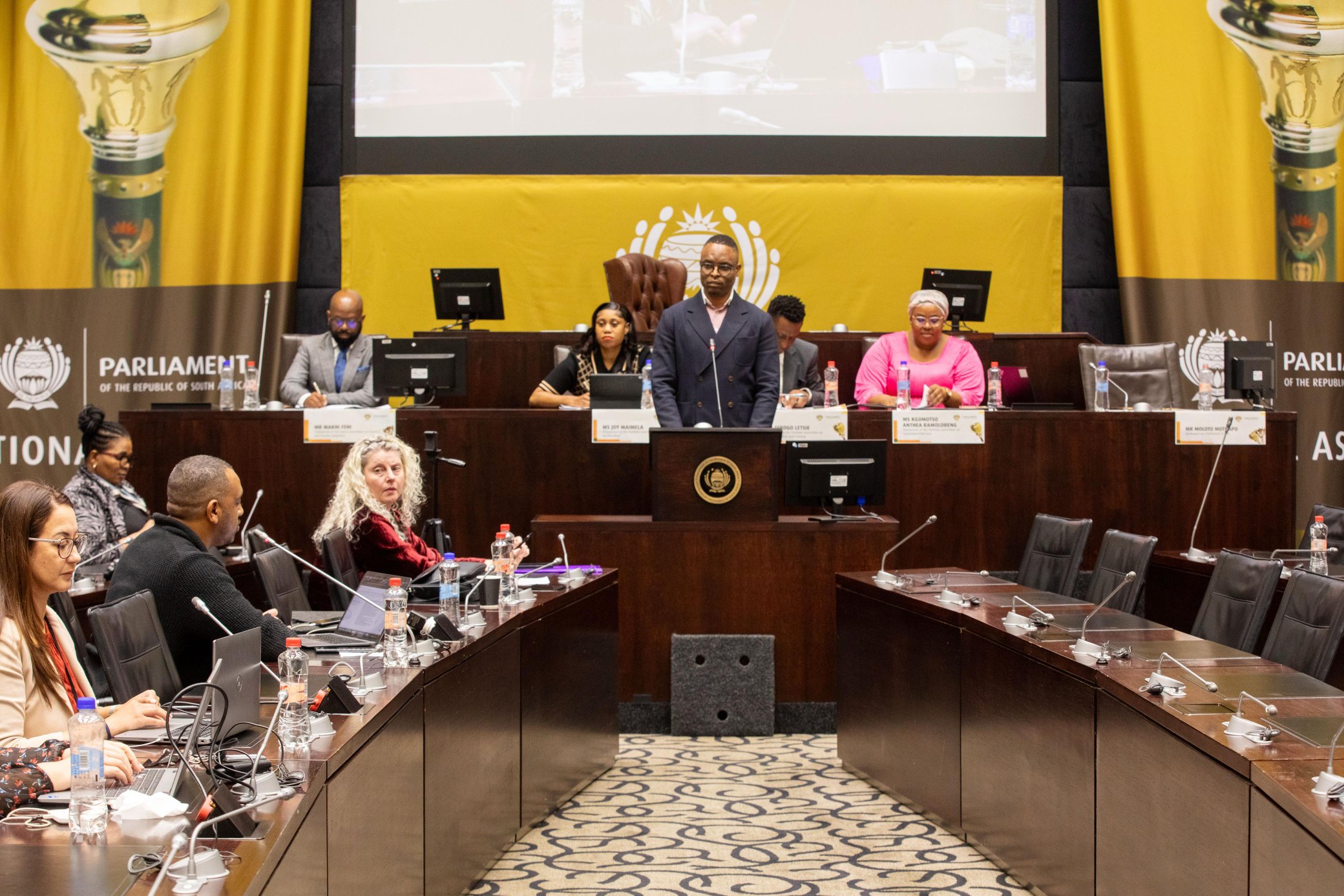
By Lehlohonolo Lehana.
The National Assembly officially adopted the updated rules to govern the Section 89 impeachment process of a sitting president, following a Constitutional Court ruling that invalidated previous Rule 129I.
The updated guidelines outline the exact process for any Member of Parliament (MP) to formally initiate the removal of a president.
These changes were fast-tracked following a Constitutional Court ruling that struck down previous rules requiring a parliamentary vote on independent panel reports.
Parliament’s Rules Committee adopted the amendments last week, after the Constitutional Court struck down Rule 129I.
President Cyril Ramaphosa is facing impeachment over his response to the storage and theft of US dollars from his farm, Phala Phala in 2020.
In the rules committee, debate was raging over whether to include a clause proposed by Democratic Alliance (DA) that members serving on the Impeachment Committee must pass the “fit and proper” test.
But this clause will not be included for now, so that there is a set criterion to determine what is a “fit and proper” member.
Secretary to the National Assembly, Masibulele Xaso, said it is the prerogative of the represented political parties to choose members to serve on the Section 89 Impeachment Committee.
On the interpretation of Rule 129A1(c), Legal Services advised that a charge under section 89 must relate to conduct personally performed by the President.
However, where the President issues an instruction or request that itself constitutes serious misconduct or a serious violation of the Constitution or the law, that instruction would satisfy the requirement of conduct performed by the President “in person”.
National Assembly speaker Thoko Didiza, said the proposed new rules guiding the impeachment process will be tabled in the House next week.
“I will really persuade the members not to actually go for a vote on this matter, but we take the rules that we have already concluded on to the house for the adoption next week if members agree, said Didiza.”
The panel, which the Speaker appointed after consulting political parties represented in the Assembly, must assess if there is sufficient evidence for Parliament to proceed with a section 89 inquiry. The panel must function impartially and without fear, favour or prejudice.
The 31 member Impeachment Committee will investigate, establish the veracity (and, where required, the seriousness) of the charges against a President and make a recommendation to the National Assembly.
The Committee’s report must include all views expressed in the Committee.
Once the Impeachment Committee has reported, the House must schedule the report for debate and decision at a House sitting with due urgency. If the report recommends that a President be removed from office, the question must be put to a vote. A President is removed from office if two thirds of members of the Assembly support the recommendation.
On Monday, on behalf of the impeachment committee, chairperson Makashule Gana officially filed an affidavit with the Western Cape High Court to oppose the interdict by Ramaphosa.
Gana said he’s duty-bound to ensure the inquiry proceeds independently and impartially, and the president will have the opportunity to present his side of events.
He has told the court that Ramaphosa should not fear being defamed through witness testimony since it’s his job to ensure the integrity of the process, and the president will have the opportunity to dispute the evidence.
Didiza has opted to abide by a court ruling, saying the National Assembly is under a constitutional obligation to act without delay.
Meanwhile Parliament took a significant step towards granting the National Prosecuting Authority (NPA) greater financial independence after the National Assembly adopted an Appropriations Report recommending a review of the prosecuting body’s funding.
It recommends that the Minister of Finance, Enoch Godongwana, the Minister of Justice and Constitutional Development, Mmamoloko Kubayi, and the National Director of Public Prosecutions review the NPA’s current budget structure and consider options such as a separate budget vote or direct funding allocation.
The NPA has argued that it does not have enough funds to effectively prosecute crime, corruption, and complex commercial cases.
The authority is currently funded through the Department of Justice and Constitutional Development, despite being constitutionally mandated to make independent prosecutorial decisions.