
Staff Reporter.
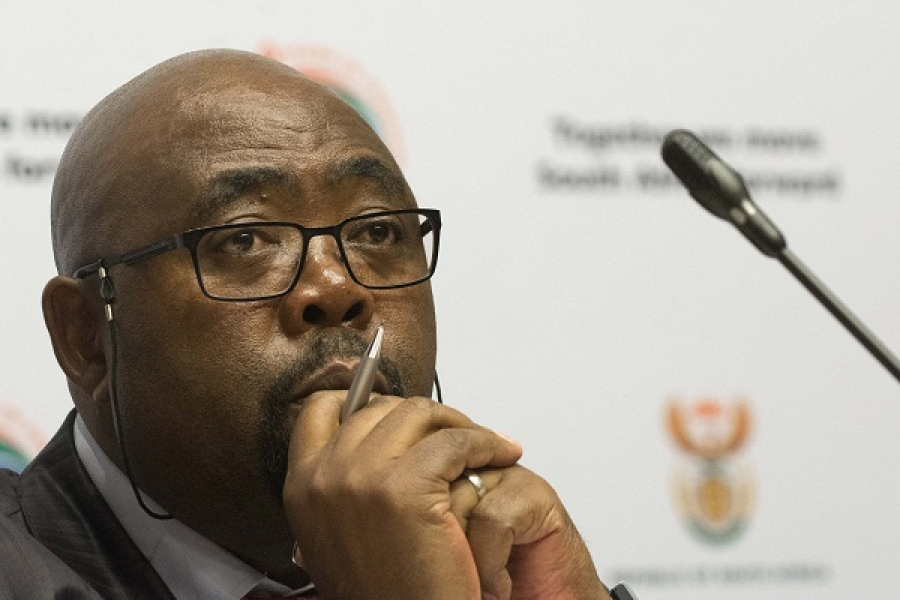
Photo Credit:Trevor Samson.
Employment and Labour minister Thulas Nxesi has published the new minimum wage for domestic workers in South Africa.
In a gazette published on Monday evening (8 February), the minister said that the national minimum wage for domestic worker s now R19.09 for each ordinary hour. This change will take effect from 1 March 2021.
This is still below official national minimum wage will rise to R21.69 for each ordinary hour on the same date.
However, the two amounts are likely to equalise in the coming years as the national minimum wage commission has said that the minimum wage should be applicable to all employees across the country and irrespective of sector.
As of March 2020, the minimum wage for domestic workers is at 75% of the base – R15.57 per hour. Under the new proposals, a bump up to 88% of the 2021 base would make the new minimum for domestic workers R19.09 per hour – a monetary increase of 23%.
This adjustment would amount to an increase of about R450 per month for a domestic worker, the commission said, depending on the different payment models. This would again increase in 2022, should the minimum wage for domestic workers increase to 100%.
While this is the absolute lowest that South African can legally pay their domestic worker, data published by cleaning service SweepSouth in 2020 shows not only a dramatic drop in earnings due to the pandemic, but a continued trend of domestic workers not earning enough to cover their most basic needs.
While most workers were earning greater than R2,500 (63%) before lockdown, only a small minority (14%) were earning above R4,000 which is generally considered to be a living wage.
The establishment of a national minimum wage was a notable achievement, but it is clear that this is becoming increasingly inadequate to cover even the bare minimum of household expenditure. This has forced many families to take on debt which often spirals out of control.
“With the onset of the Covid-19 pandemic and subsequent lockdown, the majority of workers fell below the R2,500 threshold (74%). Given that their costs have shown no sign of decreasing, this has placed phenomenal pressure on already struggling households.”
While domestic workers could see further increases in 2022, members of the National Minimum Wage Commission have warned that a minimum wage increase could lead to further job cuts.