
By Lehlohonolo Lehana.
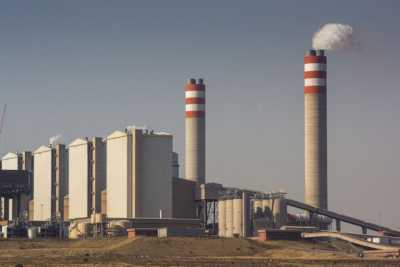
State owned power utility Eskom says nine people were arrested at the Kusile power station on September 7 for theft of coal and fraud.
Eight of the nine were weighbridge operators employed by Eskom Rotek Industries (ERI), with the ninth being a coal truck driver.
“A thorough investigation by the South African Police Service (SAPS) and an internal Eskom investigation supported by the Bidvest Protea Coin Investigation Team led to the arrest of the individuals, after information was received that coal haulers would bypass Kusile power station without offloading the ordered coal,” Eskom explains.
It says investigations revealed that the weighbridge operators would process weighbridge transactions without the coal hauler having entered the power station to offload the coal. The Kusile power station would, however, be invoiced for the coal ordered but not received.
The suspects have been detained at the Phola police station.
Eskom expects more arrests to follow as the investigations continue.
“The arrest of these unscrupulous individuals is a significant step in our fight against crime in Eskom and the country, and we shall continue in our pursuit to ensure that the perpetrators face the full might of the law,” says Eskom acting GM for security Botse Sikhwitshi.
Meanwhile the severity of load shedding this year, where Friday (8 September) marks the 40th day of stage 6 in 2023, means that simply counting the number of days of power cuts is no longer helpful (there’s only been a single day since January – 21 March – where Eskom was able to meet all demand for 24 hours.).
Data from utility app Loadshedding Notifier shows that when measuring intensity, in other words the gigawatt hour (GWh) impact, there have been 19 794 GWh of power cuts this year (to Wednesday).
This is more than the 19 103 GWh impact in 2015, 2018, 2019, 2020, 2021 and 2022 combined! (There was no load shedding in 2016 or 2017.)
This measure is useful as an hour of stage 1 is not the same as an hour of stage 4, and is not the same as an hour of stage 6. By definition, the last of these is six times more severe than the first – it requires 6 000MW of demand to be ‘removed’.
We’ve had more days of stage 6 this year than in any other year, plus days of stage 5 in 2022 and 2023 combined.