
By Lehlohonolo Lehana.
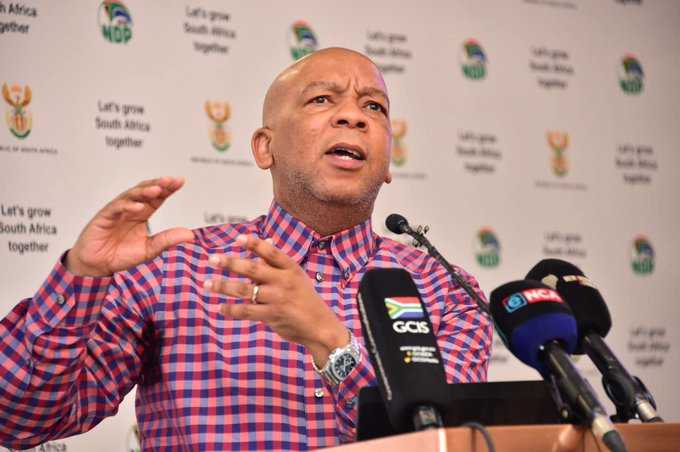
Electricity Minister Kgosientsho Ramokgopa says “there will be no shortcut to the ending of load shedding” but there will be ‘long-term gain, amid rolling Stage 6 power cuts which are likely to continue for the rest of the week.
Ramokgopa on Tuesday briefed the media virtually on the performance of the electricity grid after Eskom returned the country stage 6 power cuts.
He said that for years, Eskom’s units have been “exploited” without the necessary maintenance or the “philosophy of maintenance”.
“That has caught up with us; that is why we are in the situation we find ourselves in,” he said.
However, with the financial relief provided to Eskom in the form of the National Treasury’s R254 billion debt relief strategy, part of the conditions is that the power utility needs to maintain its assets.
Because of this, the group is now sticking to a rigorous planned maintenance regime, which will impact available supply.
“We accept that in the short-term, we face the possibility of intensified power interruptions,” Ramokgopa said.
“We say the possibility because if the planned maintenance is accompanied by increases in unplanned losses, then it means there will be an intesification of load shedding – which is essentially the situation we find ourselves in,” he said.
Ramokgopa said that planned maintenance was slowed down during winter as part of Eskom’s mitigation efforts to stave off high stages of load shedding due to increased demand.
During the winter months, planned maintenance was curbed to around 2,500MW. However, now that winter is over, planned maintenance is ramping back up and is now between 5,000MW and 6,800MW.
The effect of this has been seen in the intensification of load shedding – moving from periods where outages would be suspended during the day, to the stage2/stage4 rotations seen in more recent weeks.
This rotation was maintained while Eskom was able to keep unplanned outages below 15,000MW – however, that changed this week when losses pushed past 17,000MW.
Combined, the increase in both planned and unplanned outages has led to a shortfall of around 5,500ME to 6,000MW, resulting in stage 6 load shedding.
Bheki Nxumalo, Eskom’s group executive generation, said starting from Thursday units that are being maintained or broken down will start to return to service, with stage 6 load shedding being eased to lower stages.
Nxumalo said: Towards the end of this week, we should be in a position to start reducing the stages from the current stage 6 and also we would have recovered on our reserves.
Ramokgopa also acknowledged the negative implications of intensified load shedding on the economy and the local currency.
“We do accept that there is a correlation between load shedding and the performance of the economy. The minister of finance and the South African Reserve Bank do make the point that load shedding is a structural impediment. The South African economy won’t recover for as long as there is load shedding,” he said.
The rand hit R19.26/$ early on Tuesday, its weakest level in weeks. The currency has lost 4% of its value over the past month, and is down 11% from a year ago. It still has some way to go to breach its previous record low of R19.80, which was triggered by the fall-out of the Lady R diplomatic crisis.
On Tuesday, Statistics SA confirmed that the economy grew by 0.6% in the second quarter, which was better than economists expected.
Normally, stronger-than-expected GDP growth would have bolstered the rand, says Casparus Treurnicht, portfolio manager at Gryphon Asset Management.This signals to the Reserve Bank that the damage of aggressive interest rate hikes may be less than feared, and could convince the monetary authority to keep rates higher for longer.
“But the dollar is bolstered by traders seeking a safe haven amid market concern about the impact of a deteriorating Chinese economy on world growth.”