
By Lehlohonolo Lehana.
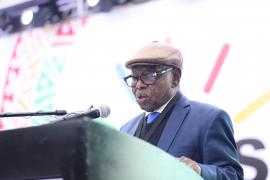
Higher Education and Training Minister, Blade Nzimande, says the education system is critical for the sustainable economic growth of the BRICS nations and to fight against the triple challenges of unemployment, poverty and inequalities
Addressing the 10th Meeting of BRICS Ministers of Education, in Mpumalanga, Nzimande said the daunting task before us as BRICS Ministers of Education is to consolidate the resolutions of these sectoral engagements and table them to the BRICS Heads of States in August 2023,
Held under the theme “Responsive and Relevant Education and Training in the Current Global Context”, the BRICS education engagement, forms part of the build-up to the 15th BRICS Summit scheduled to take place from 22-24 August 2023 in Johannesburg.
He was joined by senior officials in the education field from all four countries were Dr Rajkumar Ranjan Singh, Minister of State for Education and External Affairs from India; Konstantin Mogilevskiy, Deputy Minister of Science and Higher Education from Russia; Dr Chen Jie, Vice Minister of Education, China; and Denise Pires de Carvalho, Vice Minister of Education and Secretary of State for High Education, Brazil.
Nzimande said South Africa has put forward eight thematic areas to be discussed during this year’s meeting of Ministers of Education.
These include climate change, entrepreneurship development, skills for the changing world, mutual recognition of qualifications, out-of-school youth, labour market intelligence, early childhood development and university global ranking.
Nzimande urged the Member States to make concrete proposals on how the BRICS education system can assist to contribute meaningfully in all the thematic areas.
In the area of mutual recognition of qualifications, the Minister highlighted that since the adoption of the Global Convention on the Recognition of Qualifications concerning Higher Education, BRICS Member States need to discuss possible cooperation aimed at accelerating ratification by countries and its prompt implementation.
Nzimande also challenged BRICS countries to put systems in place to encourage mobility of students and education experts and academics.
He said South Africa is at an advanced stage in terms of concluding relevant constitutional obligations to accede to the Global Convention.
The Global Convention establishes universal principles for fair, transparent and non-discriminatory recognition of higher education qualifications and qualifications giving access to higher education and offering avenues for further study and employment.
With provisions on non-traditional learning modes, the Global Convention also facilitates the recognition of qualifications, prior learning and study periods earned remotely. In addition, it promotes the recognition of refugees’ qualifications, even in cases where documentary evidence is lacking.
“We must continue to encourage BRICS academics to research relevant topics within BRICS including the implications of the proposed BRICS currency and the role of the New Development Bank of BRICS. It is the research community of BRICS that is going to assist to elaborate this issue better,” Nzimande said.
In recognition of the theme for the 15th BRICS Summit “BRICS and Africa: Partnership for Mutually Accelerated Growth, Sustainable Development and Inclusive Multilateralism” Nzimande said the Department of Higher Education and Training has decided to invite Namibia as a guest of the 10th Meeting of BRICS Ministers of Education.
He noted that South Africa cannot prosper in isolation leaving the entire African continent behind, especially the Southern African Development Community (SADC) region.