
By Lehlohonolo Lehana.
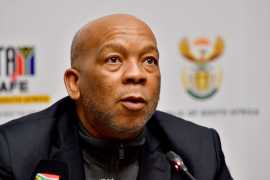
The Minister in the Presidency responsible for Electricity, Kgosientsho Ramokgopa says Eskom has ramped up planned maintenance of its ageing power stations on the back of a steadily improved performance compared with six months ago.
Ramakgopa said South Africa lost about 2 500MW to 3 000MW to planned maintenance in winter. That figure reached a high of 7 000MW on 8 December.
“That means there’s an additional 4 000MW that has been taken [off the grid],” he said.
Ramokgopa also said that Eskom’s open-cycle gas turbines (OCGTs) have been used less. He said they’ve “taken a conscious decision” to be “more judicious” on how much diesel is being burnt at the OCGTs.
He added there is around R30 billion that has been allocated towards diesel in the budget. “You don’t want to get to a situation where you are running out of funds.”
This would also have contributed to the stage 3 and 4 load shedding currently in place.
The electricity minister said Eskom’s pump storage facilities were in good health.
“They are in a good state and that’s why Eskom was able to announce some degree of reprieve – and we really think that if we keep to this, we shouldn’t see any degree of significant deterioration [and] we shouldn’t see an intensification of load shedding.”
Failure to maintain South Africa’s power stations is one of the main causes of persistent load-shedding that has hampered the economy for more than a decade.
Ramokgopa also highlighted various other recent power supply milestones, including the appointment of Eskom CEO Dan Marokane for a five-year term, and the release of the country’s Integrated Resource Plan for public comment.
Marokane’s appointment augured well for further power supply progress, Ramokgopa said. “Certainly it is key in the resolution of a crisis of this magnitude.
Ramokgopa said they are receiving legal advice on the Pretoria High Court judgment that the government should exempt schools, hospitals and police stations from load shedding by the end of January.
He said, that they were studying the judgment and would communicate once they had received legal advice on the matter.
The country was currently in the middle of an energy crisis and they would obtain the correct interpretation of the judgment.
However, Ramokgopa said, there were also financial implications, depending on the nature of the advice they received.
Eskom generation head Bheki Nxumalo has indicated that an extended outage at Koeberg Unit 2, which begins on December 11, is currently expected to continue until September 2024, increasing the prospect of both Koeberg units being out of service simultaneously from late July next year.
Nxumalo provided an update on the outage schedule during a briefing on the implementation of the Energy Action Plan, at which it was confirmed that Unit 1 had been ramped up to 924 MW by December 10.
This, following the unit’s much-delayed outage, during which its three steam generators were replaced. Unit 2’s steam generators will be replaced during the outage starting on December 11.
The replacement forms a key part of Eskom’s application to the National Nuclear Regulator (NNR) for authorisation to operate Koeberg’s two pressurised water reactors for a further 20 years, after their 40-year licence expires.
As things stand, the licences for both units will expire on July 21, 2024; the same date on which Eskom currently intends removing Unit 1 for another 200-day-plus outage to conduct compulsory works in line with a ten-year maintenance cycle, including crucial containment building leak tests.
Meanwhile the draft Integrated Resource Plan (IRP) has been approved by Cabinet, with Minister Gwede Mantashe expected to gazette the document for public comment soon.
The IRP plans for two “horizons”, with the first involving calculating SA’s energy needs from the present until 2030, and the second from 2030 to 2050.
Watch Live in the video below:
Video Courtesy of GCIS.