
By Lehlohonolo Lehana.
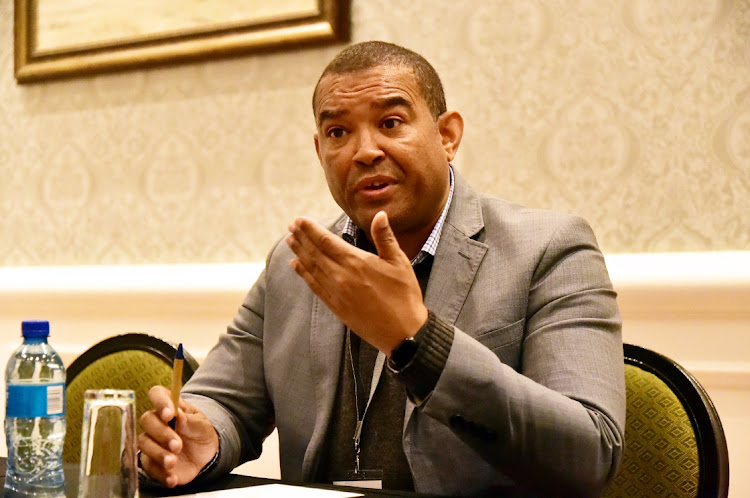
Speaking at the launch of the Operation Vulindlela fourth-quarter progress report on April 22, acting chief director of the microeconomic policy team at the National Treasury Aalia Cassim highlighted key milestones achieved during the quarter.
Operation Vulindlela is a joint initiative of the Presidency and the National Treasury aimed at driving the implementation of structural reforms to support more rapid and inclusive economic growth.
The report marks the third update under Phase II of Operation Vulindlela.
Phase II of Operation Vulindlela (OV) builds on the momentum created since 2020, when OV was established. Its continuation under the Government of National Unity reaffirms government’s commitment to driving more rapid, sustainable, and inclusive growth by removing the structural barriers that have long constrained the economy.
The focus remains to transform the electricity sector; to modernise the freight logistics sector; to ensure reliable access to safe drinking water; to attract skills, investment and tourism; and to improve the delivery of basic services and infrastructure.
Cassim discussed progress made in the energy sector during the quarter, including the submission of the Market Code for regulatory approval to the National Energy Regulator of South Africa (Nersa) by the National Transmission Company South Africa.
Cassim also discussed the establishment of the ERTT to lead the process toward the establishment of a fully independent Transmission System Operator (TSO), highlighting some of the core principles guiding the ERTT, including ensuring full independence of the TSO from all market participants.
She explained that the TSO was expected to be completed by December 31, 2027.
Additionally, Cassim also mentioned the project by international energy company EDF Power Solutions that commissioned its 420 MW Koruson 1 wind farm cluster project, procured through Bid Window 5 of the Renewable Energy Independent Power Producer Procurement Programme.
She added that Nersa’s project registration pipeline continued to grow, with over 1 GW registered in the first two months of this year.
Meanwhile, in the freight logistics sector, the report indicates that 40% of reforms are on track, while 60% of reforms are delayed.
The report notes that progress was made with regard to the implementation of institutional reforms during the period with Cabinet’s approval of the publication of the National Rail Master Plan (NRMP) for public comment.
Following the conclusion of the technical assessment on the corporatisation of the Transnet National Ports Authority (TNPA) in the previous quarter, the report explains that a detailed implementation plan has been developed for consideration by Transport Minister Barbara Creecy, which will guide the process and timeframes for the establishment of the National Ports Authority as an independent entity.
Additionally, further progress was made towards the establishment of the Transport Economic Regulator (TER), and the award of capacity on the freight rail network to 11 private train operating companies has paved the way for investment in new rolling stock to enable third party operations, with several companies announcing firm commitments in this regard.
“Transport reforms have moved quite slowly and what’s important to mention is that even though there’s been a slow pace of reforms, we still have seen a sustained improvement in terms of the recovery in volumes at Transnet,” Cassim said.
Transnet’s recovery in volumes continues, with the 2025/26 rail volumes estimated to be about 168-million tonnes, compared with 160.1-million tonnes reported in the previous financial year, with the aim of reaching 180-million tonnes in the 2026/27 financial year.
Additionally, the report indicates that 100% of the reform progress for water and sanitation is on track, noting that reforms related to institutional restructuring, stronger regulation and the promotion of infrastructure investment gained significant momentum over the period.
The report also notes progress made regarding visas, with the Electronic Visa Authorisation (ETA) system fully implemented, enabling applicants from non-visa waiver countries to apply online, capture biometrics and receive approvals in real-time.
Operation Vulindlela continues to evolve as government learns from each quarter’s progress. The focus remains on completing key milestones, resolving delays and ensuring reforms deliver visible results on the ground.
Rudi Dicks, head of the project management office in The Presidency, said the pace of reform needs to be improved for the country to continue pulling through global ructions.
“If you don’t do this, it will be worse. It’s like when we were [battling with] load shedding – if we didn’t deal with those things then, we would probably be in worse territory now,” says Dicks.
He added that the reforms lay the basis, and “when we get through the global economic challenges” it will be easier for things to take off with regards to economic growth. He said that this will however take time. We’ve got to temper our expectations, you’re not going to see 5% or 6% growth next quarter, this is a process of consistency and maintaining momentum.”
Despite the reform progress, the country’s growth challenge remains significant. But Dicks said the spur in confidence by domestic and international investors is encouraging.
One of government’s key target is for gross fixed capital formation to reach 30% of gross domestic product (GDP) by 2030, with public sector investment reaching 10% of GDP.
Government has earmarked a R1 trillion spend over the next three years on infrastructure, with the private sector also expected to continue pumping funds into key projects.