
Staff Reporter.
South Africa’s largest opposition party has teamed up with six small groups to build a coalition aimed at ousting the long-ruling ANC in next year’s elections, they announced Monday.
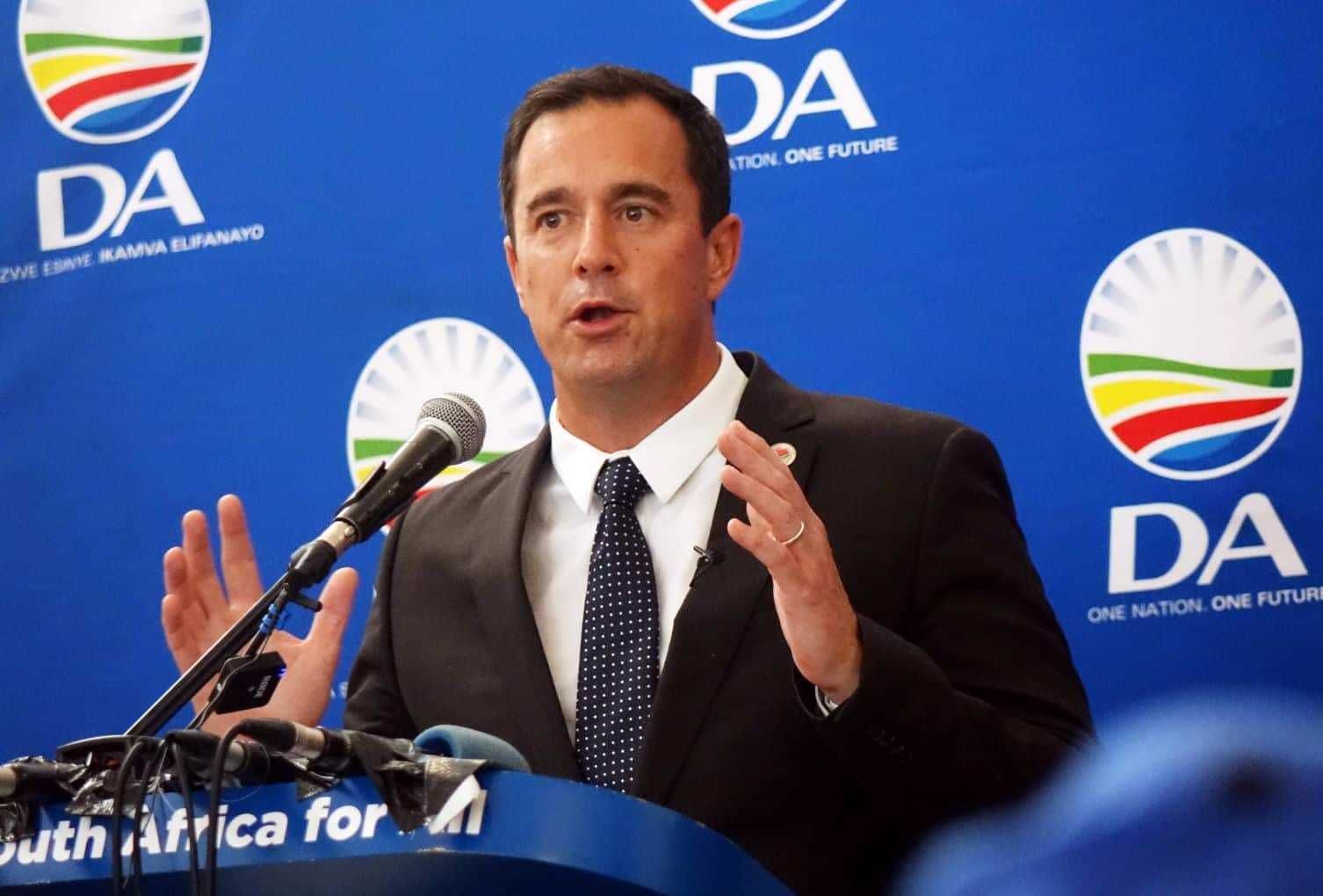
The Democratic Alliance, which has a fifth of the seats in parliament, is in the forefront of the plan.
The initiative does not include the third largest party, the radical leftist Economic Freedom Fighters (EFF).
The leaders of the seven parties will hold what they dubbed “historic” talks on August 16 and 17 in Johannesburg to map out “a common vision for a new government.”
The governing African National Congress (ANC) — which has been in power for nearly three decades — is facing growing discontent fuelled by a sickly economy, entrenched unemployment, worsening inequality and an electricity crisis.
It suffered record losses in the 2021 municipal elections, the first time in the democratic era its support dipped below half of ballots cast nationally.
Next year’s ballot is for the National Assembly, where the majority party also usually chooses the president.
“The 2024 election presents an unprecedented opportunity for the people of South Africa to elect a new government that can steer our country out of the multiple crises it faces,” the parties said in a joint statement.
“We are proud to report today that, through good faith and through engagement, party leaders have established sufficient common ground for this national convention to take place on 16 and 17 August 2023. The convention will be held at Emperors Palace in Kempton Park. This venue was deliberately chosen for symbolic significance, being the same venue where the Codesa negotiations took place that laid the foundations for South Africa’s transition to democracy.”
The convention will cement the ongoing conversations party leaders have held over the last two months, finalising the pact in which each party will decide on whether to join formally.
In their statement, the parties said, “every party leader that has engaged in this process so far has done so voluntarily, and it is for each party to ultimately decide whether it wants to join the pact once negotiations have been concluded formally”.
“For the very first time since 1994, the incumbent governing party is set to lose its majority when voters go to the polls next year.”
Under the constitution, the parliament meets after national elections to choose the president. Usually a candidate from the party with majority lawmakers wins.
Compiled by Lehlohonolo Lehana.