
By Lehlohonolo Lehana.
German vehicle manufacturer Volkswagen announced that it will invest R4-billion in its Kariega (formerly Uitenhage) plant for the refurbishment of production facilities, local content tooling, quality assurance and manufacturing equipment.
The investment is aimed at preparing the plant to manufacture a third model from 2027.
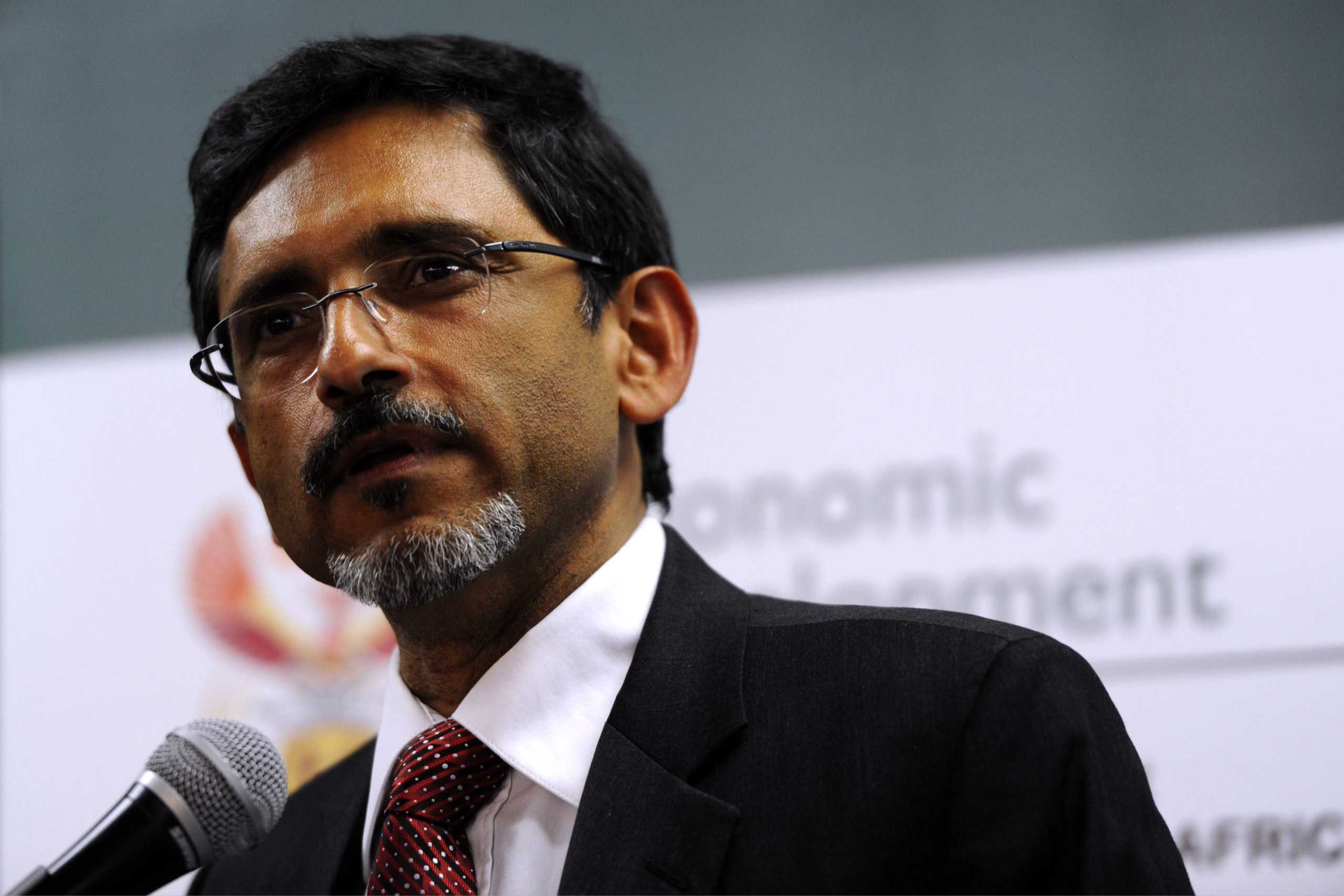
Trade, Industry and Competition Minister, Ebrahim Patel said the move positions the facility as the sole manufacturer of the Polo brand globally and the new SUV model will be exported to global markets.
Patel addressed the public announcement on Wednesday held at VWSA’s facility in Kariega.
He said the investment was a testament to the country’s industrial policy, and it will not only strengthen the assembly plant but also secure the livelihoods of approximately 3 500 people who are directly employed by VWSA.
“Moreover, this investment has rippled through this part of the Eastern Cape, fostering an ecosystem of prosperity and industrialisation, supporting an estimated 50 000 indirect jobs and livelihoods.”
In the last five years, government has undertaken significant work to bolster automotive production in South Africa.
Patel highlighted 10 actions, which have been taken in the sixth administration to support the industry:
• New Automotive Masterplan crafted together with the industry was implemented in July 2021, setting the policy framework for the next decade.
• The African Continental Free Trade Agreement (AfCFTA) has concluded modalities, including rules of origin for a first list of auto products, opening up a vast market.
• A free-trade agreement with the United Kingdom after Brexit was concluded and implemented, which enabled South Africa to retain access to preferential terms in the United Kingdom market.
• The establishment of the R6 billion Auto Industry Transformation Fund, which VWSA and other Original Equipment Manufacturers (OEMs) contribute to bringing Black component manufacturers into the supply chain.
• A major agreement with tier 1 auto component manufacturers has been concluded that will ensure greater opportunities for Black manufacturers in tier 2 or tier 3 levels.
• R50 billion in investment commitments in the auto sector have been secured.
• A landmark agreement with Stellantis for the construction of a new R3 billion plant in the Coega Special Economic Zone has been reached.
• Semi-knocked down (SKD) production by BAIC, also in the Coega Special Economic Zone, has commenced as a first phase toward more value-additive complete knocked down (CKD) production.
• A new Tshwane Automotive Special Economic Zone has been established, with 10 factories for Ford suppliers already built by March 2024, employing 3 300 workers.
• The Electric Vehicle Policy was finalised by the Department of Trade, Industry and Competition (dtic), and a new incentive package to assist the transition was announced by the Minister of Finance in the 2024 Budget.
According to Patel, the automotive industry plays a crucial role in our economy, contributing significantly to gross domestic product (GDP) and employment.
The manufacturing component of the auto industry contributed 2.9% of South Africa’s GDP in 2022.
With over 115 000 direct employees and an additional 240 000 indirect jobs, Patel said the auto industry remains a cornerstone of South Africa’s manufacturing sector.
Martina Biene, the Chairperson and Managing Director of Volkswagen Group Africa said as most global vehicle markets transition to electric vehicles, African markets like South Africa will continue manufacturing and selling vehicles with internal combustion engines for the foreseeable future. She explained that there was still customer demand for vehicles with internal combustion engines and the introduction of electric vehicles to the market has been slow.
Nelson Mandela Bay Business Chamber CEO Denise van Huyssteen said they were encouraged by the investment.
“This is a welcome development and highlights the company’s long-standing commitment to Nelson Mandela Bay, as the country’s largest automotive manufacturer. Volkswagen is the biggest private employer in our Metro and indirectly creates ongoing employment throughout the local automotive supply chain,” she said.
The metro is also home to around 40% of the country’s automotive components manufacturers. It employs 41% of employed residents in the metro.