
By Lehlohonolo Lehana.
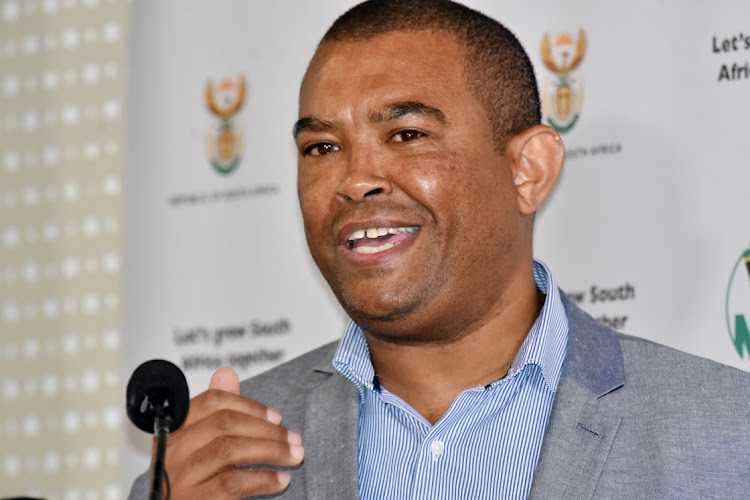
Director-General (DG) in the Presidency Phindile Baleni says Operation Vulindlela has made significant progress in reforming the economy since its announcement nearly four years ago.
Baleni spoke at the unveiling of a progress report by the Presidency and National Treasury on the economic reforms through Operation Vulindlela.
Operation Vulindlela, initiated as part of the Economic Reconstruction and Recovery Plan, aims to accelerate structural reforms to promote economic growth and job creation.
Baleni said one of the areas which has seen marked improvement is the country’s visa system, with the eVisa now available in 34 countries.
“Visas have been waived for visitors from 135 countries. The recommendations of the work visa review task team, which was complemented last year, are now being implemented, including the establishment of the trusted employer scheme and the points-based system for work visas.
“Operation Vulindlela’s most important lesson is that we can achieve significant progress by enabling collaboration across government, implementing clear, time-bound plans, and establishing systems to support accountability.
“More than 15 government entities and departments have contributed to the implementation of these reforms through new ways of working and a singular focus on implementation and results.”
She believes significant progress has been made in reforming the economy since the establishment of Operation Vulindlela in October 2023.
“The reform of the energy system is now far advanced, with the passage of the Electricity Regulation Amendment Bill and the establishment of the National Transmission Company of South Africa, amongst other key milestones.
“We are already seeing the impacts of these reforms in reduced load shedding and in the proliferation of new energy projects across the country.”
The Presidency’s project management unit head Rudi Dicks lauded the progress being made through the Energy One Stop Shop to support the private projects stimulated by the reform to allow grid-connected private projects of any size to proceed without a licence.
The pipeline of such projects had increased significantly and currently represented a combined capacity of 22.5 GW and an estimated investment value of R390-billion.
The projects, he stated, were also additional to those that would be bid as part of various public procurement processes being advanced in line with Section 34 of the Electricity Regulation Act, where Ministerial determinations had been issued for the procurement of about 10 000 MW of wind, solar PV and gas-to-power generation, as well as battery energy storage.
He argued, too, that Eskom was not seeking to preserve capacity across the entire grid system, but rather to ensure that there was sufficient grid capacity for wind projects in light of the disappointment of Bid Window Six (BW6) of the Renewable Energy Independent Power Producer Procurement Programme, when no wind IPP was selected for the 3 200 MW initially allocated.
This failure was attributed to the fact that the grid capacity that formed the basis for the bids by wind IPPs that submitted BW6 bids was allocated to private IPPs, which were allocated that same capacity under Eskom’s prevailing ‘first come, first served’ grid-access rules. These have since been adjusted under Eskom’s 2023 Interim Grid Capacity Allocation Rules to ‘first ready, first served’.
Defending Eskom’s application for permission to reserve grid for public procurement, Dicks said: “It is important for us, in terms of broader public interest, that we ensure that we don’t have a similar situation that happened during Bid Window Six, where [Bid Window Seven] potentially fails.
Earlier this year, the deadline for bid submissions under BW7 was extended by a month to May 30 to accommodate both grid-connection uncertainty and a curtailment addendum to the Grid Capacity Connection Assessment (GCCA 2025) published by Eskom in January.
The GCCA 2025 addendum states that 3 470 MW of additional grid capacity to connect wind generation will be made available by accepting a “reasonable share of no more than 10% of curtailment”. A total of 2 680 MW of this capacity is available in the Western Cape and 790 MW in the Eastern Cape.
Baleni indicating that the methodology had delivered results in the five priority areas of electricity, freight logistics, water, telecommunications and visa reform.
She, thus, indicated that there would be a benefit in carrying over the Operational Vulindlela initiative into the next administration.