
By Lehlohonolo Lehana.
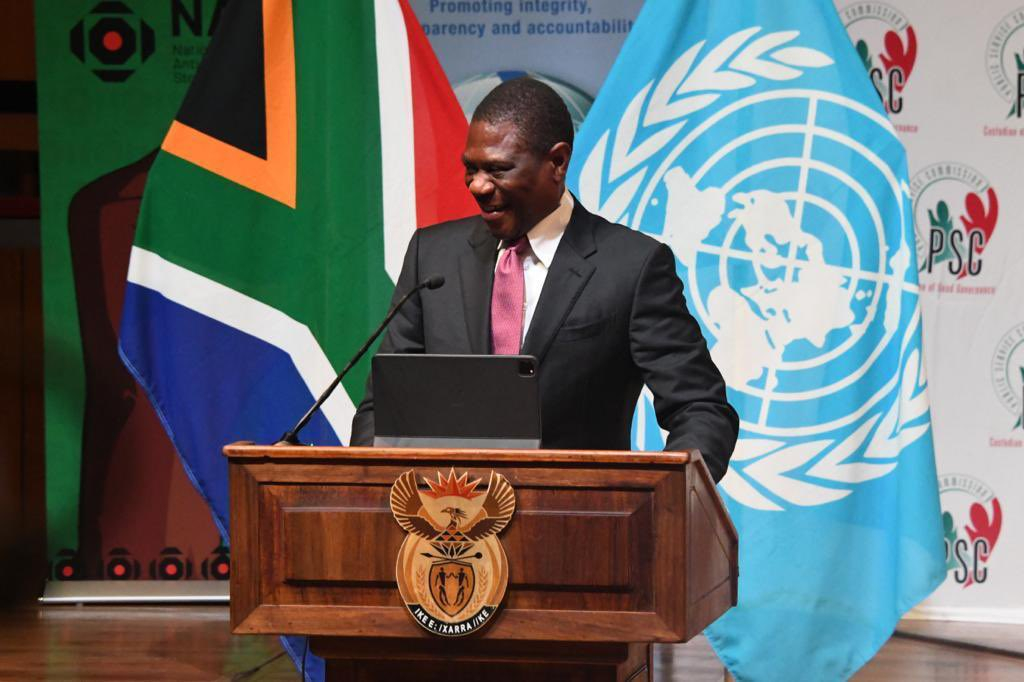
Acting President Paul Mashatile has signed the second Presidential Health Compact, which aims to improve the quality of health services.
President Cyril Ramaphosa has appointed Mashatile as Acting President, based on medical advice to allow an eye infection to clear.
The Presidential Health Compact is an initiative launched by Ramaphosa in 2019, which established a “framework of cooperation” between critical sectors in South Africa to significantly influence good health outcomes.
The 2024 compact is the second iteration of the framework, and it specifically focuses on supporting health systems and strengthening and preparing them for the implementation of the National Health Insurance (NHI).
However, it is this explicit focus on the NHI that has drawn backlash from the very stakeholders the compact aims to draw in, with business group BUSA, and healthcare professional bodies, SAMA and the SAHPC, pulling out of signing the document.
Despite the boycotts, Mashatile talked up the importance of the private sector in healthcare in South Africa, encouraging cooperation. However, he did not steer away from the NHI as the central theme to the government’s plans.
“The private sector has a crucial role to play in strengthening health systems. Our experience with Covid-19 showed how we could deepen public-private partnerships,” he said.
“With greater collaboration, the resources and capabilities of both the public and private sectors can be brought to bear to serve those who need health care most.”
Mashatile said that, with the NHI Act now signed into law, “it is even more urgent that we work together”.
“As we implement the NHI, we will build on lessons learned to streamline standards and ensure quality of care, whether it is rendered at a public or private facility.
He also touched on healthcare funding challenges due to budget cuts and a constrained fiscal environment compounded by inefficiencies, mismanagement, and corruption in resource allocation.
However, he said budgeting in the health sector is steadily improving to ensure a more equitable allocation of resources.
“Less money is being lost to litigation. This is thanks to the hard work of the Health Sector Anti-Corruption Forum, which continues to expedite prosecutions and recover stolen funds,” he said.
With greater collaboration, he said the resources and capabilities of both the public and private sectors can be brought together to serve those who need healthcare the most.
The continued push for the NHI comes despite abject rejection from the private sector of the scheme in its current form, with concerns frequently raised about funding, coverage, implementation and administration, which have gone unanswered.
The boycott of the signing by key groups also reflected this rejection, where the organisations cited a lack of consultation over the wording of the compact and its focus on the NHI, saying that the document was “nothing more than an attempt to lock in support for the NHI Act”, while challenges are mounting.
Immediately after the Health Compact signing, Mashatile received Letters of Credence from Heads of Mission and Ambassadors-Designate of 11 countries.
The incoming members of the Diplomatic Corps have been nominated by their respective governments to serve as official representatives to South Africa.
The presentation of credentials to the Acting President took place at the Sefako Makgatho Presidential Guest House on the Bryntirion Estate.