
By Lehlohonolo Lehana.
The Public Service Commission (PSC) has expressed concern about the use of precautionary suspension as a punishment, rather than an opportunity to investigate wrongdoing by civil servants.
“Ideally, suspensions should be for a period not longer than 60 days. To this end, the PSC recommends that once the 60 days has expired, the affected employee should return to work or must be stationed in other relevant units within the department,” said PSC commissioner Anele Gxoyiya.
Disciplinary procedures which are not managed effectively and consistently can pose a threat to service delivery, “said Gxoyiya.
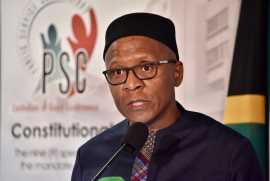
Addressing the media in Pretoria, Commissioner Gxoyiya said it is imperative that disciplinary processes be applied swiftly, fairly and consistently.
“Failure to do so, threatens labour peace which is an essential ingredient of workplace harmony and productivity, “Gxoyiya said.
He said disciplinary Code and Procedures for the Public Service provides the framework within which departments must manage employees ‘discipline.
“Whilst the Code provides examples of sanctions to be imposed, the management of precautionary suspensions rests with departments.
“There is a real risk that precautionary suspensions decided on by departments remain active for a long time because reliance is placed on external legal practitioners to conclude disciplinary processes, at huge cost to government.
“Precautionary suspension does not amount to a breach of the employment contract by the employer, because the employee remains on full pay, although prevented by the employer from performing the duties that would normally be required of the employee, “Gxoyiya said.
Gxoyiya says suspension with full pay should only be considered as a last resort and if it is not possible for the employer to precautionary transfer an employee during the investigation.
Reports from the DPSA showed that the total costs of precautionary suspensions at national and provincial departments amounted to R25 million during the 2021/2022 financial year.
According to Gxoyiya, the scale of the problem needs government to put in place robust measures to reduce the pending cost of suspensions to taxpayers.
“In fact, receiving salaries while absent from duty is in violation of the rule of no work no pay. The PSC noted that deep rooted and systemic corruption do not exist in a vacuum.
“Suspensions trends showed that they have flourished due to institutional failures in State systems and accountability as well as failures to achieve visible consequences for corrupt activities, “he said.
“Government needs to make precautionary suspension efforts more transparent and accountable in terms of efficiency and effectiveness,” he said.
According to the Public Service Commission, ideally, suspensions should be for a period not longer than 60 days.