
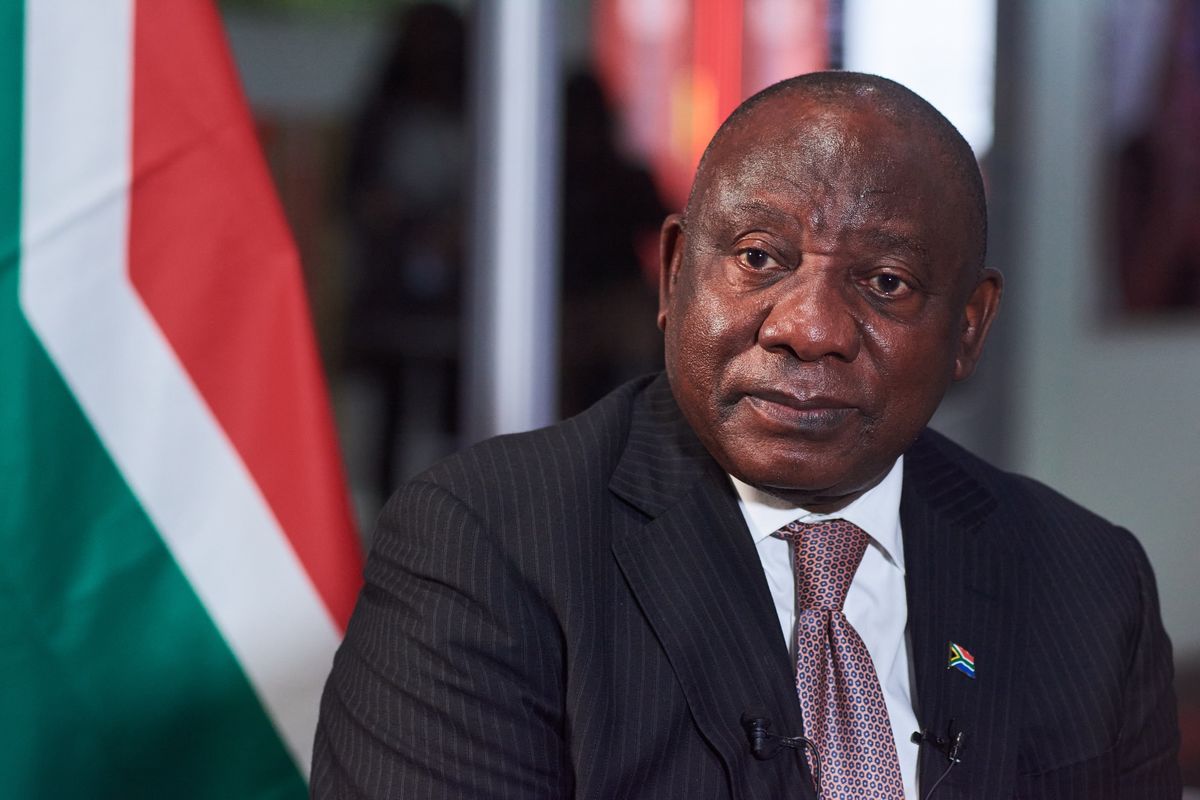
By Lehlohonolo Lehana.
President Cyril Ramaphosa has called for a recalibration of trade rules that ensured policy space for the industrialisation of developing countries.
Ramaphosa spoke at the 30th anniversary of the establishment of the World Trade Organisation (WTO), which was held virtually on Thursday.
This comes as US President Donald Trump imposed tariffs against several countries, including South Africa, China and Europe.
Trump has since halted this discussion for 90 days except for China.
Trump’s approach to tariffs raises fundamental questions about the WTO’s ability to navigate a landscape where one of its key members actively undermines its rules.
Ramaphosa described constraints and potential over-reach of trade rules, globally, which he said limited access to key policy tools.
He called on the WTO to provide reform and to be assertive in its mission, as more than 80% of world trade takes place under WTO rules.
“We are seeing unilateral and protectionist measures being implemented by some advanced economies that are outside the agreed-upon multilateral framework. It is incumbent on us all to ensure that the multilateral trading system is strengthened, or we risk the encroachment of a global trade regime based on power dynamics. The WTO is called upon to assert its role in ensuring that global trade works for all. WTO reform must be development centric. Consensus-based decision-making in the WTO must remain paramount,” Ramaphosa said.
He noted that the fourteenth Ministerial Conference of the WTO, in Cameroon in 2026, provided an opportunity to outline a road to reform.
The WTO General Director, Ngozi Okonjo-Iweala, has expressed concern that the escalation of trade conflicts, particularly between the U.S. and China, could lead to a significant reduction in global trade and economic fragmentation.
In summary, while the WTO marks three decades of existence, the current trade environment poses serious questions about its future role and functionality. The organization’s ability to adapt to these challenges will be crucial in determining whether it can maintain its relevance in a rapidly changing global economic landscape.