
By Lehlohonolo Lehana.
President Cyril Ramaphosa has highlighted the urgent need for global unity in ensuring equal access to education for all, amid the various challenges confronting the world, including ongoing conflicts.
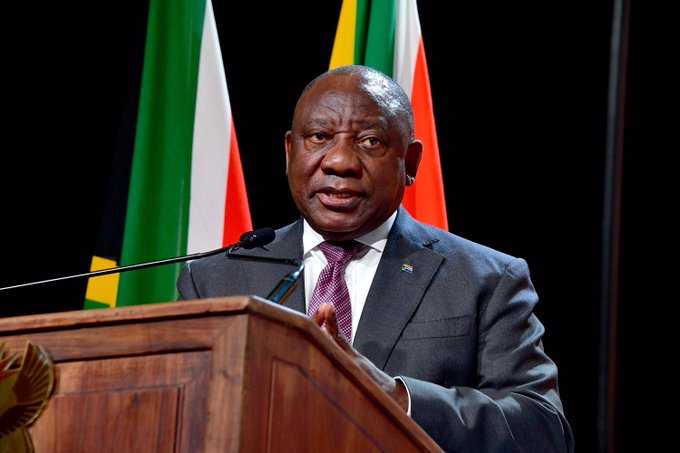
Ramaphosa was speaking at the Education International 10th Africa Regional Conference held at the Sandton Convention Centre in Johannesburg on Tuesday.
The conference takes place every four years and hosting rotates among member organisations.
The theme for this year’s event is, “Standing Together for Resilient Education Systems in Times of Crisis”.
EI is a global union federation of teachers and education support personnel unions consisting of 383 member organisations in 178 countries and territories representing more than 32 million members globally.
The conference is set to formulate strategies to ensure equitable, inclusive, quality public education for all, despite the numerous challenges confronting the region, including Covid, Ebola, HIV/Aids, conflict and climate change.
EIAFR local affiliates include the South African Democratic Teachers’ Union, the National Professional Teachers’ Organisation of South Africa, the National Teachers’ Union, the Professional Educators Union and the Suid-Afrikaanse Onderwysersunie.
Ramaphosa lauded the conference organisers for their commitment to advancing education, particularly in times of crisis, which is crucial for the future of the African continent and the world.
The President told delegates that as nations navigated the turbulent waters brought by the COVID-19 pandemic, the world was confronted with political upheavals and conflicts.
“These crises further strained our social fabric, affecting the livelihoods of countless individuals and denying many children their fundamental right to education. In these times of instability, it is even more critical for nations to stand united in pursuit of equal access to education for all.
“Education is the cornerstone upon which societies build their future. Through education, we cultivate respect for human rights, the rule of law and the principles of democracy,” the President said.
Decolonising education
Ramaphosa said many countries on the continent needed to deal with the impact of colonisation, which had plunged them into crisis.
“The impact of colonisation in many of our countries on our continent has a huge negative impact, and the whole process of decolonisation of education has become increasingly important,” Ramaphosa said.
He said the discussions at the conference focusing on tackling important issues such as racism, decolonising education, promoting democracy, human rights and trade union rights could not be more timely.
“The project of decolonising education in Africa is not just a matter of academic interest. In many ways, it is a pressing need that others will say is a life and death matter because education is so important in the lives of people around the world.”
He said it had become more urgent that education be streamlined and cleansed of the colonial type of ideology that infected the education system.
“We must challenge colonial theories and practices to build resilient education systems that are centred on African perspectives and experiences.”
This, Ramaphosa said, required a shift from a Eurocentric worldview to embrace a more diverse and inclusive perspective.
However, he said, there was also a need to acknowledge and value the knowledge systems of all peoples and integrate them into the curricular and knowledge selection processes.
Collaborate
He said labour movements, civil society organisations and non-government organisations operating in the education sphere must work together and collaborate to protect the space.
“Through such partnerships, we can prepare our learners and students to be informed citizens in democratic societies.”
The role of EI, he said, was vital as the organisation advocates for quality education.
“Your mission is to ensure inclusive, equitable learning opportunities for all and not just for some.”
During the apartheid years, he said, education opportunities were opened to some people only.
We now want to address that legacy and bury it so that education opportunities and access are open to all South Africans.”
The same, he said, applied on the continent.
“The disparities that exist in various parts of our continent as a result of poverty and inequality must disappear. Education must be for all and not for some.”
What was also needed, he said, were safe and conducive environments where the rights of all learners were respected and upheld.