
By Lehlohonolo Lehana.
President Cyril Ramaphosa says the government had made progress in addressing some of the country’s challenges over the past five years.
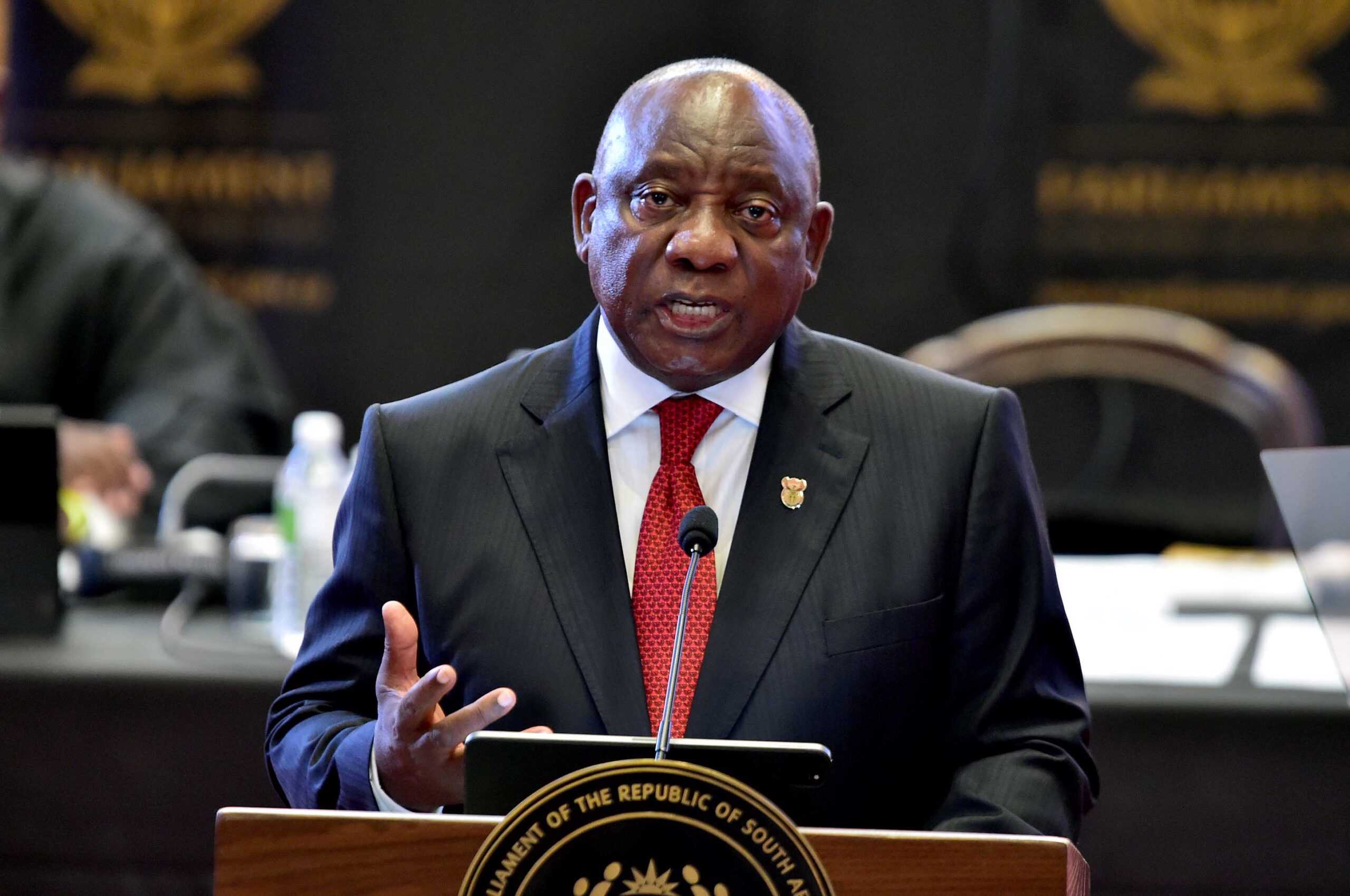
Ramaphosa on Thursday replied to the two-day debate on his State of the Nation Address (Sona).
The president highlighted some of the work done by the government to strengthen entities like the South African Revenue Service (SARS), the National Prosecuting Authority (NPA), and the Special Investigating Unit (SIU) to fulfil their mandates effectively.
He said the debate on his Sona revealed the extent of political contestation in the country.
“Some chose to belittle and even to deride what has been achieved over the last five years in the midst of extremely difficult conditions because it does not serve their political interests to recognise the progress that has been made, and progress that is clear to everyone who cares to know.”
Ramaphosa defended his decision to implement the state of disaster, during his reply to the debate on his State of the Nation Address (SONA).
“We will use it to ensure continuity in the provision of critical services and supply chains, and to address the impact of load shedding on businesses and households,” Ramaphosa told MPs.
“Several speakers in this debate have argued that the national state of disaster is unnecessary, or that it will allow for abuse of the system. This includes some leaders in the opposition – such as the premier of the Western Cape [Alan Winde] – who as recently as last month were writing me letters and holding media briefings calling for a state of disaster to be declared,” Ramaphosa said.
“This is the same Disaster Management Act that made possible our decisive, effective and agile response to successive waves of Covid-19 infections. It was this act that empowered us during that pandemic to save many lives and prevent even greater hardship. It is this Disaster Management Act that has on numerous occasions enabled us to provide urgent relief and support to people affected by floods and other natural disasters,” he said.
Ramaphosa said with the state of disaster, environmental protections and technical standards would be maintained.
Procurement would also be undertaken with transparency and proper oversight, he assured MPs.
“As we build an electricity system that will meet our energy requirements into the future, we need to dispel some of the myths that have been circulating – and that have been repeated here – about the path we are taking.
“We need to dispel this idea that we are abandoning coal as a fuel source. We should all remember that coal-fired power stations provide 80% of our energy source and will therefore continue to provide the bulk of our ‘base load’ supply into the future, “he said.
Civil action group Outa meanwhile has joined other groups in launching a court challenge against Ramaphosa’s declaration of a state of disaster over the ongoing energy crisis.
In papers filed on Thursday (16 February), Outa approached the Pretoria High Court to have the declaration overturned.
Under the state of disaster, the government would be able to cut through red tape and take swift action in dealing with load shedding and the wider energy shortfall, and could quickly exempt critical infrastructure and services from rolling blackouts.
According to Outa, however, the decision to declare the disaster was irrational, arbitrary and unlawful, because the national government already has the requisite power to deal with the crisis – it simply hasn’t done so.
“(The state of disaster) is the result of a crisis created by the government itself, which has been more than 15 years in the making. It is unnecessary because laws already exist to enable urgent action to address the energy crisis,” the group said.
“Years of state capture, mismanagement and a dysfunctional culture cannot be a rational justification for the declaration of a national state of disaster,” said advocate Stefanie Fick, Outa Executive Director.
Outa argues that the state of disaster grants extraordinary powers to officials to make far-reaching decisions without parliamentary oversight – which is a real concern in light of the extensive looting enabled by emergency procurement during the Covid-19 state of disaster.
Regarding the new ministry of electricity, Ramaphosa said this minister would assume full responsibility for overseeing all aspects of the electricity crisis response.
“The minister will be responsible for driving the various actions being coordinated by the National Energy Crisis Committee to end load shedding as a matter of urgency. The reality is that the resolution of the energy crisis requires effective coordination across several departments and public entities,” he said.
The president said the energy crisis required “undivided attention of a political principal who does not need to split time and energies among different important responsibilities”.
He added that it was not accurate that the minister of electricity would clash with other ministers who have been responsible for energy.
Ramaphosa said, some have suggested that the appointment of the minister will cause confusion and fragmentation, and that it might also result in turf wars amongst the ministers who deal with energy and Eskom.
“This is not the case. The minister of electricity will be focused day in and day out only on addressing the load shedding crisis, working together with the management of Eskom and the board.
Ramaphosa has also given his clearest indication that his deputy David Mabuza is on the way out.
This is the first time Ramaphosa has said anything about Mabuza’s imminent departure from the Union Buildings.
“As I conclude [the speech], I wish to extend my appreciation to Deputy President David Mabuza for his unwavering support over the last five years. He has ably led the South African National Aids Council and extensive engagements with military veterans and traditional leaders.
“He has supported peace building efforts in South Sudan and led processes around land reform, among other things. Deputy President Mabuza has indicated his wish to step down from his position, a request that we are attending to,” Ramaphosa said.
After loud cheers and chants from ANC MPs, Ramaphosa paused and looked at Mabuza and said: “Cheers, DP “
Watch live in the video below:
Video Courtesy of Presidency.