
By Lehlohonolo Lehana.
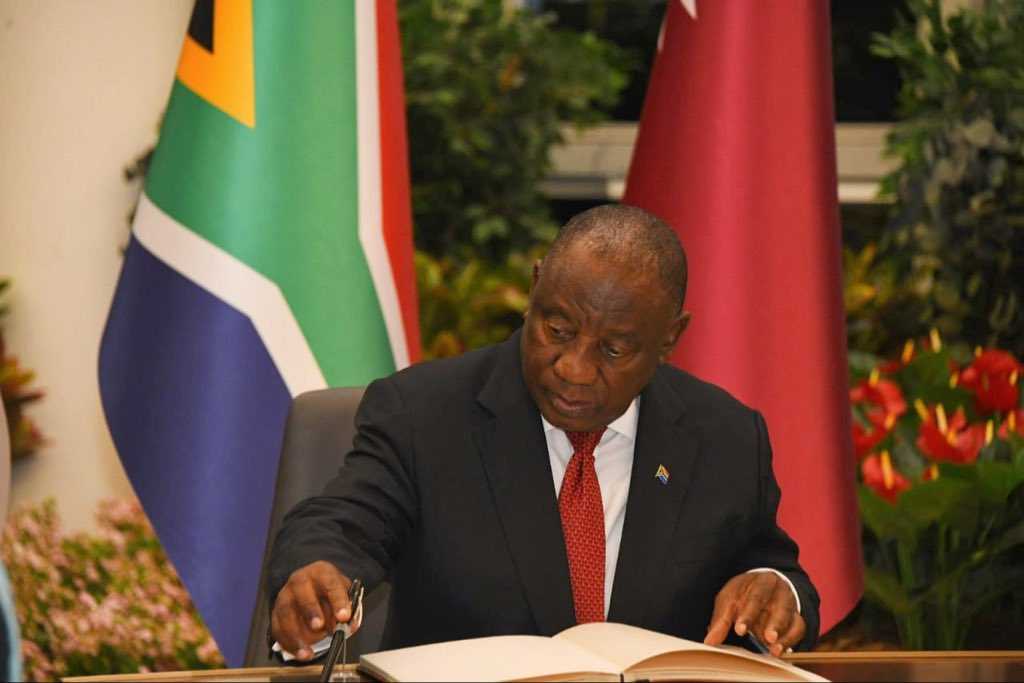
President Cyril Ramaphosa has indicated that it is just a matter of time before he signs the much criticised National Health Insurance (NHI) bill into law.
The bill was passed by lawmakers last year, aims to provide universal health coverage to all South Africans.
Speaking at the worker’s day rally in Cape Town, Ramaphosa said that government had processed many policies and laws which were demanded by working class.
Among these is the National Health Insurance Bill, which the president said workers advocated for over the years.
“You advocated for years, for you wanted all our people to be treated equally when it comes to healthcare,” he said. “The National Health Insurance Bill has now been passed, and it’s coming to my desk,” he said.
Ramaphosa said he was approached by Cosatu leadership, who told him, “If you don’t yet have a pen, Cosatu has a pen, and we are going to give it to you today so you can sign this law into operation.”
The comment references the president’s statement during his February State of the Nation address, where he said he was “looking for a pen” to sign the NHI into law.
In the three months since then, Ramahosa has signed several bills into law as the government moves with haste to finalise many of the bills it has been working on over the last five years before the end of the sixth administation.
Some of these new laws include the National Veld and Forest Fire Amendment Bill, the Agricultural Product Standards Amendment Bill, the Correctional Services Amendment Bill, the Judicial Matters Amendment Bill and the Eskom Debt Relief Bill.
However, the NHI—arguably one of the biggest pieces of legislation the Ramaphosa administration could pass —has not yet received the president’s signature despite being passed by both the National Assembly and National Council of Provinces at the end of 2023.
Since expressing his intent to sign the bill in February, Ramaphosa has used the bill as an electioneering tool at various ANC political rallies, repeatedly promising that it will be signed into law.
According to the Constitution, under Section 79, once a Bill is adopted, the President must either assent to and sign the Bill or, if the President has reservations about the constitutionality of the Bill, refer it back to the National Assembly for reconsideration.
B4SA Steering Committee chair Martin Kingston said that Busa and B4SA have concerns, recommendations, research, data and inputs, in addition to those made by a wide range of experts and affected stakeholders. They claim this information has been ignored by the Parliamentary Portfolio Committee on Health and the NCOP, which are legally mandated to ensure that the NHI Bill passes constitutional muster and is properly configured to give healthcare the best possible chance of success.
Kingston cited the concern that no amendments were made including those suggested by the Department of Health itself.
The National Education, Health and Allied Workers’ Union (Nehawu) has welcomed the passing of the Bill and condemned the delay in passing it.
Nehawu says the NHI Bill has gone through extensive debate and scrutiny and almost two decades of refinement, clause-by-clause deliberation and comprehensive public participation processes across all nine provinces.
Welcoming the passing of the Bill, the Congress of South African Trade Unions (Cosatu) has said that government cannot continue to place the profit margins of private industry above the needs of society.
It said South Africa spends 8.5% of its gross domestic product on healthcare which is higher than many industrialised and peer nations.