
By Lehlohonolo Lehana.
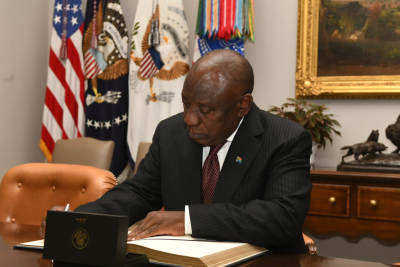
President Cyril Ramaphosa is leading the South African delegation to the 79th session of the United Nations General Assembly Debate.
Ramaphosa is expected to address the General Assembly on the opening day on Tuesday.
He is accompanied by Ronald Lamola, Minister of International Relations and Cooperation; Maropene Ramokgopa, Minister in the Presidency responsible for Planning, Monitoring and Evaluation; Dr Aaron Motsoaledi, Minister of Health; Dr Dion George, Minister of Environment, Forestry and Fisheries and Parks Tau, Minister of Trade, Industry and Competition.
This annual gathering of world leaders is the most important event on the UN calendar, with Heads of State and Government and Heads of International Organisations discussing global challenges and how to address these challenges in the best interest of humanity.
This year, the African Group presides over the General Assembly, with Philemon Yang, former Prime Minister of Cameroon, elected as President of the 79th Session.
The theme identified by the President of UNGA79 is, “Unity in diversity, for the advancement of peace, sustainable development and human dignity for everyone everywhere.”
In a statement, presidency said among the issues on which Ramaphosa will focus on during his engagements in New York include the necessity for the maintenance of international peace and security; the Sustainable Development Goals (SDGs) and the implementation of the 2030 Agenda; climate change and the upcoming COP29 in Baku; financing for development, and health and pandemic preparedness.
“Ramaphosa will take part in the United Nations Secretary-General’s flagship High-Level Summit of the Future (SoTF) on 22 September 2024, which, at its conclusion, is expected to adopt a Pact for the Future (PFTF),” read the statement.
“While in New York, Ramaphosa will also engage business leaders as part of the drive to attract foreign direct investment for South Africa.”
Since starting earlier this month, one of the main focuses of the 79th session of the UN General Assembly has been the weakening of the international system and the declining ability of international organizations to respond to crises around the world.
While direct and indirect wars are taking place in Europe and the Middle East, the ineffectiveness of international agencies in resolving their underlying disputes has sparked criticism.
Existing institutions are seen as unable to deal with problems, take necessary decisions, or implement them in a meaningful way.
They have also faced criticism that they are unable to adequately enforce sanctions with the compliance of all countries.