
By Lehlohonolo Lehana.
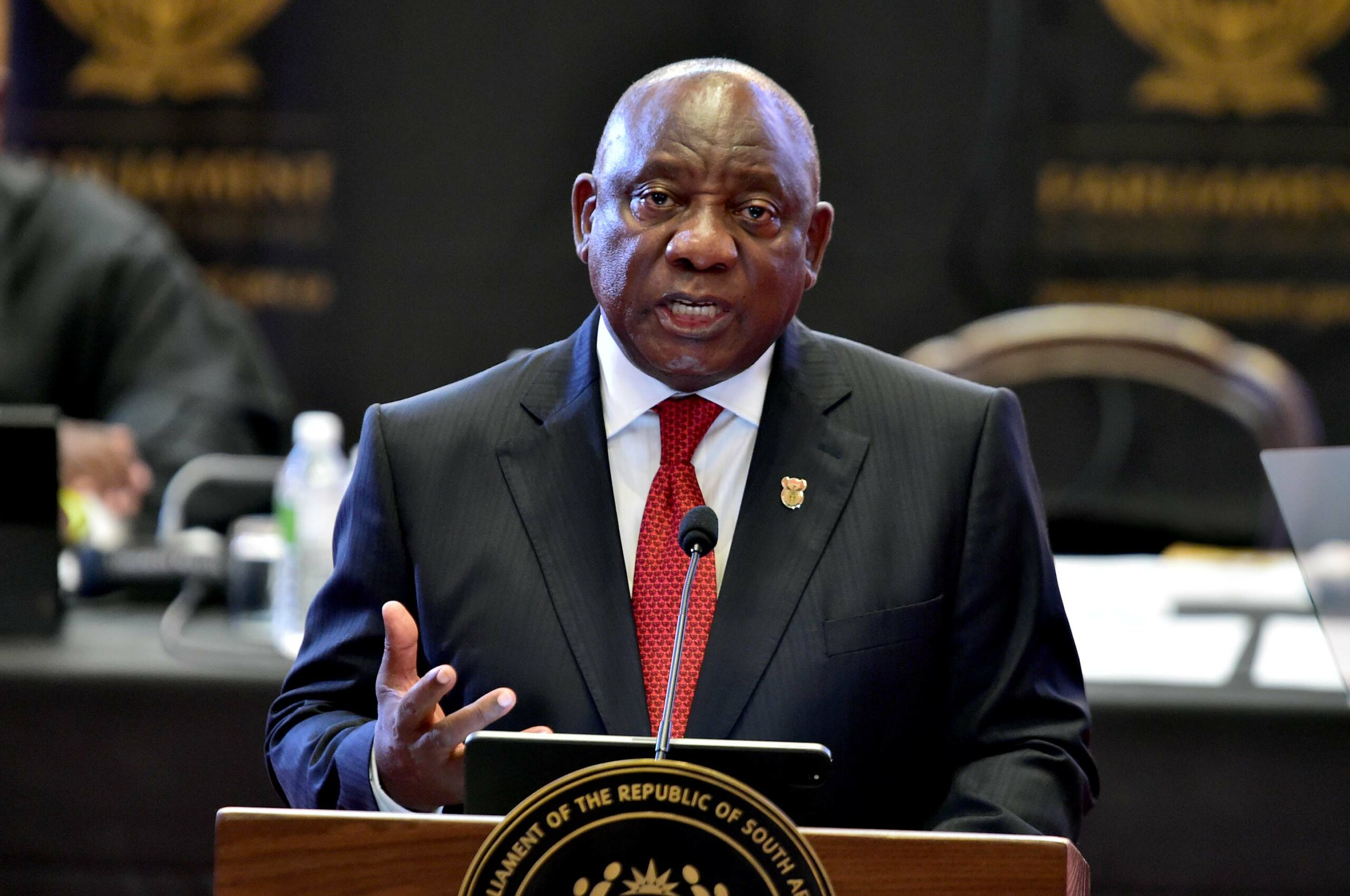
President Cyril Ramaphosa insisted that through the Government of National Unity (GNU), South Africa would change for the better.
Ramaphosa was responding to issues raised in the National Assembly debate on his Opening of Parliament Address (OPA).
The debate was robust as all political parties in the National Assembly had the opportunity to respond to Ramaphosa’s speech, which focus on growth and job creation, reducing poverty and the cost of living, and building a capable, ethical and developmental state.
During the debate on Ramaphosa’s speech, the leader of the opposition in the National Assembly, the uMkhonto Wesizwe (MK) party’s John Hlophe, called for an amendment of the Constitution to allow for land expropriation without compensation.
“We are not apologetic about our stand. We remain firm. Section 25 of the Constitution must be amended to make provision for the expropriation of land without compensation. That is the only way we can redress imbalances of the past and ensure every South African has access to land.”
ActionSA’s Athol Trollip accused Ramaphosa of taking inspiration from his speech from their policies, particularly the emphasis on inclusive economic growth and empowerment.
But he said the President made key omissions in his speech, including announcing interventions to improve the framework for combating money laundering and the financing of terrorism.
Ramaphosa also faced criticism from Economic Freedom Fighters (EFF) leader Julius Malema, who felt that the President’s speech inspired little hope. He criticised the GNU, saying that while it was the brainchild of the ANC, the Democratic Alliance (DA) holds veto power among partners who are part of the pact.
Malema further questioned the formation of the National Union of Mineworkers (NUM), suggesting that Ramaphosa had formed the union with the sole aim of serving as a conveyer belt between mine workers and the “highly exploitative” mining industry.
In his reply, Ramaphosa fiercely defended the GNU, which he said was determined to rapidly scale up the pace of efforts to bring development and shared prosperity, agreeing with Rise Mzansi’s leader Songezo Zibi that “urgency is the currency of the times in which we now live”.
Ramaphosa acknowledged that with the results of the May 29 vote, the landscape of South African politics is no longer what it once was.
“Much of what has been said during this debate has confirmed that we have entered a new era in South African politics. It is an era of hope. It is an era of optimism for the people of our country and for its future. We must demonstrate in word and in deed that this is an era of a government of national unity and not a fleeting convenience.
“We have had, and will continue to have, points of divergence, as the spirited nature of the debate has demonstrated. At the same time, we all understand what is expected of us by those who put us here.
‘They expect us to chart this country towards the ultimate goal of a better life for all. Talking to each other and working together and in the end, pulling in the same direction. That direction is towards the implementation of the Medium-Term Development Plan 2024-2029…the programme that will guide the seventh administration.”
Ramaphosa insisted that although South Africa faces a myriad of challenges and obstacles, the country is not a “hopeless case”.
“We are very much alive to the challenges we still face as a country. And yet we must remind ourselves that South Africa is not in the hopeless situation that some in the opposition benches want us to believe and have sought to loudly assert with sound and fury during this debate.
“South Africa is a country that has come a long way over the past 30 years. Let us never lose sight of that. Certainly, there have been setbacks and shortcomings. But we have done much to recover from these and are now committed to move forward with greater speed and impact,” he said.
Ramaphosa added that by working together, the GNU is “determined to rapidly scale up the pace of our efforts to bring development and shared prosperity to our people”.
“And in this effort, as Minister [John] Steenhuisen says, we need the builders, not the breakers or destroyers. We need weavers and not vultures. Those who share this vision of a better South Africa will find the doors of the Government of National Unity always open to cooperation and collaboration.
“It is expected of us all who have been entrusted with positions of leadership within the Government of National Unity and in this Parliament that we rise to the challenge to be builders and not breakers. We must be at the forefront of building a capable, ethical developmental state, of growing an inclusive economy, and reducing poverty, “Ramaphosa said.
Ramaphosa further said Malema should avail himself of meetings where they would discuss politics in detail. He alleged that the Red Berets leader was out of touch with what politics really is.
He said Malema found it hard to understand politics and would usually look confused in matters that involved politics, especially old politics.
Ramaphosa was confident that Malema would be able to talk about things that would better South Africa after sitting down with him.
You know, you stood here some two years ago and insulted me and my father. You said my father was a police officer, and yes, I’m proud to be the son of a policeman, a very good policeman,” said Ramaphosa.
“I have spoken to your grandmother and I would never stand here to insult your mother because I respected her, and I respect you too. I say this because when we are in politics, it is important that we respect each other to show that all we are for is to take our country forward,” Ramaphosa added.
He said what Malema had said did not only offend him but other people as well so it was important that they work on understanding politics for the betterment of the country.