
By Lehlohonolo Lehana.
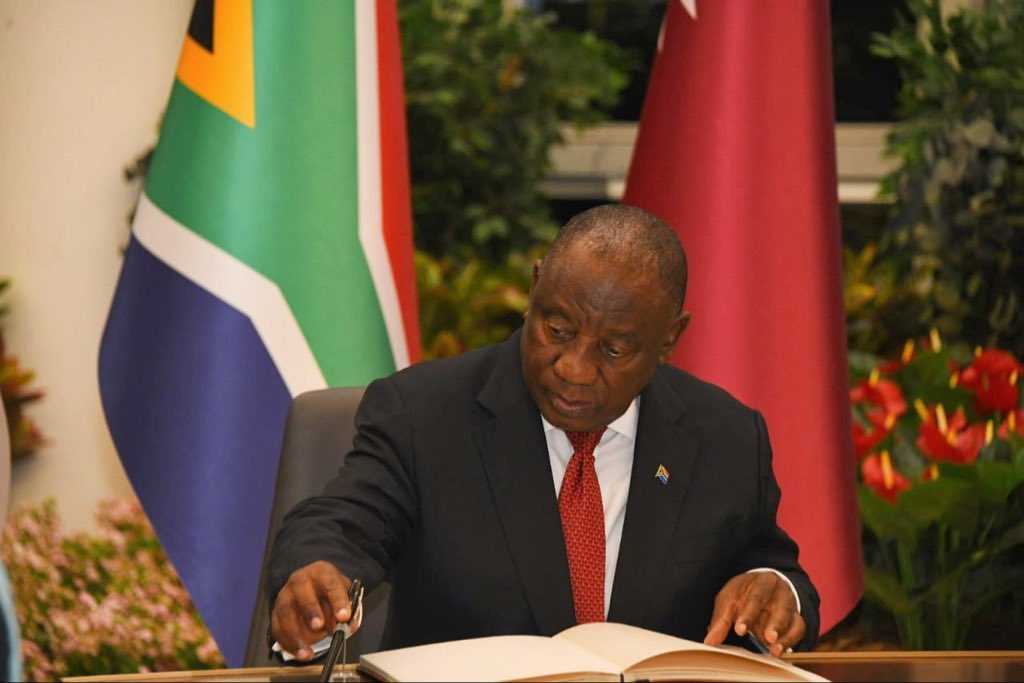
President Cyril Ramaphosa has signed the Electoral Matters Amendment Bill into law, despite concern over the impact that it would have on political funding.
The Bill has been critised by various political parties, saying it is “unconstitutional” because it ultimately removes the cap on political party donations and changes disclosure criteria.
The legislation, passed by Parliament in March and signed by Ramaposa on 7 May 2024, amends the Political Party Funding Act (PFFA).
This is so that it aligns with the Electoral Amendment Act of 2023 to allow independent candidates to run for positions in the National Assembly and provincial legislatures.
The bill also seeks to regulate donations to independent candidates in the same manner as political parties, and allows them access to the Multi-Party Democracy Fund once elected, which currently supports political parties with private sector donations.
In a statement on Tuesday, Ramaphosa said the bill makes consequential amendments to the Electoral Act of 1998.
“The new legislation provides for independent representatives to receive funds from the Multi-Party Democracy Fund, which is also administered by the Independent Electoral Commission.
“While the Represented Political Parties Fund is resourced by the fiscus, the Multi-Party Democracy Fund aims to raise and distribute donated funds from the private sector to represented political parties. The Fund will now include independent candidates.
“In a year in which voters are presented with the greatest diversity of electoral choice, the legislation that is now enacted constitutes tangible, material support for a vibrant, competitive, open and equitable electoral system and democratic culture,” said Ramaphosa.
Last week, MPs were warned of a potential gap in the Electoral Matters Amendment Bill.
Parliamentary legal advisor, Charmaine van der Merwe, said that Parliament retains the current limits prescribed in the Political Party Funding Act for the time being.
“The president can only make those regulations upon a resolution from the National Assembly, so we are sitting between a rock and a hard place.”
“But we are fortunate that the Act currently provides that in section 24, that the National Assembly may make a resolution and that the president may then make regulations based on that resolution,” said van der Merwe.
Van der Merwe further emphasised that the resolution did not align with the provisions of the Electoral Matters Amendment Bill, but rather with those of the PPFA.
Secretary to the National Assembly, Masibulele Xaso, proposed that a sitting be held on 16 May to consider a motion on the resolution.
“The 15th [of May] is Cabinet [meeting] day and therefore, we need the numbers in the House for these pieces of law to be processed.”
Acting National Assembly Speaker Lechesa Tsenoli agreed with the proposal.
Some political parties and civil society organisations have vowed to take legal action against the Electoral Matters Amendment Bill.