
By Lehlohonolo Lehana.
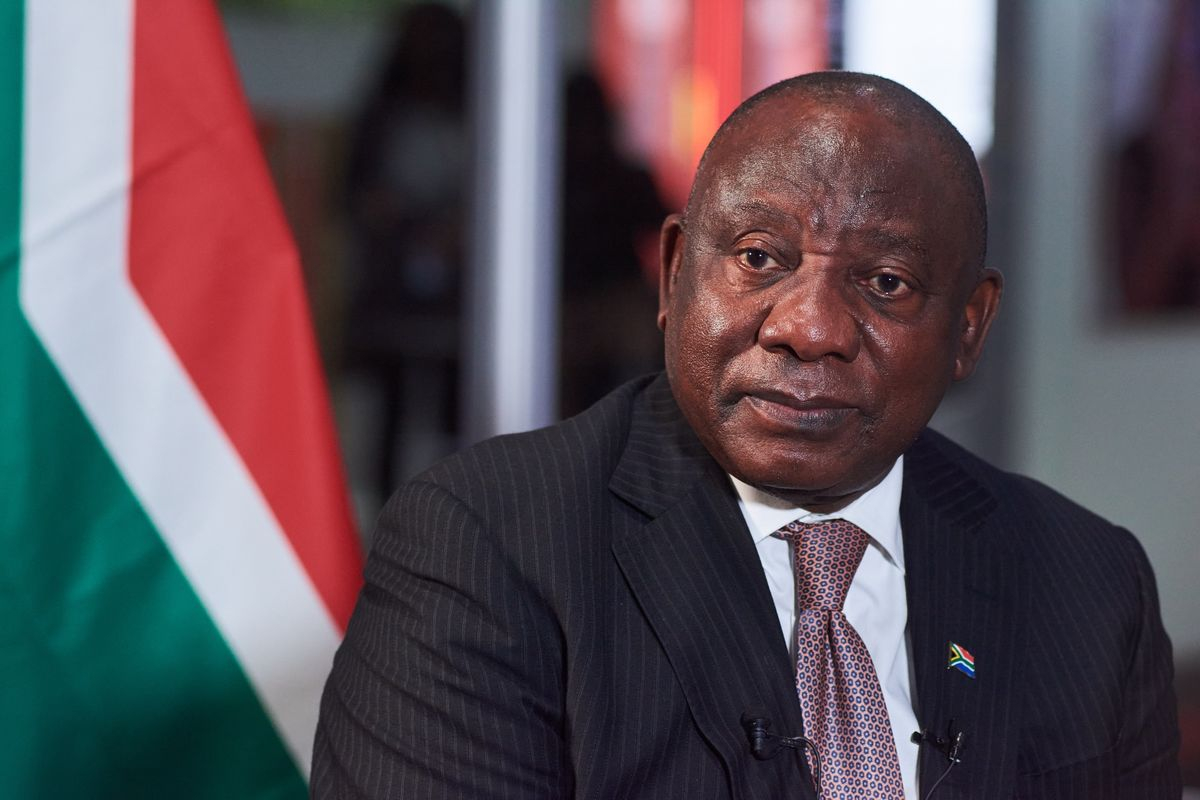
President Cyril Ramaphosa has signed the Local Government: Municipal Systems Amendment Bill into law, barring municipal workers and senior managers from holding political office.
The bill prohibits all municipal officials from holding political office and also empowers MECs to take appropriate steps, which includes the application of declaratory orders on the validity of appointments to enforce compliance.
The new laws replace the 2011 Amendment Act, which had a political office ban that only applied to municipal managers and their direct reports.
The laws come amid a wider project to professionalise public services in South Africa and clamp down on questionable appointments in local government.
Minister of Cooperative Governance and Traditional Affairs, Nkosazana Dlamini Zuma recently introduced regulations professionalising local government administration by establishing uniform norms and standards and including minimum qualification and competency criteria.
The latter-most regulation entails requirements for senior management such as tertiary qualifications, a minimum of five years of management experience and certain critical leadership competencies, such as problem-solving.
The regulations also delineate roles and responsibilities for councillors and officials, which was prohibiting councillors from participating in the recruitment and selection processes. To complement this, the minister said the Municipal Infrastructure Support Agency (MISA) worked with municipalities and deployed professionals to specific municipalities.
These include registered engineers, planners, as well as energy, solid waste, water, sanitation, and roads and transport specialists who work and provide on-the-job training and support to municipal staff.
The Local Government Municipal Systems Amendment law will work alongside these measures in ensuring that municipal managers, senior managers, and staff members in municipalities are not also holding political offices and being deployed as part of political goals.
The laws state that: “A staff member may not hold political office in a political party, whether in a permanent, temporary or acting capacity.”
It defines political office as the position of chairperson, deputy chairperson, secretary, deputy secretary or treasurer of a political party nationally or in any province, region or other areas in which the party operates.
The laws complement the Local Government Municipal Structures Amendment Act which came into effect on 1 November 2021. These laws strengthen governance in municipalities through a minimum councillor requirement and the introduction of a specialised code of conduct.
The legislation also provides for the repeal of the Municipal Systems Amendment Act of 2011 which was declared unconstitutional in 2017, for its failure to comply with the procedures as set out in Section 76 of the Constitution. The Act was tagged as a Section 75, instead of a Section 76, Bill.
In her audit of municipal figures for the 2020/21 financial year, Auditor-General Tsakani Maluleke reported that R21.10 billion of irregular expenditure was incurred at a local government level, mainly due to non-compliance with supply chain legislation.
Maluleke also reported that only 62 municipalities gave her office credible statements when the audit season began.