
By Lehlohonolo Lehana.
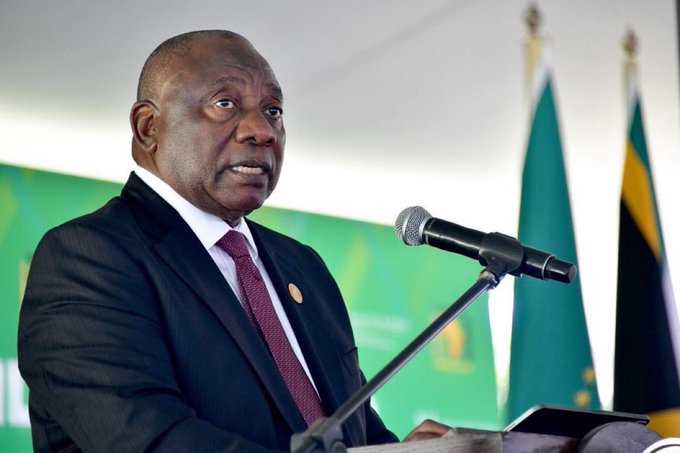
President Cyril Ramaphosa says the country must effectively address the challenges in the local government to improve the lives of the South Africans.
In his weekly newsletter Ramaphosa said, South Africans deserve local governments that are willing to serve them and to ‘uphold their right to dignity’.
Municipalities are at the coalface of serving South Africans, as they are responsible for delivering basic services such as water, sanitation and electricity to citizens. said Ramaphosa.
“Local government provides the infrastructure and services that help improve people’s livelihoods. All spheres of government must therefore work together to ensure that municipalities are able to fulfil their responsibilities.
Ramaphosa reflected that at a meeting of the Presidential Coordinating Council (PCC) – a platform to engage with provinces and local government – on Friday, 2 June, the matter of improving the lives of the people was high on the agenda.
“The council was presented with proposals on local government reform and improving intergovernmental coordination in the critical areas of electricity distribution, water and sanitation services, waste management and roads.
“The council focused on the challenge of municipal underspending. While many municipalities are in great financial difficulty, they often do not spend the grants they are allocated by national government.
“In the last year, around 88 municipalities failed to spend at least 10% of their Municipal Infrastructure Grant, which is supposed to be used for eradicating infrastructure backlogs. Another challenge is that money that is not allocated for a specific purpose is often misspent, “Ramaphosa said.
According to the President, low revenue collection in municipalities stymies the ability of municipalities to implement projects and programmes, and must be addressed urgently.
“It is imperative that municipalities must have credible, sustainable and well-managed revenue collection programmes that apply fair and equitable standards to all customers. Citizens should play their part by paying for services. All businesses and government departments must pay outstanding debt to municipalities.
“The PCC recommended that National Treasury and the Department of Cooperative Governance should develop measures to further support and strengthen municipal revenue collection systems with urgency. As the Auditor-General’s report noted, municipalities are often to blame for their own financial woes because of poor debt collection practices.
“More broadly, the Presidential Coordinating Council deliberated on the urgent task to review the funding model for municipalities to ensure they have the resources they need to do their work,” he said.
Turning to the issue of Municipal Audit Outcomes for 2021/22, Ramaphosa said although clean audits are not the only way to measure the performance of a municipality, this must improve.
Last week, Auditor-General Tsakani Maluleke painted a gloomy picture of how the municipalities were being run.
Maluleke noted a deterioration in local governance across the country, citing councils that are not disciplined.
Of the 257 municipalities in the country, only 38 have recorded clean audits from the Auditor-General.
“While clean audits are not the only indicator of good service delivery, there is a clear correlation between achieving good audit outcomes and improving services to communities.
“In the face of the great needs of our citizens, the dire material conditions in which millions of people live, and ongoing service delivery failures, the findings of the Auditor-General are serious and need a coordinated response, “he said.