
By Lehlohonolo Lehana.
President Cyril Ramaphosa has warned that climate change poses an existential threat to the future of humanity and the planet, which requires urgent, and coordinated global action.
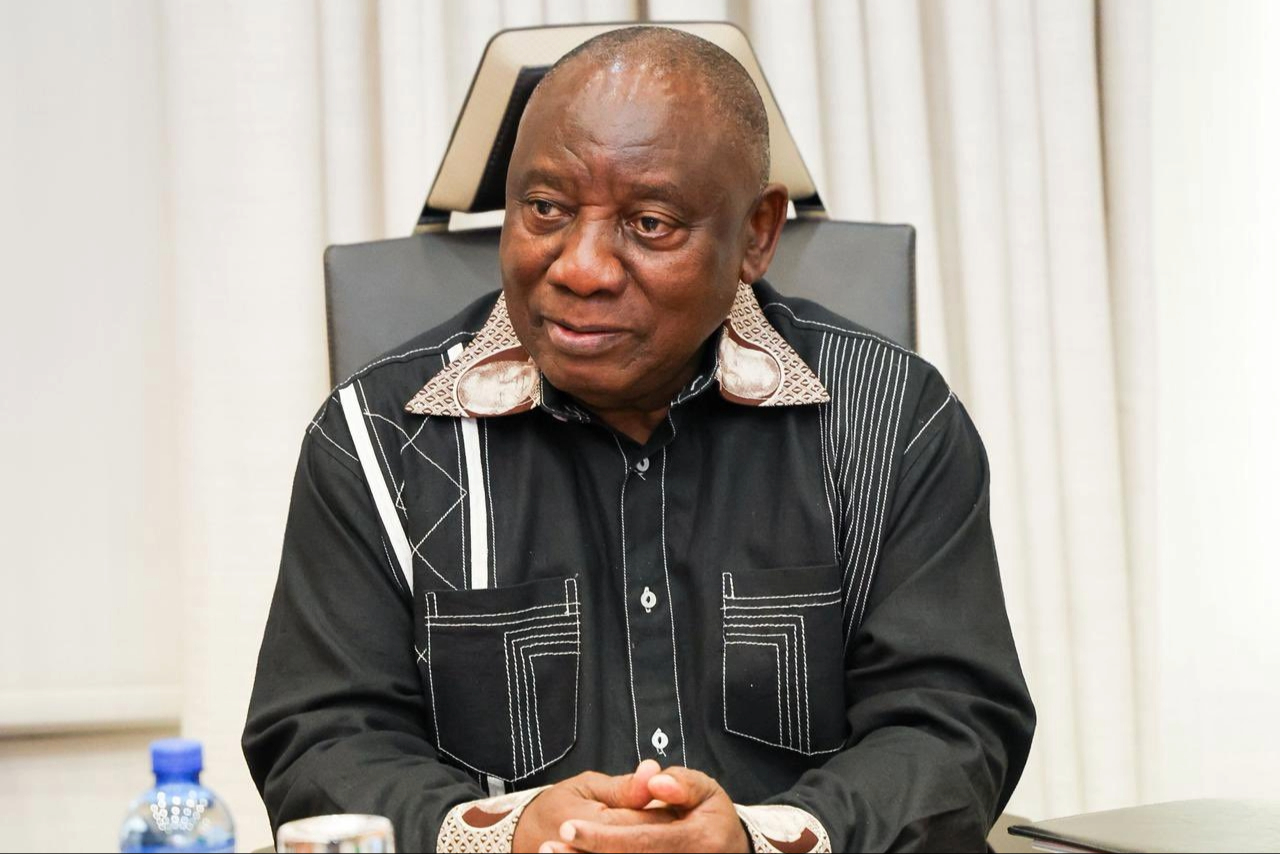
Speaking at a special session of the newly elected Presidential Climate Commission (PCC) on Friday, Ramaphosa said the country is already experiencing climate change effects that could significantly impede growth and undermine efforts to address inequality, poverty and unemployment.
Ministers in the Presidency, higher education and training and forestry, fisheries and the environment attended the meeting, which set priorities for advancing the country’s just transition to a low-carbon, climate-resilient economy.
Ramaphosa cited recent flooding and extreme weather events across several provinces.
“Addressing climate change must therefore go hand in hand with improving living conditions for all,” he said, adding that vulnerable groups — including women, children, people with disabilities, the poor and the unemployed — must be protected.
He also underscored need to safeguard jobs and livelihoods in carbon-intensive sectors, particularly coal mining, as the country transitions to a low-carbon economy.
Ramaphosa called for unprecedented cooperation between government, business, labour and communities to manage the transition fairly.
“This will require inclusive social dialogue and unprecedented levels of cooperation, “he said, highlighting the PCC’s role in building national consensus on economic, social and environmental policies tied to decarbonisation.
Reflecting on the PCC’s work since its establishment in December 2020, Ramaphosa said it had marked a turning point in the country’s climate agenda by fostering consensus among government, business, labour, civil society, youth and academia on some of the most contested climate and development challenges.
Ramaphosa called on commissioners to work in close partnership with key ministers and their departments to ensure climate action is fully integrated into national priorities, from energy and finance to trade, labour and cooperative governance.
The reconstituted commission was assuming its mandate at a critical moment, said PCC deputy chairperson Dipak Patel. “Climate action must drive development, protect workers and communities and unlock new economic opportunities,” Patel said, adding that the PCC would sharpen its focus on delivery over the next five years.
Patel said,PCC would build on the strong foundation established by the first cohort of commissioners and sharpen its focus over the next five years.
“As the commission embarks on its second term, we will focus on strengthening public awareness, enabling local action and advising on the required policy adjustment measures where necessary driven collective resolve to ensure that South Africa’s transition to a low-carbon, climate-resilient future is inclusive, fair, and development-driven.