
By Lehlohonolo Lehana.
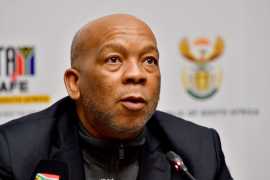
The amount of unpaid dues that municipalities owe Eskom has risen to more than R63.2-billion and is increasing exponentially, says Electricity Minister, Dr Kgosientsho Ramokgopa.
Ramokgopa says the financial status of municipalities is of huge concern. “‘The financial health of municipalities is very illiquid. Some are insolvent and not raising sufficient revenue to meet their operational activities,” he said.
Eskom supplies power to 238 municipalities with the top 20 of them accounting for 77%, or R48.9-billion, of the total overdue debt, Ramokgopa said.
Metros also owe an amount of R3.1 billion to Eskom as at 30 June. These are the City of Tshwane and the City of Ekurhuleni. They made partial payments in July.
He added that at the current rate, municipal debt is expected to increase exponentially, and this ultimately places a burden on Eskom.
Ramokgopa briefed the media on Sunday on the progress made in the battle against load shedding.
He also said municipalities’ inability to invest in electricity infrastructure leads to issues such as load reduction.
“These communities are subjected to a number of challenges. They are subjected to load reduction. Communities in other parts of the country are going for longer periods of time without electricity, not because of loadshedding but because of these challenges.
“There are a number of municipalities that have entered into some agreements. They fail to live up to those agreements, because essentially their revenue base has been eroded. They are unable to sustain those agreements,” said Ramokgopa.
Ramokgopa said once the issue of load shedding is resolved, some communities will continue to suffer power outages due to the failing infrastructure.
“The comfort we want to give to communities is that we are attending to all of these problems. We are not waiting to resolve loadshedding and much later we go and address the distribution side. We are addressing the entire ecosystem so that we can have full proof comprehensive solution on the resolution of the electricity problem in the country.”
Ramokgopa said that work was underway with Eskom’s distribution team, as well as the South African Local Government Association, to help address municipalities’ financial challenges that limit their ability to invest in infrastructure.
Another issue is illegal connections – whereby people are consuming power they have not paid for. These illegal connections overburden infrastructure, and that is also increasing the rate of power failures.
Ramokgopa explained that municipalities contract a certain amount of power from Eskom called the Notified Maximum Demand (NMD). Illegal connections are over and above the NMD, and that causes the infrastructure to fail because it can’t support that unaccounted-for demand.
As a result, Eskom needs to implement load reductions in these municipalities.
“The casualties are good-paying residents, the poor registered as indigent users, and the industry not able to produce…,” Ramokgopa said.
Monde Bala, head of Eskom distribution said “We will monitor the payments for the next 12 months, and then we will trigger the first tranche of the relief package if they stick to the payment of their current account.”
Bala said that the National Energy Crisis Committee (Necom) is working on options to fund the refurbishment of distribution infrastructure. There are some “indicative figures” of how much will be required to bolster Eskom’s infrastructure, but determinations are still being made for how much municipalities will need.
Bala said that there are talks about possibly using the Just Energy Transition project funding to support the distribution requirements.
With the BRICS summit kicking off in Johannesburg this week, Ramokgopa was also asked if the conference would be spared load shedding.
In response, Ramokgopa reiterated that load shedding is a tool required to protect the integrity of the grid when demand exceeds generation capacity.
Watch Live in the video below:
Video Courtesy of GCIS.