
By Lehlohonolo Lehana.
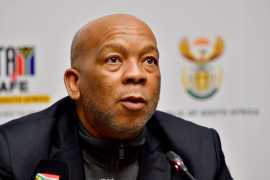
South Africa will soon start allowing private-sector investors to participate in the funding of new grid infrastructure such as power lines, according minister in the presidency responsible for electricity Kgosientsho Ramokgopa.
Ramakgopa used his latest briefing on the Energy Action Plan to again emphasise the importance of expanding the country’s electricity networks to help end loadshedding, which has been undermining the growth and development of the economy for some 14 years.
Inadequate grid investment is currently constraining the ability of independent power producers (IPPs) to connect new generation projects in the Eastern, Northern and Western Cape provinces, where Eskom has indicated there to be no more connection capacity.
The utility has indicated that it is aiming to unlock some capacity through the introduction of a new curtailment framework and a gated approach to the release of capacity for public and private procurement cycles.
However, neither solution had been finalised by December 14, when the IPP Office released requests for proposals for 5 000 MW of new renewable energy, 2 000 MW of gas to power and 615 MW/2 460 MW of battery storage.
Ramokgopa, thus, forecast that the grid constraint would continue to weigh on current and future procurement programmes unless new powerlines and substations were added at a pace that exceeded the schedule outlined in Eskom’s current Transmission Development Plan (TDP).
During the sixth renewables bidding round in 2022, none of the wind projects that bid for a 3 200 MW allocation advanced to preferred bidder stage after Eskom said the grid-connection capacity on which the projects were premised had been fully absorbed.
Under the TDP, only 1 675 km of line is planned for construction by 2027, leaving the lion’s share of 14 218 km proposed for construction by 2032 to be implemented in the last five years of the plan’s horizon.
Besides it being insufficient to connect new generation, the delayed investment profile has also been heavily criticised by local industry, which has warned that it will be unable to make the manufacturing and skills investments required to participate in the later steep rise in grid expenditure.
“We are looking at this to buttress the work that Eskom is already doing under the TDP,” the Minister said, adding that the intention was to inject “aggression” into the implementation of the TDP.
Ramokgopa indicated that he would meet with the new board of the National Transmission Company of South Africa (NTCSA) to ensure alignment between it and government on the plan to accelerate grid investment by attracting private finance, contractors and operators into an area currently monopolised by the State-owned utility.
The NTCSA is currently being separated from within Eskom to create a level playing field between IPPs and Eskom and is expected to be operationalised once Eskom has received bondholder consent for its unbundling and its establishment as an independent entity under Eskom Holdings.
The Minister said South Africa’s ambitions to attract private investment into the grid had been well received when canvassed recently with potential investors at the World Economic Forum in Davos, Switzerland, as well as with the leaders of European missions in South Africa.
He added that funding could also arise from those governments that were supporting the country’s Just Energy Transition Investment Plan, the implementation plan for which was published late last year.
There was, he argued, an “insatiable appetite” within the private sector to support independent transmission projects in South Africa and the focus currently was on finalising a procurement architecture that did not place an additional burden on public finances but that was still attractive to investors.
“The issues that we need to resolve are the governance framework, which will inform how we go out and procure,” Ramokgopa said, while confirming that a BOT-type approach was being considered.
Before providing its final approval, Cabinet wanted the model fully canvassed with stakeholders, including the NTCSA, as well as greater clarity on what financial resources were required to establish the procurement unit, which would be “incubated” within either the DBSA or the IDC.
“We have done a comprehensive study, and we are not guinea pigs; many parts of the world have gone that route of [BOT].
That’s the route that the private sector is also familiar with, thats the route that confirms certainty that … [the grid] remains a public asset, because it gets to be transferred back to the State; so we are not relinquishing ownership of the grid.
Eskom meanwhile says that stage 2 load shedding will be implemented indefinitely following a brief suspension earlier this morning.
Utility said that, due to the anticipated low electricity demand, load shedding will be suspended from midnight until 05:00 on Tuesday.
Thereafter, Stage 2 load shedding will resume until further notice. Eskom will communicate should any significant changes occur.
For access to other load shedding schedules, Eskom has made them available on loadshedding.eskom.co.za.
Smartphone users can also download the app EskomSePush to receive push notifications when load shedding is implemented, as well as the times the area you are in will be off.