
By Kevin Rademeyer.
Since the very first race in 1970, the New York City Marathon has embodied much more than a sporting challenge, becoming a celebration of resilience and human diversity. What began as a modest run through Central Park with just 55 finishers has evolved into the largest marathon in the world, a 26.2-mile journey that unites runners from every corner of the globe and turns the streets of all five boroughs into a carnival of endurance, music and community spirit.
This year, with less than three months to go, the appetite to be part of that magic has reached unprecedented heights. More than 200,000 hopefuls applied for the 2025 TCS New York City Marathon, a staggering 22 per cent increase on last year and the most in the event’s 55-year history. The odds of getting in through the general lottery, drawn on 5 March, were razor-thin, just two to three per cent, making it as selective as some Ivy League universities.
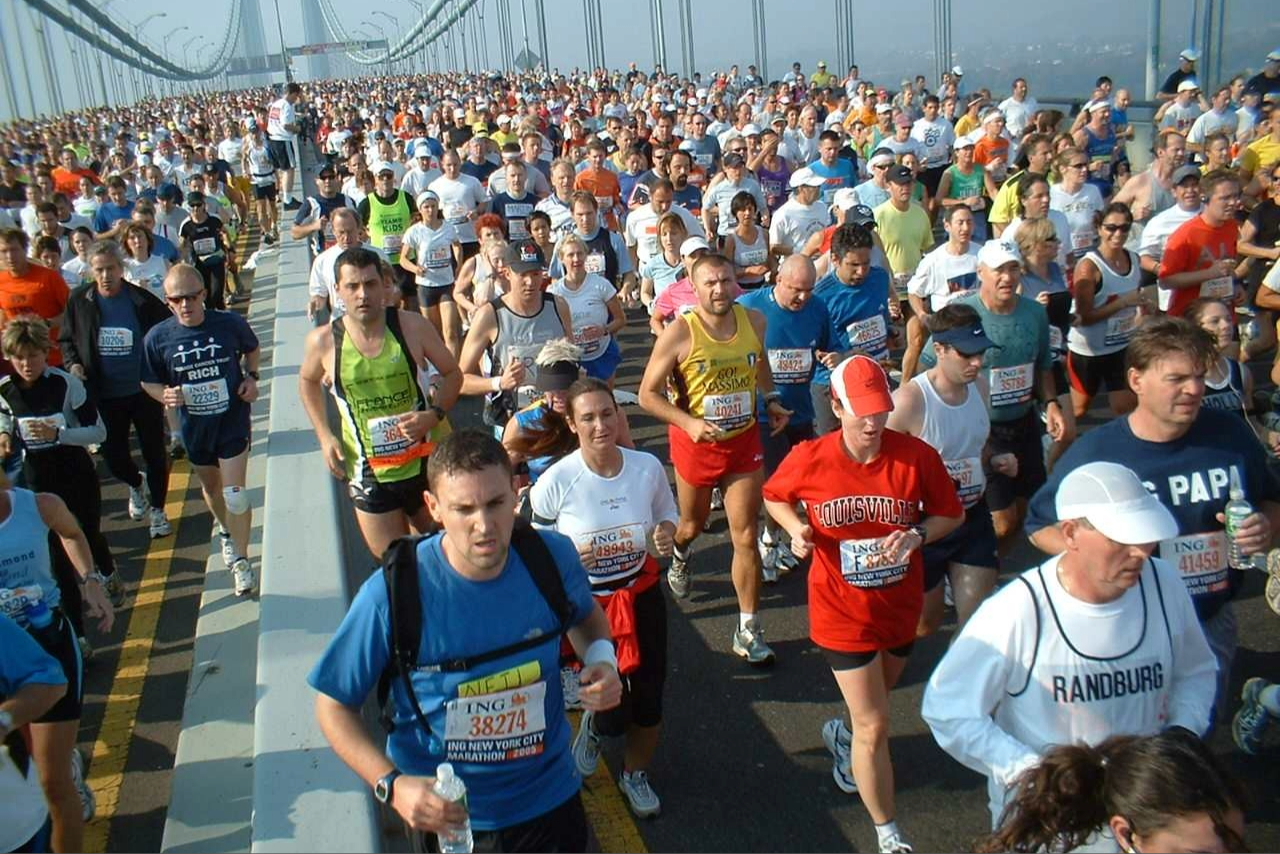
The race, organised by the non-profit New York Road Runners, will take place on Sunday 2 November, with the starting line on Staten Island and the finish in Central Park. Along the way, runners will conquer bridges, weave through neighbourhoods rich with culture, and be propelled by roaring crowds lining every inch of the course. From the Verrazzano-Narrows Bridge to First Avenue and into the heart of Manhattan, the marathon offers a moving postcard of the city itself.
The scale of participation has grown beyond anything its founders could have imagined. Last year’s edition set a world record with 55,643 finishers, representing more than 150 nations and ranging in age from 18 to 87. The race has become both a pinnacle goal for elite athletes and a bucket-list dream for amateurs who relish the idea of running shoulder-to-shoulder with the world.
For those who cannot rely on the lottery, there are other paths to the starting line. Runners can qualify through lightning-fast times, for women aged 18 to 34, that is a brisk 3:13:00, or a 7:22 pace, or by joining the New York Road Runners; 9+1 programme, which guarantees entry after completing nine official races and volunteering at one eligible event. Others choose to run for charity, raising vital funds for causes through official partner organisations.
Part of the race’s magic lies in the atmosphere. TikTok creator Justine Huang, who went viral for her unconventional approach to last year’s marathon, describes the day as “the whole city becoming a party”. The blend of live music, hand-painted signs, strangers shouting your name and the shared grit of tens of thousands of runners creates an electricity impossible to replicate elsewhere.
The marathon has also benefited from New York’s fast-growing run-club culture, where early-morning jogs become a gateway to lasting friendships and community. For many, the social and cultural energy of the city is as much a draw as the race itself.
But prestige comes at a cost. Entry fees for the 2025 marathon are set at $315 for non-members of NYRR and $255 for members. While some see the price as a fair trade for a once-in-a-lifetime experience, others point to smaller, more affordable races as worthy alternatives.
Still, for those who secure their bib, the New York City Marathon remains a singular event, a sweeping celebration of endurance, unity and the indomitable spirit of the city it calls home. On 2 November, as the starting cannon fires, the streets will once again fill with the sound of pounding footsteps, cheers in dozens of languages and the shared heartbeat of more than 50,000 runners chasing a dream.