
By Lehlohonolo Lehana.
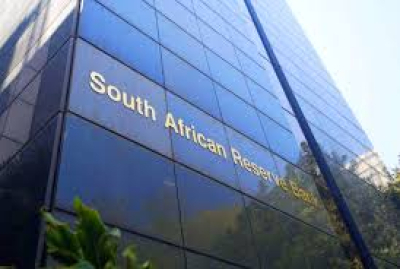
The South African Reserve Bank (SARB) raised interest rates for a sixth meeting running as it moved to protect the weakened rand and stabilise inflation.
At the end of its three-day meeting on Thursday, the monetary policy committee (MPC) lifted the repo rate by 75 basis points (bps) to 6.25% as predicted by 12 of 20 economists surveyed by Reuters.
According to Reserve Bank governor Lesetja Kganyago, the rate hike comes off a general slowdown in global growth and high inflation due to the war in Ukraine, as well as local factors, such as load shedding
“While economic growth is slowing globally, inflation continues to surprise to the upside. Sustained policy accommodation, supply shortages and other restrictions have sharply increased the prices of many goods, services and commodities,” he said.
Russia’s war in Ukraine continues to impair the production and trade of a wide range of energy, food and other commodities. The supply of energy to the Euro area is limited as winter approaches, placing immense strain on households, businesses and governments.
Taking these and other factors into account, the SARB’s forecast for global growth in 2022 is revised down from 3.3% in the July meeting to 3.0%, and is lowered to 2.0% (from 2.5%) for 2023.
Locally, fuel prices – and thus fuel price inflation – has come down in recent months, but food price inflation remains high, revised upward to 8.1% for 2022 and only falling back into the targeted range for 2023. The Bank’s forecast of headline inflation for this year is unchanged at 6.5%. For 2023, headline inflation is revised lower to 5.3%.
The risks to the inflation outlook are assessed to the upside, Kganyago said.
This year the SARB expects the South African economy to grow by 1.9% – down from 2.0% in the July meeting. Growth in the first quarter of this year surprised to the upside, at 1.7%. In the second quarter, flooding in KwaZulu Natal and more extensive load-shedding contributed to a contraction of 0.7%.
Growth in the third and fourth quarters is forecast to be 0.4% and 0.3%, respectively.
“Private investment has strengthened on the back of the recovery, but public sector investment remains weak. Household spending remains supportive of growth, but is likely to soften next year. Tourism, hospitality and construction should see stronger recoveries as the year progresses,” Kganyago said.
“Against this backdrop, the MPC decided to increase the repurchase rate by 75 basis points to 6.25% per year, with effect from the 23 September 2022,” he said.