
By Lehlohonolo Lehana.
South Africa has recorded a slight decline in rhino poaching in May and June this year, and the government said global cooperation is essential to save the rare animals.
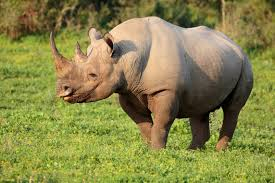
Poaching poses the biggest threat to the rhino population in South Africa where at least one rhino is killed for their horns every day. Rhino horns – made primarily of keratin, a protein also found in human hair and fingernails – are prized in some East Asian countries for traditional medicine and jewellery.
Environment minister Dion George highlighted that during the first six months of 2024, 229 rhinos were poached in South Africa, compared with 231 for the same reporting period in 2023.
“…of those rhino poached, 191 were killed on State properties and 38 on privately owned parks/reserves/farms,” he said.
This reduced loss was thought to be attributable to the dehorning of rhino populations in KwaZulu-Natal and specifically in Hluhluwe iMfolozi Park where over 1 000 rhinos had been dehorned since April 2024, he said.
At the end of 2023, South Africa reported 16 056 rhinos, comprising 2 065 black and 13 991 white rhinos.
“These figures compare with figures estimated for the end of 2021 when there were 6,487 black and 12 968 white rhinos in the country. South Africa had 1 032 more rhinos in 2023 than what there were in 2021 despite the poaching – in 2022 and 2023, 2.9% and 3.2% of South Africa’s rhinos respectively were poached,” he said.
George explained that these were lower than the threshold of 3.5%, beyond which rhino numbers will decline.
He noted that Kruger National Park (KNP) lost 45 rhinos to poaching from January to June 2024, compared with 42 during the same reporting period in 2023, stating that the park continued to implement its Rhino Conservation Plan which focused on guarding and protecting rhinos.
He added that the KNP Integrity Management Plan was being implemented to address staff integrity, which he said also focuses on other initiatives such as Field Ranger Selection & Training, Polygraph Testing, Wellness, Financial Literacy Training and Skills Development programmes.
He said during the reporting period, over 60 suspects had been arrested and 20 heavy calibre firearms recovered in relation to rhino poaching and rhino horn trafficking.
Meanwhile, the Department of Forestry, Fisheries and the Environment said it was currently in the process of finalising the consultative process for the publication of the revised Biodiversity Management Plan for Black and White Rhinos for implementation.
He said this was in line with the provision of the National Environmental Management Biodiversity Act.
“All comments from the consultative process, which included over 700 individuals, will be processed and synthesised to revise the draft plan before the end of 2024,” said George.
Here is the link for the poaching statistics:Poaching Statistics & Facts in 2024.