
By Gavin Rich.
@GalloImages.
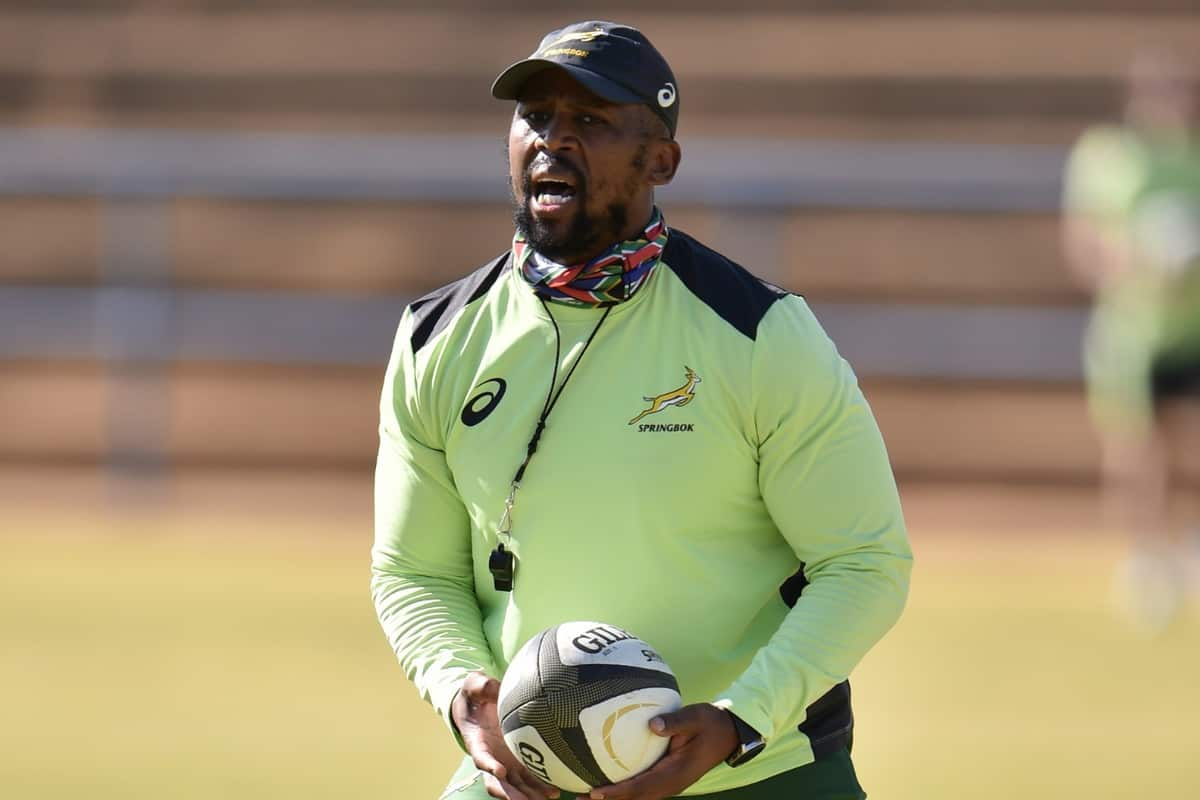
There may be no ‘I’ in team, as the saying goes, but there is an ‘I’, in fact a few of them, in individual. And when South Africa A coach Mzwandile Stick used that word in describing his team’s disappointing performance against Bristol Bears, he may have hit the nail on the head.
At least his first nail, for he was to do it again later in his post-match summary of where his team went wrong in losing 26-18 to the Bristol Bears at the Ashton Gate Stadium in the west England city on Thursday night.
“The result was very disappointing for us because we take a lot of pride in the way we play. We made a lot of unforced errors and individual mistakes, and that cost the team,” said Stick after a loss that followed an equally chastening reverse to Munster the week before.
After starting strongly enough, and dominating territory in the early phases, the SA A team played like individuals once their opponents were able to get into the game and exert pressure on them. And individuals is what in some ways they were.
This wasn’t the first time we have seen South Africans wearing green and gold jerseys humbled by club opposition between tour test matches in Europe in November. It happened in 2009, when both Leicester and Saracens got it over the midweek Boks.
NOT BEING OFFICIAL BOKS DOES BRING DIFFERENT PERSPECTIVE
Back then though the teams that the English clubs beat were officially Boks. Both games were tight, with the Saracens game being won by, of all people, former Bok and Bulls flyhalf Derrick Hougaard, who kicked a drop-goal in the dying seconds. There was much gnashing of teeth back then, and rightly so – the Tigers and Saracens could claim a Springbok scalp.
Munster and the Bristol Bears can’t – the team they beat was officially known as the South Africa ‘A’ side and all but a small smattering of the ‘A’ players weren’t touring with the Bok squad or under the influence of the wider Bok coaching group.
It also really was a second-string squad, with players not even in the starting team for their franchises being tried out in some key positions. In that sense, there shouldn’t be quite as much gnashing of teeth this time.
The fact they weren’t an official Bok team may even have worked against the SA A side. In the sense that it was one of those rare occasions when the players, in their professional careers, weren’t playing for a trophy and they weren’t even officially representing their country’s national team. What they were effectively doing was playing a Bok trial game, which can have an interesting impact that can go in several directions, one of them being that the players do sometimes end up playing for themselves rather than a collective.
LACK OF PREPARATION
The quest to catch the eye rather than win as a group could well have played a role in delivering the listless and disorganised performances of the two midweek games. In the Munster game in particular there was the excuse of lack of preparation. The players had hardly been together before they were called into action against a team that was missing some stars but was still a combination made up of players who know each other well from training so much together at the Munster HQ.
The SA A side was made up of combinations that featured players who’d played against each other more often than with each other, and 20-year-old flyhalf Sacha Feinberg-Mngomezulu, who produced an error-strewn performance at Ashton Gate, was with the Boks in Marseille the night the Munster game was played.
South Africa’s national director of rugby Rassie Erasmus made the point earlier this week that he understood the elements that contributed to the SA A defeat in Munster – driving rain, a motivated opponent determined to make a point and the fact the team was playing together for the first time. He said he wasn’t too concerned about the result, but was rather on the look out for players who might have stuck up their hands on a difficult night.
He singled out scrumhalf Grant Williams, who is capped for the Boks, as a player who did. Presumably Herschel Jantjies, who was part of the 2019 Bok Rugby World Cup winning effort and started against Munster, presumably didn’t. The Stormers man’s star may be on the wane now at national level, as might some others, while Mngomezulu might have shown at Bristol that while he is undeniably a talented player for the future, it would be wrong to push him too quickly into the international cauldron.
UNHEALTHY MEDIA CLAMOUR
Certainly, there’s been an almost unhealthy clamour from sections of the Cape media for the age-group star to be given international recognition sooner rather than later, but the argument doesn’t really stand up. While one of the commentators in the Bristol game offered the opinion that Feinberg-Mngomezulu has been “world class at URC level”, that might have been true only for a fleeting moment – he’s played mostly as a replacement for the Stormers, and his only start on overseas soil was at inside centre, not flyhalf, against lowly Zebre. Admittedly he was good that day, and against the Emirates Lions more recently, but combinations are important, and he and Stormers pivot Manie Libbok benefitted from effectively being a two flyhalf pairing in the key 10/12 decision making axis in those games.
That wasn’t the case in Bristol, where he was entrusted with the responsibility of the being the game driver alongside a No 12 who is closer to being a wing than being another player with flyhalf abilities. Feinberg-Mngomezulu also wouldn’t have played with Williams much, if at all, which effectively means he was thrown to the wolves.
That is okay if the coaches wanted to see if he was ready to swim rather than sink in this early stage of his career. And also okay if you take the line, which maybe one should, that the results of these games don’t matter as much as the fact the players got exposed to the pressures of playing in a national team environment does.
The situation also wouldn’t have been as testing for Feinberg-Mngomezulu had there been at least some kind of training camp before the tour for the SA A players. Instead, while the tour seemed to be a good idea, it was as if it was also just in some ways an after-thought.
STICK HITS HIS SECOND NAIL
“If we have a similar tour to this again, perhaps we need to have a one-week camp to implement a few things before we leave because we only had one or two training session before the first game and three before the second game,” said Stick.
There we see the second nail, which is related to the first, being his squarely on the head. Stick is right when he refers to the squad that toured as “a talented group of players”. But a talented group of players only becomes a good team if it is given sufficient time to prepare.
We’ve seen these same players excel at URC and other levels, and if there was one incident in the Bristol game that summed up the biggest problem for the visitors it was when Leolin Zas dropped a switch pass from Johan Goosen that would probably have been a try-scoring assist had it happened to Zas were he playing with the guys he knows at the Stormers.
So perhaps there were lessons learned for the South African rugby brains trust as much as the players on this rather disappointing SA A sojourn – if you are going to send the national second stringers on tour, for goodness sake take it seriously, or rather don’t send them. Sending a team underprepared doesn’t do the players who tour any favours and leaves the whole exercise looking a little pointless.
SOUTH AFRICA A TOUR RESULTS
Munster 28 – SA A 14
Bristol Bears 26 – SA A 18.