
By Lehlohonolo Lehana.
South Africa calls for calm and restraint from all actors after an elite group of soldiers joined thousands of protesters against the Madagascar’s president on the streets of the capital on Saturday afternoon.
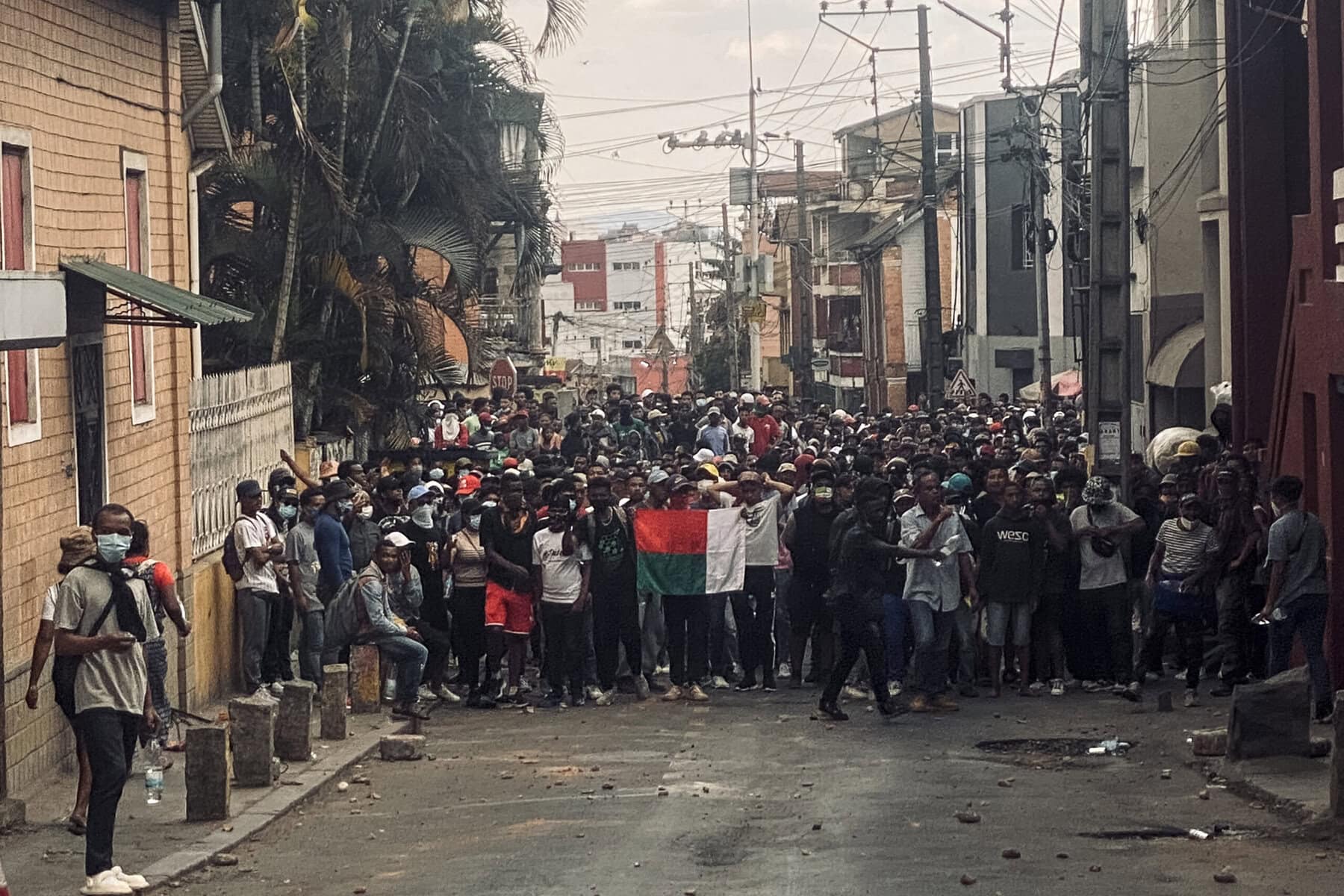
The demonstration in Antananarivo came amid the most significant unrest in the island country in years, with police using tear gas, stun grenades and rubber bullets to disperse the crowds.
Organized by “Gen Z Madagascar,” a coalition of students and youth, the protests were sparked by frustration over water and power cuts but soon turned into calls for Andry Rajoelina to step down, with the president’s dissolution of the government and fresh appointments to selected portfolios doing little to restore order.
Speaking on state television on Saturday night, the prime minister, Ruphin Fortunat Zafisambo, said the government was “fully ready to listen and engage in dialogue with all factions – youth, unions or the military”.
Rajoelina appointed Zafisambo and a new defence and security minister after dissolving the previous government last week in response to the protests.
An activist who attended Saturday’s demonstrations said she was concerned about the involvement of Capsat (Capsat refers to the mutiny of a part of the Malagasy army), due to their role in the 2009 coup that brought Rajoelina to power. She also criticised politicians who made brief addresses to the crowds in front of the city hall as “opportunists”.
“That’s why I’m not rejoicing at all, because all of those people gravitating around this ‘event’ are all dangerous,” said the activist, who didn’t want to be named for fear for her safety.
A member of Gen Z Madagascar, a leaderless group of young people that has helped to coordinate the protests, also expressed doubts about what would happen next. “We are very happy, but a lot is happening [and] we don’t want another corrupted person to take the power here, so we will do everything to have the right to choose who to put up there,” he said.
In a statement Dirco said, “We strongly call upon all parties to respect the democratic process and constitutional order. It is imperative that any disputes be resolved peacefully through inclusive dialogue, cooperation, and established legal mechanisms.”
In accordance with the Lomé declaration, South Africa does not support unconstitutional changes of government.
Minister Ronald Lamola reaffirms South Africa’s commitment to supporting a peaceful resolution that upholds the principles of democracy, the rule of law, and sustainable development for the region, added Dirco.
Madagascar’s army has a long history of intervening in politics during crises. Since independence in 1960, it has backed or led several power shifts, including coups in the 1970s and in 2009, when it helped oust President Marc Ravalomanana and bring reformist mayor, Rajoelina, to power.
Though the military has stayed mostly in the background in recent years, it remains an influential force in the country’s often fragile political landscape.
The United Nations (UN) says at least 22 people have been killed and more than 100 injured since the protests erupted on September 25, though the government disputes these figures.