
By Lehlohonolo Lehana.
The security forces have been placed on high alert ahead of former president Jacob Zuma’s court appearance this week, with officials not keen for a repeat of the July riots, which left R50 billion worth of destruction in its wake.
The City Press reports that law enforcement will be deployed to hotspot areas, where intelligence points to the greatest likelihood for unrest.
The forces’ deployments have been extended beyond the July 13 to 31 period to enable this.
The hotspots include the Pietermaritzburg High Court, where Zuma will make his appearance on Tuesday (10 August).
Security forces will be out in number until Saturday (14 August), the paper said. Zuma supporters are expected to be out in full force.
President Cyril Ramaphosa’s newly appointed security cluster – which sees Thandi Modise as minister of defence joining police minister Bheki Cele, and Zizi Kodwa as deputy minister of state security in the presidency – will be looking to avoid a repeat of the riots which broke out in July.
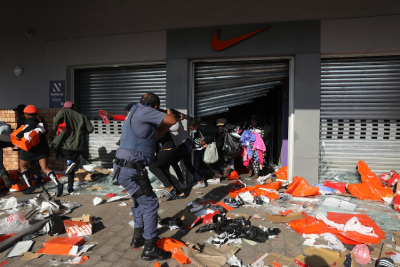
What started as isolated incidents of public unrest in mid-July – purportedly over the arrest of Jacob Zuma for being in contempt of the Constitutional Court – soon erupted into widespread looting and violence in KwaZulu-Natal and parts of Gauteng.
Amid the looting, destruction, and arson, South Africa’s police forces were scarcely seen; and in areas they were present, they were too small in number to effectively do anything.
The situation remained volatile until South African National Defence Force units were deployed to these areas to assist the police.
Ultimately, 25,000 soldiers and support staff were deployed to bring the situation under control – however, by that time, the bulk of the damage was already done.
In briefings to parliament following the unrest, the officials in charge at the time characterised it as a failure of intelligence and blamed each other for the shortfalls.
Ramaphosa told the nation in an address that the riots were part of a failed insurrection.
The government has placed the blame for the riots squarely at the feet of a small group of instigators, who it says were pushing a political agenda following Zuma’s arrest.
The violence marked the worst civil unrest in South Africa since the end of White-minority rule in 1994 and left 342 people dead and thousands of businesses looted or burned down.
Data shows there is a strong correlation between economic growth and social stability, and rioting and looting could become more prevalent in the next few years unless the authorities are serious about implementing reforms.