
By Lehlohonolo Lehana.
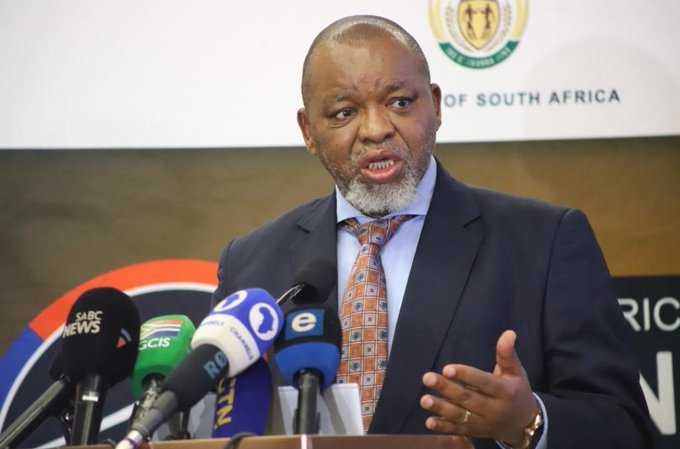
Department of Mineral Resources and Energy minister Gwede Mantashe, says establishing the South African National Petroleum Company (SANPC) would allow ‘the state to participate meaningfully in oil and gas developments’.
Speaking at the Department of Mineral Resources and Energy Budget Vote, Mantashe, said South Africa is one step closer to having a new entity in charge of petroleum in the country.
Following the tabling of the Upstream Petroleum Resources Development Bill, cabinet has approved the merger of IGas, PetroSA and the Strategic Fuel Fund to form the SANPC.
The bill details various objectives concerning petroleum rights licensing, exploration of petroleum and management rights relating to petroleum.
The new corporation is also expected to oversee strategic planning, coordination, and governance of the country’s petroleum resources, contributing to sustainable development and economic growth.
According to Mantashe, to bring this Cabinet approval into effect, the final draft of the SANPC Bill has been submitted to the state law advisor for constitutional certification. It will be gazetted for public comments in July this year.
“We implore members to ensure its finalisation before the end of the term of this administration,” said the minister.
The merger regarding the SANPC has been on the cards since June 2020 and has failed to meet various deadlines.
Speaking on the merger, a day before Mantashe’s delivery, the chairperson of the CEF, Ayanda Noah, said that the merger of the three entities had been a colossal task and it is now entered its second phase following an initial period involving a feasibility test.
“This merger will be a catalyst for unlocking economic growth in the country. We are now focused on accelerating our efforts to finalise implementation of Phase 2, to get to those massive market opportunities,” Noah said.
Mantashe said that the merger comes as the petroleum supply is significantly unstable.
“The closure of crude oil refineries has presented a new set of challenges, with potential instability if not well-managed,” said the minister.
“Importation of petroleum products has reached unprecedented levels. The robustness of the distribution infrastructure will be tested when the Sasolburg refinery goes into a mandatory maintenance shutdown for four months scheduled for later this month.”
He said that contingency plans are being put in place to eliminate the risk of product shortage in the market. The minister of energy further welcomed the return of the Cape Town refinery to full operation.